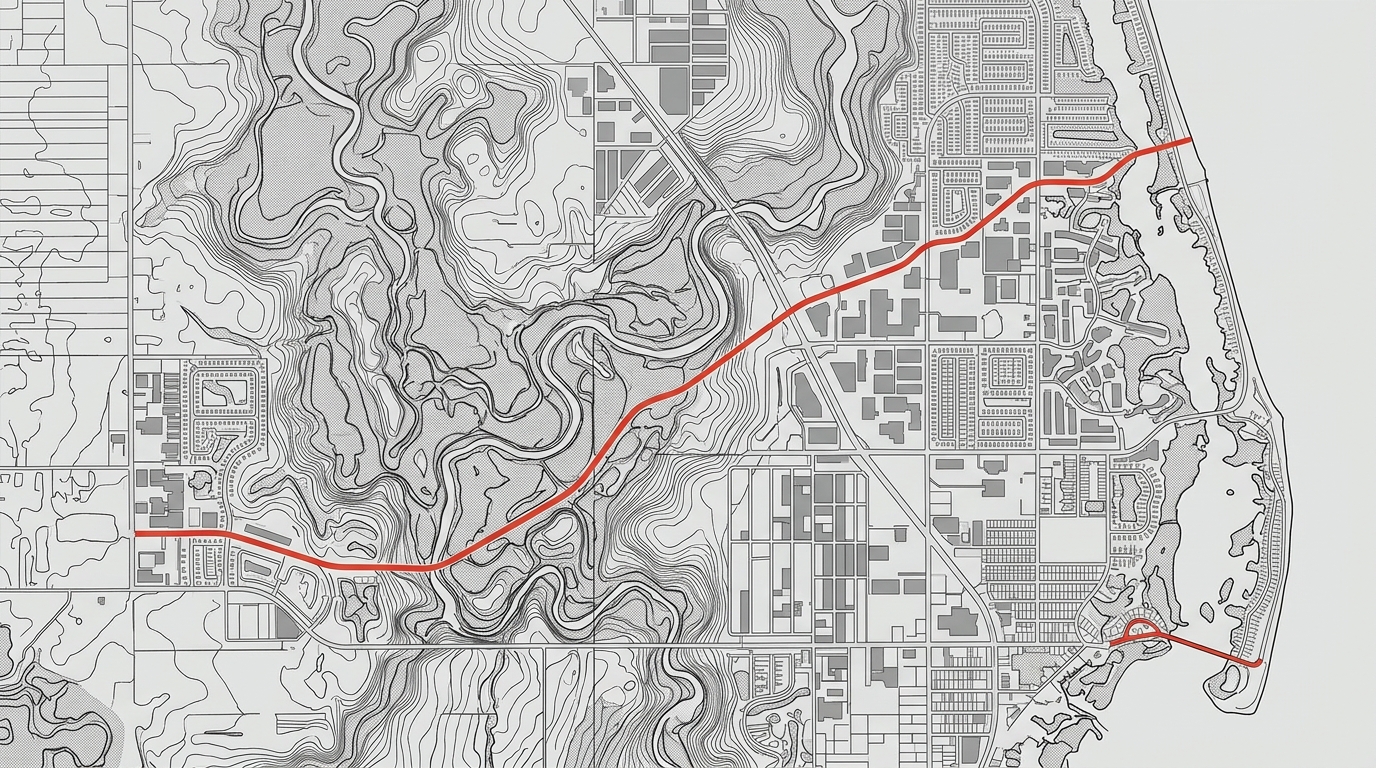
Manatee County, Florida is moving ahead with the next phase of the Gateway Greenway Trail, launching the environmental and engineering review process that will determine whether a major new multi-use corridor becomes reality for the fast-growing region just south of Tampa Bay.
The county is hiring consultants to conduct a Project Development and Environment study, a required step under Florida Department of Transportation guidelines before any trail of this scope can advance to final design and construction. The study will evaluate route alternatives, assess impacts on wetlands and other sensitive ecosystems, and produce documentation to satisfy both state and federal environmental review requirements — clearing the path for potential federal funding under programs like the Transportation Alternatives Program, which received a significant boost through the 2021 Bipartisan Infrastructure Law.
The timing reflects real pressure. Manatee County added tens of thousands of residents during the 2020s, ranking among the fastest-growing counties in the United States. That growth has clogged roads and strained parks, while also creating sprawling suburban neighborhoods with few safe options for walking or biking. The Gateway Greenway is designed to serve as a key connector, linking residential areas to schools, commercial districts, and existing trail networks, potentially including regional routes in neighboring Hillsborough and Sarasota counties.
Phase I work on the trail is already underway or complete, and Phase II extends the county's ambitions further. The flat terrain and year-round warm climate make Manatee County well-suited for trails, and the county's own long-range transportation plan has identified trail connectivity as a priority. Florida's SUN Trail program, which dedicates dedicated state tax revenue to building a statewide nonmotorized network, provides another potential funding source for future construction.
PD&E studies in Florida routinely include public input sessions, which often surface community concerns about route alignments, private property impacts, and effects on wetlands — all factors that could reshape the final plan. The Gateway Greenway Trail has been years in the making for the county, and the outcome of this study will set the terms for what gets built, where, and at what cost.