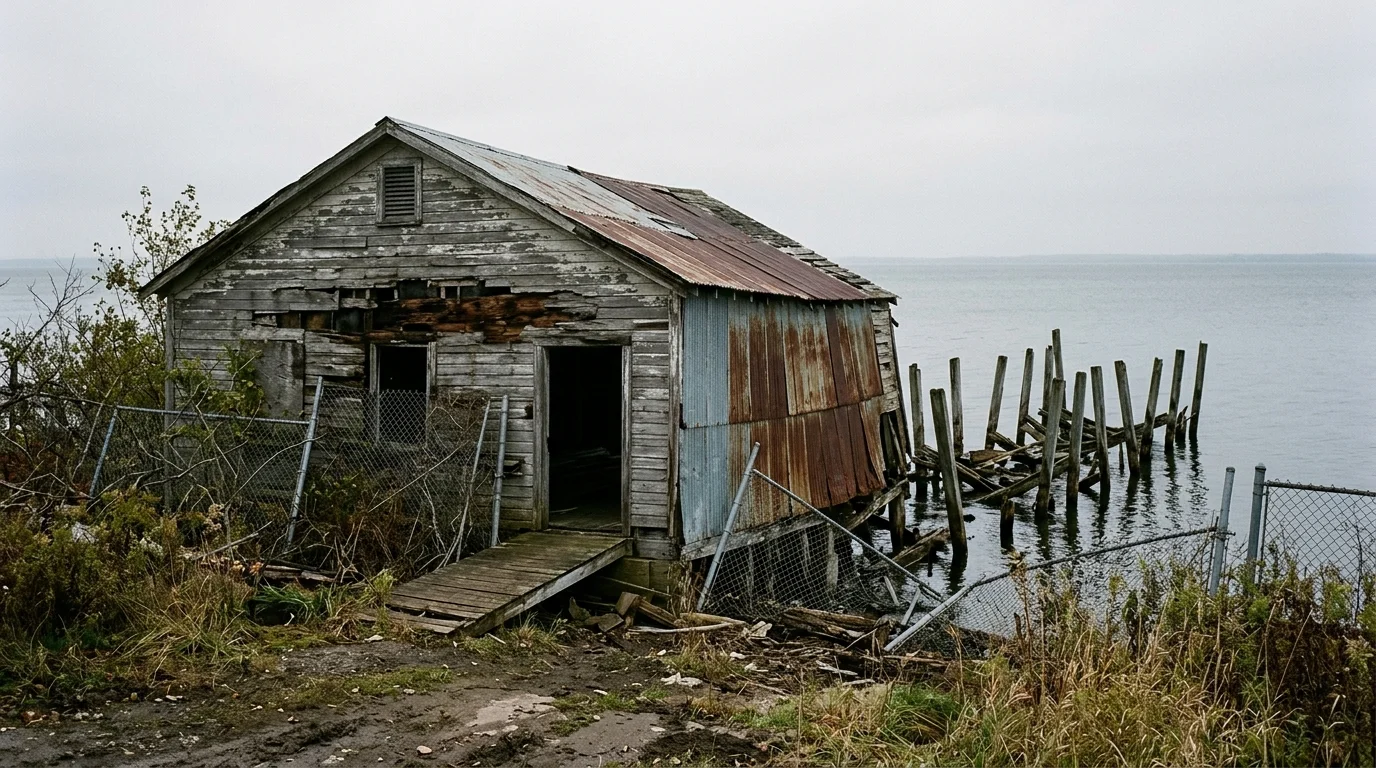
A decaying fish processing building and the marina that once served it are finally coming down at Beaver's Landing, Michigan, as a local community moves to reclaim a stretch of shoreline that has sat blighted since the regional commercial fishing industry collapsed.
The cleanup, posted through the Michigan Inter-governmental Trade Network, covers both the abandoned processing facility and the adjacent marina. Sites like this one carry a familiar mix of hazards: wood-frame and metal structures soaked with decades of fish oil, aging refrigeration systems that may contain ammonia, asbestos, lead paint, and fuel contamination from dockside fueling operations. Derelict marinas bring their own complications, including rotting docks and contaminated sediments.
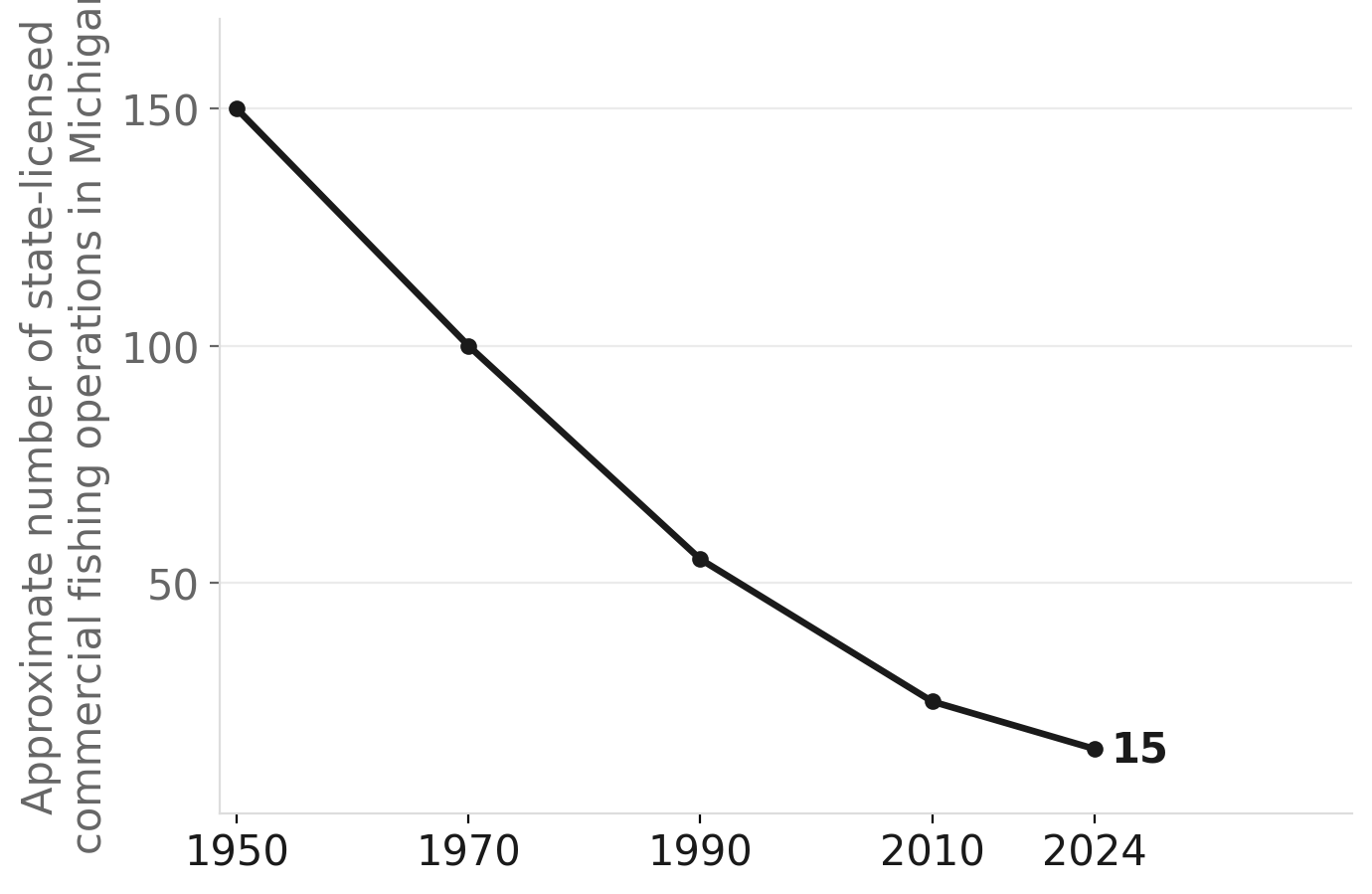
The collapse of small-scale commercial fishing across the Great Lakes and Michigan's inland waterways left hundreds of sites like this one stranded. Michigan once had hundreds of licensed commercial fishing operations; today fewer than 15 remain licensed statewide. The industry was hollowed out by invasive species, overfishing, federal catch regulations, and consolidation that pushed small processors out of business through the 1970s, '80s and '90s. What they left behind became orphaned liabilities that small, rural waterfront townships rarely have the tax base to address on their own.
Source: NationGraph.
Federal money has increasingly filled that gap. The 2021 Bipartisan Infrastructure Law added $1.5 billion to the EPA's Brownfields program, and Michigan has pursued waterfront remediation aggressively through its Department of Environment, Great Lakes, and Energy. High-profile cleanups at sites like Muskegon Lake and in Saginaw Bay point to a broader state push to restore public access to shorelines that industry once held and then abandoned.
The framing here mirrors that trend. Rather than attracting a new industrial tenant to replace the fish processor, communities remediating these sites are increasingly betting on public waterfront access as the path to revitalization, amid years of rising real estate pressure that has put much of the U.S. coastline out of public reach.
The specific agency leading the Beaver's Landing project was not identified in the posted record; the jurisdiction should be confirmed through the MITN listing. Contractor selection is underway, and the timeline for completing the demolition and marina cleanup has not been publicly detailed.