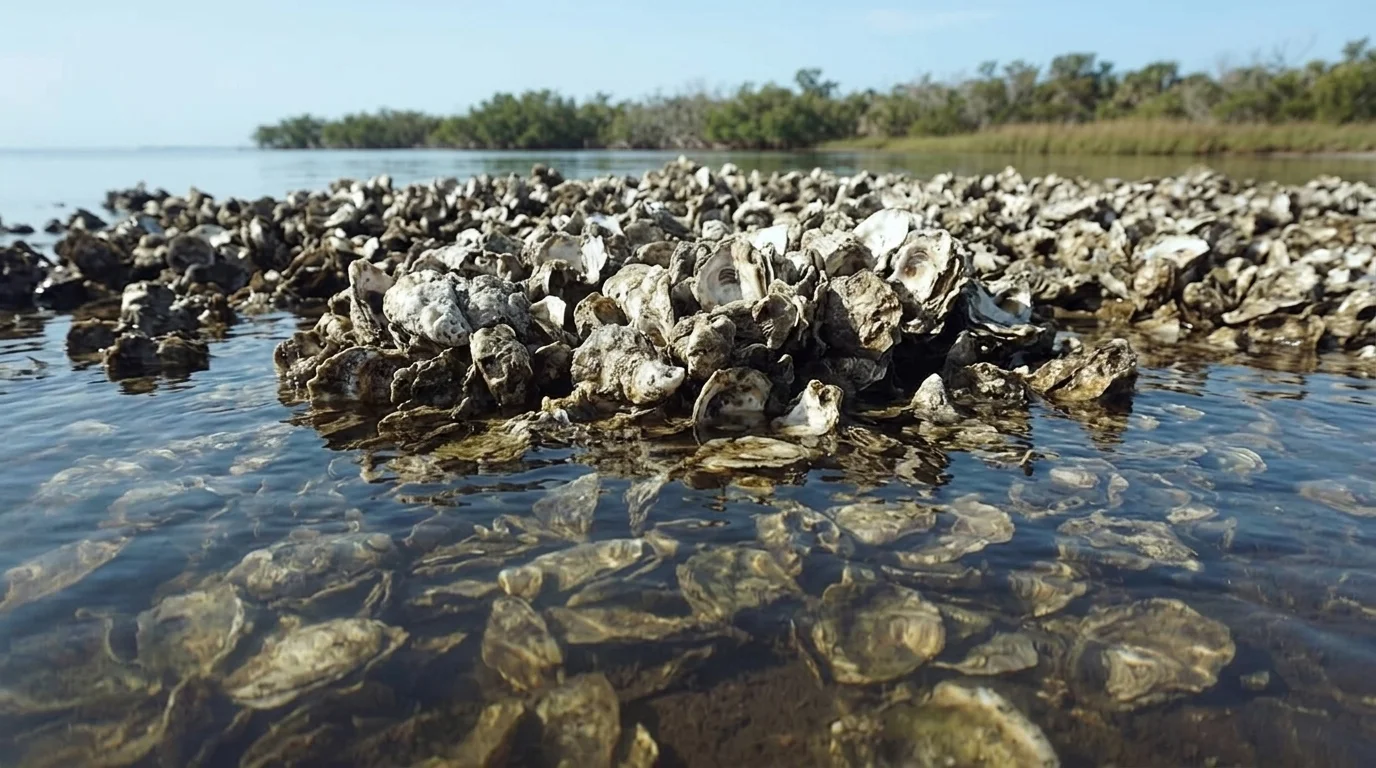
Manatee County, Florida is moving to rebuild oyster reefs along its Gulf and bay shorelines, betting that living reefs can do what seawalls cannot: absorb storm surge, filter polluted water, and restore ecosystems that have been largely gone for over a century.
The county has posted a request for restoration contractors to carry out the work across historic oyster habitat in Anna Maria Sound, Sarasota Bay, Terra Ceia Bay, and the southern Tampa Bay shoreline. The dual goals are explicit: rebuild native reef ecosystems and protect coastal communities from storm surge.
The timing is hard to separate from recent disasters. Hurricane Milton's storm surge in October 2024 overwhelmed Anna Maria Island, Holmes Beach, and Bradenton Beach, with cleanup and rebuilding still underway. Before that, Hurricanes Ian and Idalia took turns battering the same stretch of coast. And in 2021, the Piney Point wastewater disaster released 215 million gallons of nutrient-laden water into Tampa Bay, fueling massive fish kills and algal blooms that accelerated calls to restore the filter-feeding bivalves that once kept the bay cleaner.
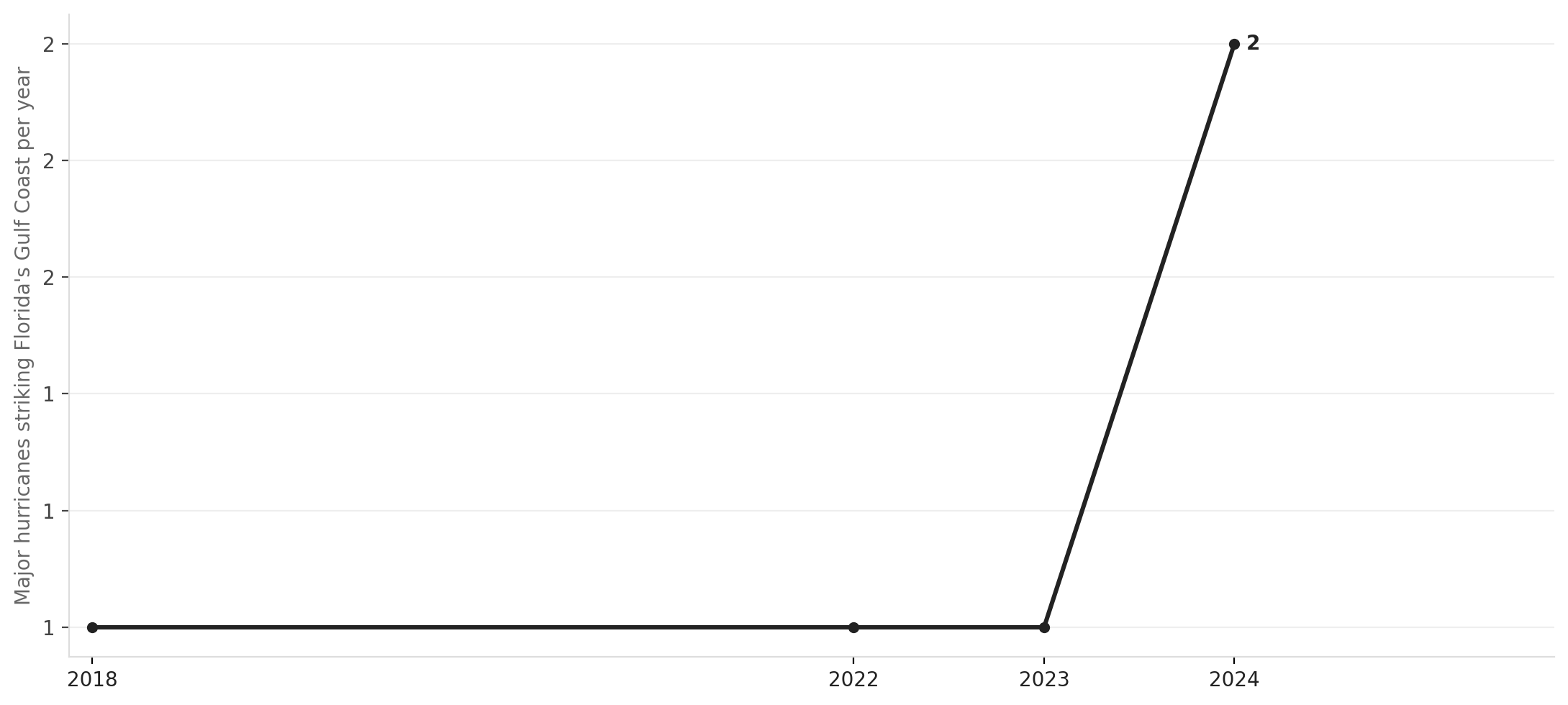
Source: NationGraph.
Oysters are remarkably effective at both jobs. A single adult oyster filters roughly 50 gallons of water per day, and reef structures attenuate wave energy, slowing erosion and blunting surge in ways that hard armoring cannot replicate. Florida has lost an estimated 85 to 90 percent of its historic oyster reefs since the late 1800s, the result of overharvesting, dredging, altered freshwater flows, and water quality decline. The 2020 closure of Apalachicola Bay to wild oyster harvest put that collapse in stark terms for the entire state.
Manatee County's move fits into a broader Gulf Coast turn toward what engineers and ecologists call living shorelines. The Tampa Bay and Sarasota Bay Estuary Programs have set targets for hundreds of acres of restored oyster habitat by 2030, and federal funding through NOAA's Climate-Ready Coasts initiative has been pushing money toward exactly this kind of work.
Cortez, one of Florida's last working fishing villages and a community with deep cultural ties to shellfish, sits along this same coastline and stands to benefit from healthier reefs.
The county has not disclosed a project budget or acreage target in the posting. Contractor selection will determine the scope and timeline for when reef work in the water actually begins.