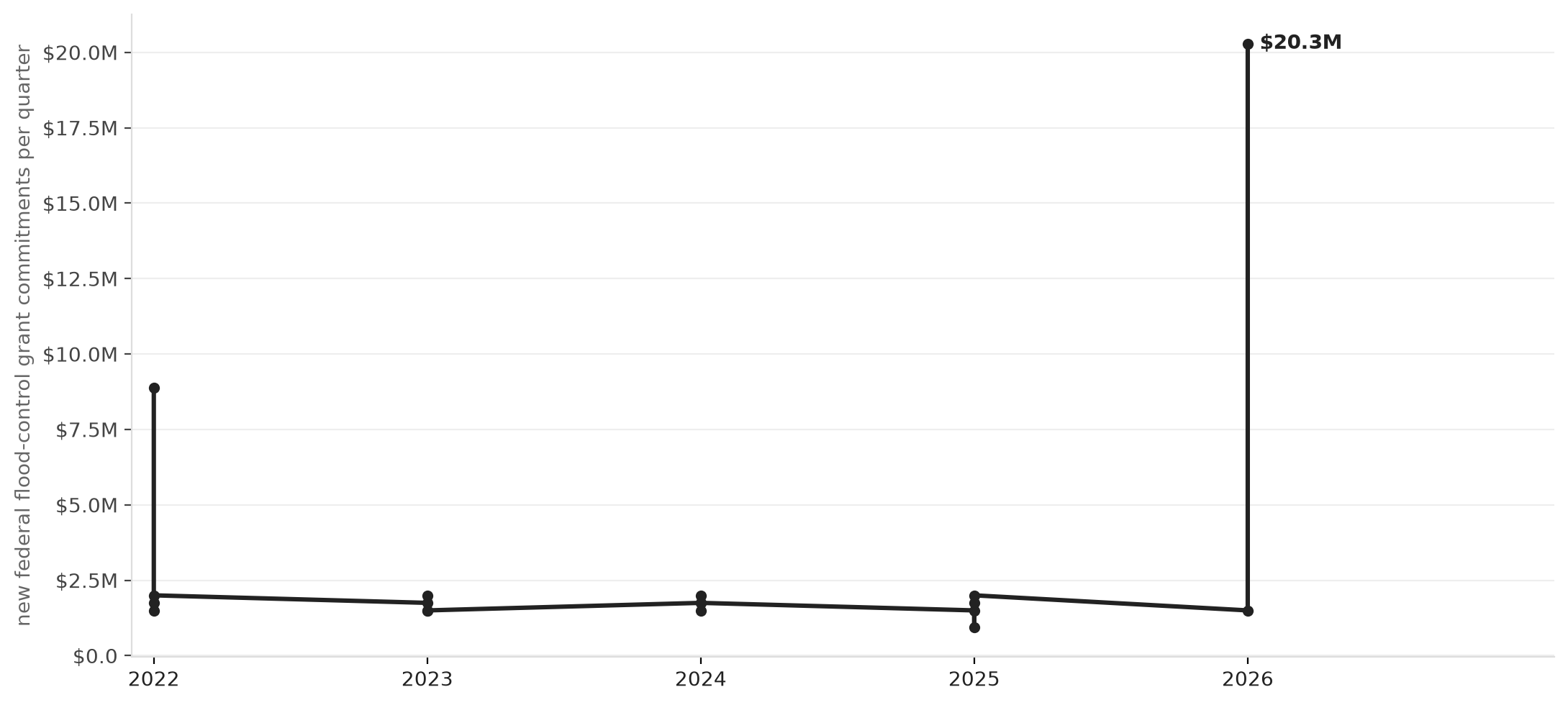
Iowa has collected $20.29 million in new federal flood-control grants in the past 90 days, a 2,070% increase over the $934,860 the state received in the same window a year ago. The surge is not the result of a sudden policy shift or a new commitment to resilience investment. It is the sound of a bureaucratic dam breaking: nearly two years of grant applications, triggered by the catastrophic June 2024 floods in northwest Iowa, are being obligated in a single concentrated burst.
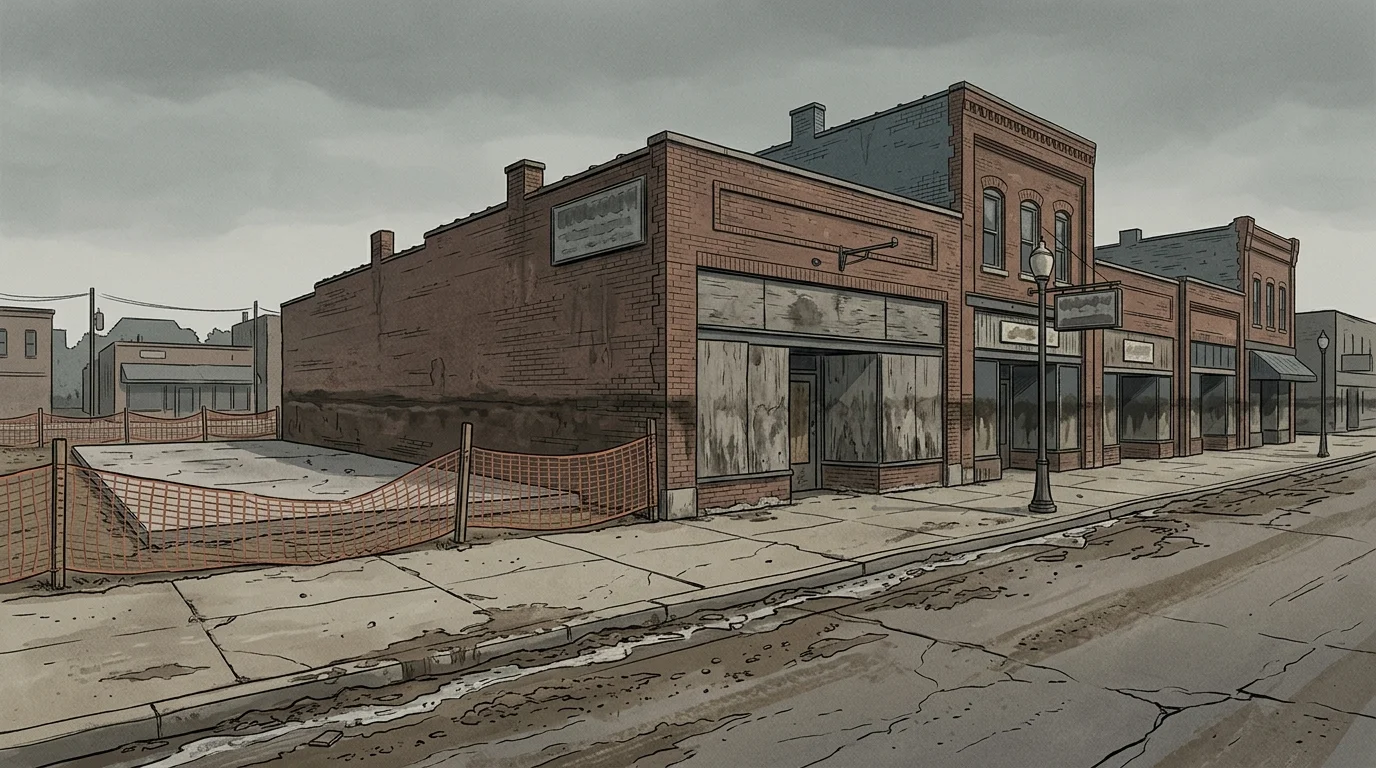
The mechanism matters. When FEMA issued Major Disaster Declaration DR-4796-IA on June 24, 2024, covering severe storms and flooding that had begun eight days earlier, it unlocked Hazard Mitigation Grant Program and Flood Mitigation Assistance eligibility for all 99 Iowa counties. But federal mitigation grants do not flow the day a declaration is signed. States submit project applications, FEMA reviews them, and the awards move through a regional office queue that, as of early 2026, had grown into a substantial national backlog. Under a DHS-directed effort to clear that backlog, FEMA's Region 7 office began obligating Iowa awards in April and June 2026, roughly 20 months after the flooding that justified them.
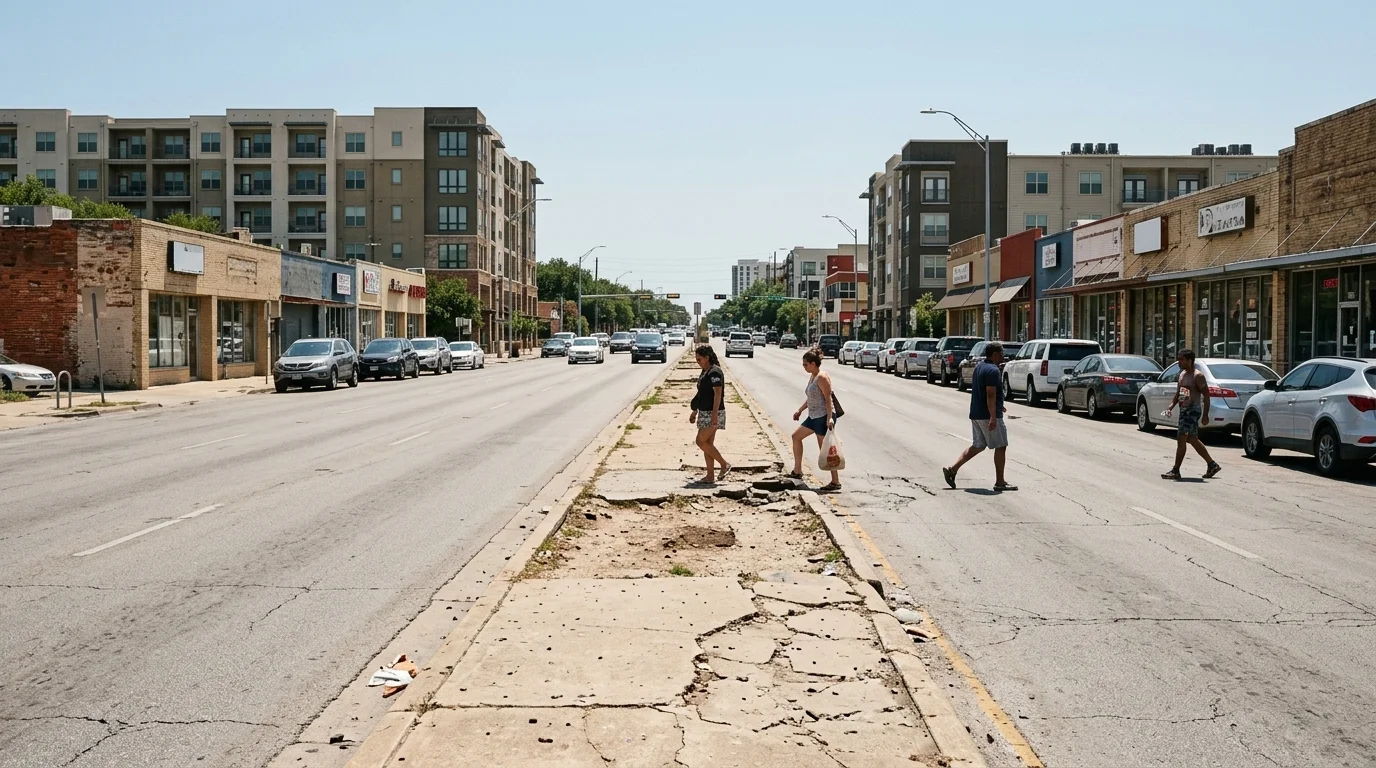
The anchor award is a $14.29 million Flood Mitigation Assistance grant to Iowa Homeland Security and Emergency Management, obligated April 24, 2026, and running through 2029. The core of that commitment is a $13.1 million acquisition-and-demolition project targeting repetitively flooded commercial structures along Clive's University Boulevard corridor, a stretch of development that has cycled through flood damage and repair for years. The second major award is a $6 million DOT Bridge Investment Program grant to Cedar Rapids, obligated June 4, 2026, covering flood-vulnerable infrastructure through 2031. Together, those two commitments account for the full $20.29 million and represent Iowa's largest flood-grant quarter in at least four years, roughly 2.3 times the prior peak of $8.87 million recorded in Q1 2022.
Source: NationGraph.
The June 2024 event that set this in motion was severe. In Rock Valley, a small city of about 4,000 in Sioux County, a protective berm overtopped on June 22, 2024, leaving hundreds of homes uninhabitable. That community's wait for federal help ended on July 2, 2026, when FEMA obligated $22 million in HMGP funds for buyouts of 123 flood-damaged residential properties in Rock Valley, with FEMA Region 7 Acting Administrator Jay Van Der Werff citing strong coordination between state and local emergency management. That $22 million obligation came after the 90-day window captured in the headline metric, meaning the actual volume of Iowa flood-mitigation spending breaking loose right now is larger still.
In February 2026, Rep. Randy Feenstra announced that Iowa communities would receive $62 million in total FEMA disaster recovery grants tied to the 2024 floods. The awards flowing now are part of that broader commitment working its way through the pipeline. A second disaster declaration, DR-4870-IA, issued in March 2025 for additional severe weather, extends mitigation eligibility into 2026 and has its own set of applications already in review. Iowa also has pending awards on the near horizon: Cedar Rapids has an active application for a $1.4 million pump-station generator, and Davenport is seeking $2.9 million for a water-pollution and flood-mitigation project.
For context on the regional scale of this shift, Iowa's current 90-day total outpaces the combined flood-control grant receipts of Nebraska ($3.83 million), Missouri ($2 million), Wisconsin ($525,000), and Illinois ($321,000) in the same window. That comparison does not mean Iowa has a more sophisticated grant program than its neighbors. It means Iowa had a larger triggering disaster, a state emergency management agency with the coordination capacity to move applications forward, and the bad luck, or circumstance, of being further along in the processing queue when the regional backlog clearance began.
For Iowans living in flood-prone communities, the practical consequence of this compression is that the infrastructure projects arriving now are being designed around damage assessments that are two years old. Buyouts in Rock Valley and acquisitions in Clive address the footprint of the 2024 event. A second disaster declaration is already in place, and the communities that experienced flooding in early 2025 are at the beginning of the same multi-year processing cycle.
The next signal to watch is the July 22, 2026 application deadline for Cedar Rapids and Davenport's pending awards. Whether those come through on that timeline, or join the next wave of delayed obligations, will indicate whether the backlog clearance is a one-time acceleration or a lasting change in how quickly federal mitigation dollars reach the state.