Federal grants tagged to homelessness response in Alaska have reached $18.9 million in the trailing 90 days, up from $4.3 million in the same window last year, a 343% increase. But the number obscures something more important than the size of the jump: 83% of it arrived through a funding channel that operates entirely outside the system most Americans think of when they hear "federal homelessness spending."
The surge belongs almost entirely to three Alaska Native entities. Cook Inlet Housing Authority received $6 million, Chilkoot Indian Association received $5 million, and Louden Tribe received $4.7 million, all booked in early September 2026 through HUD's Indian Housing Block Grant program. The remaining $3.2 million came from conventional sources: Section 8 vouchers, Continuum of Care renewals, PATH formula grants, and Emergency Solutions Grant funding, all of which came in roughly flat compared to last year. In the prior-year baseline, there were zero IHBG awards. The 343% jump is, almost entirely, the arrival of tribal block grants.
The reason these three awards landed now is specific. HUD Secretary Scott Turner announced a $1.1 billion national IHBG formula allocation on April 10, 2026, framing it around the 30th anniversary of the Native American Housing Assistance and Self-Determination Act, the 1996 law that created the block grant program. IHBG is a formula grant, not a competitive application, distributed annually by HUD's Office of Native American Programs directly to federally recognized tribes and tribally designated housing entities. The Alaska awards, booked downstream in September, carry performance periods running to September 2033. This is a seven-year commitment, not a one-time emergency appropriation.
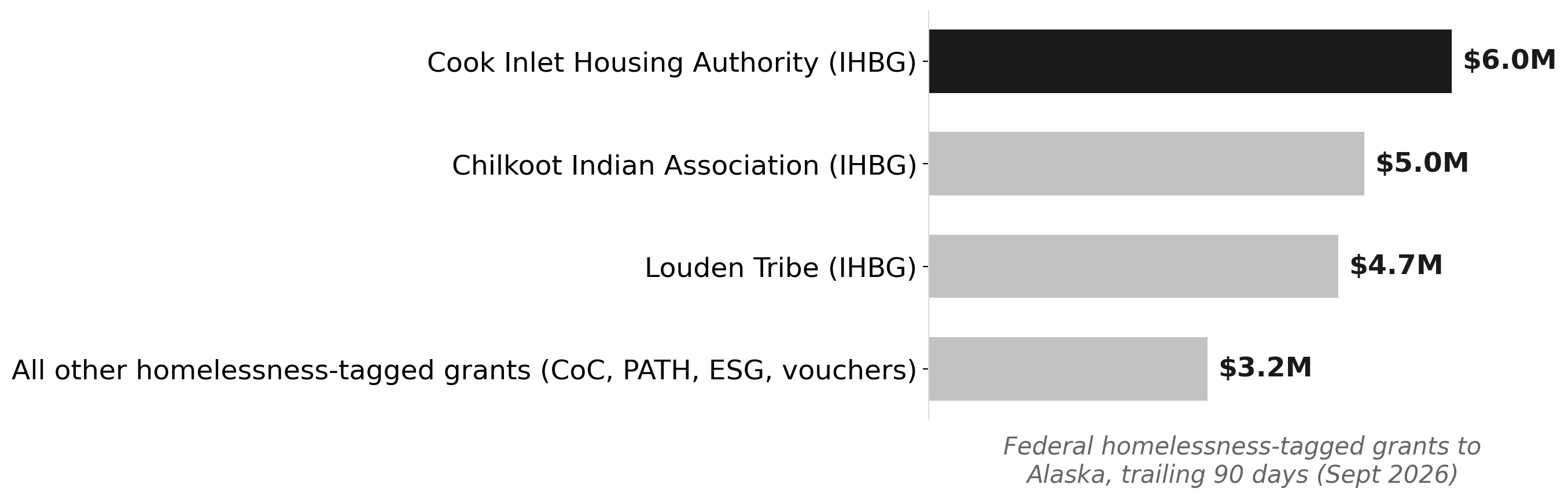
Source: NationGraph.
The IHBG program and the conventional HUD homelessness programs, CoC, PATH, ESG, are separate mechanisms governed by different legal authorities and serving different definitions of need. That distinction is the core of what the Alaska numbers reveal. HUD's statutory definition of homelessness, which anchors the CoC system and drives the annual Point-in-Time count, does not count overcrowding. In rural Alaska Native villages, where large extended families routinely share small structures and road-inaccessible communities have no shelter system to count, overcrowding is the primary form of housing distress. Alaska has more than 200 federally recognized tribes, second only to California, and a substantial share of their members live in communities that CoC outreach never reaches and that federal homelessness surveys cannot see.
Alaska CoCs told state legislators in February 2026 that the state needs more than 27,000 housing units over the next decade, with roughly half of that need coming from replacement or renovation of existing stock rather than new construction. That estimate, itself derived partly from CoC data, almost certainly understates need in villages where the data gap is structural. The IHBG channel exists precisely because that gap exists, it flows government-to-government to tribal housing authorities, with eligible uses that include addressing overcrowding and homelessness on tribal lands, without requiring recipients to meet HUD's narrower homelessness definition.
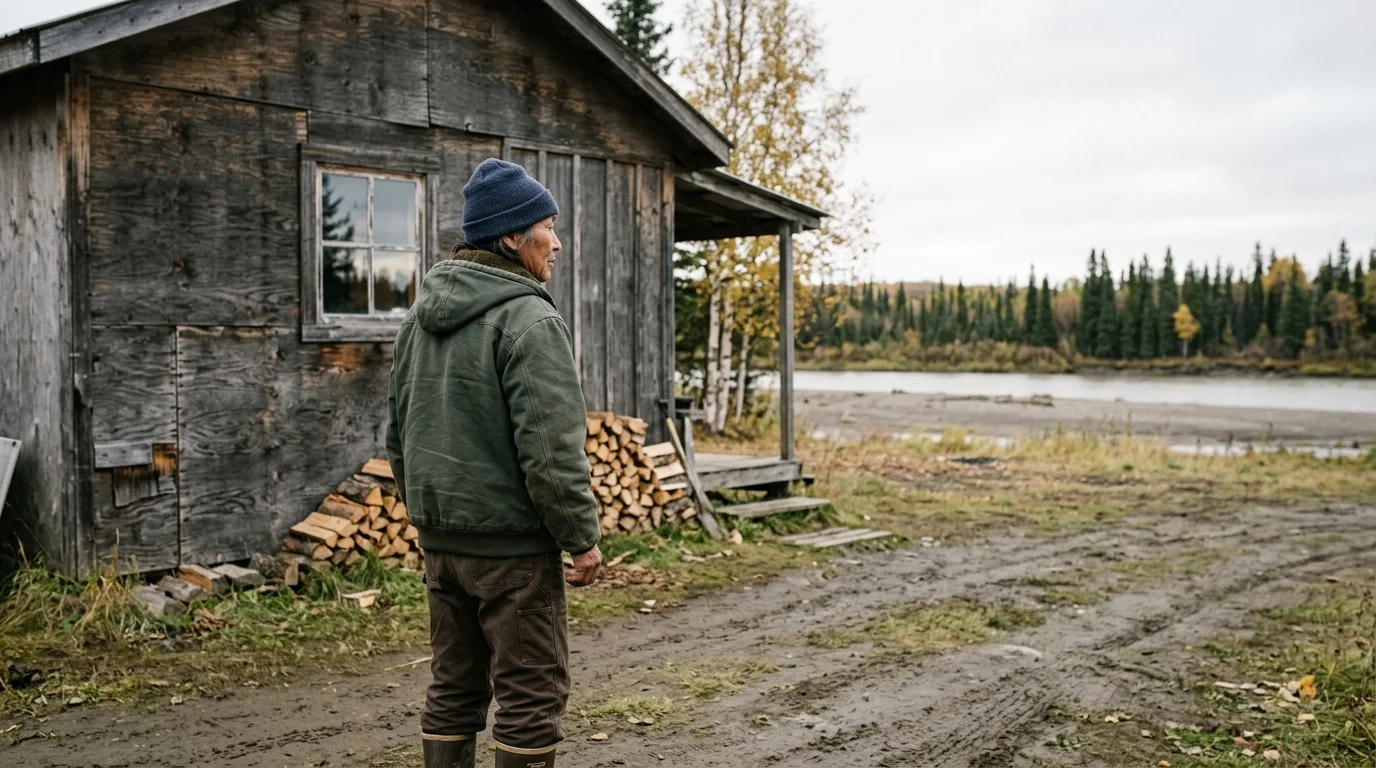
Cook Inlet Housing Authority, the largest of the three recipients, operates across Southcentral Alaska and has long functioned as a major provider of affordable housing development and repair for Alaska Native and low-income residents in and around Anchorage. Chilkoot Indian Association is based in Haines and serves a small Tlingit community. Louden Tribe, headquartered in Galena in the Interior, serves a Koyukon Athabascan community in a remote Yukon River village with no road access to the state highway system. The geographic spread of these three awards, urban, Southeast coastal, deep Interior, illustrates how the IHBG program reaches a housing landscape that no single state-level initiative can cover.
Alaska now leads all comparable small-population states in homelessness-tagged federal grants in the trailing 90-day window. Idaho, the next closest, received $8.6 million, less than half of Alaska's total. That ranking reflects the concentration of tribal housing entities in Alaska more than any difference in state policy.
The political backdrop adds complexity. Native News Online noted in April 2026 that the same federal budget framework that released the IHBG funds also proposed cuts to Tribal Colleges and other Native programs, meaning the housing infusion arrived alongside budget pressures on other parts of the tribal services ecosystem. The IHBG grants themselves are formula-driven and legally protected under NAHASDA, but the broader federal posture toward tribal programs is not settled.
For Alaskans watching this space, the signal to watch next is whether the conventional homelessness programs, CoC renewals, ESG, PATH, see any movement in the next funding cycle, or whether the flatness that characterized the last year continues. The IHBG awards running to 2033 represent a durable, if narrowly scoped, commitment. The gap between what those grants can reach and what the CoC system can count remains open.