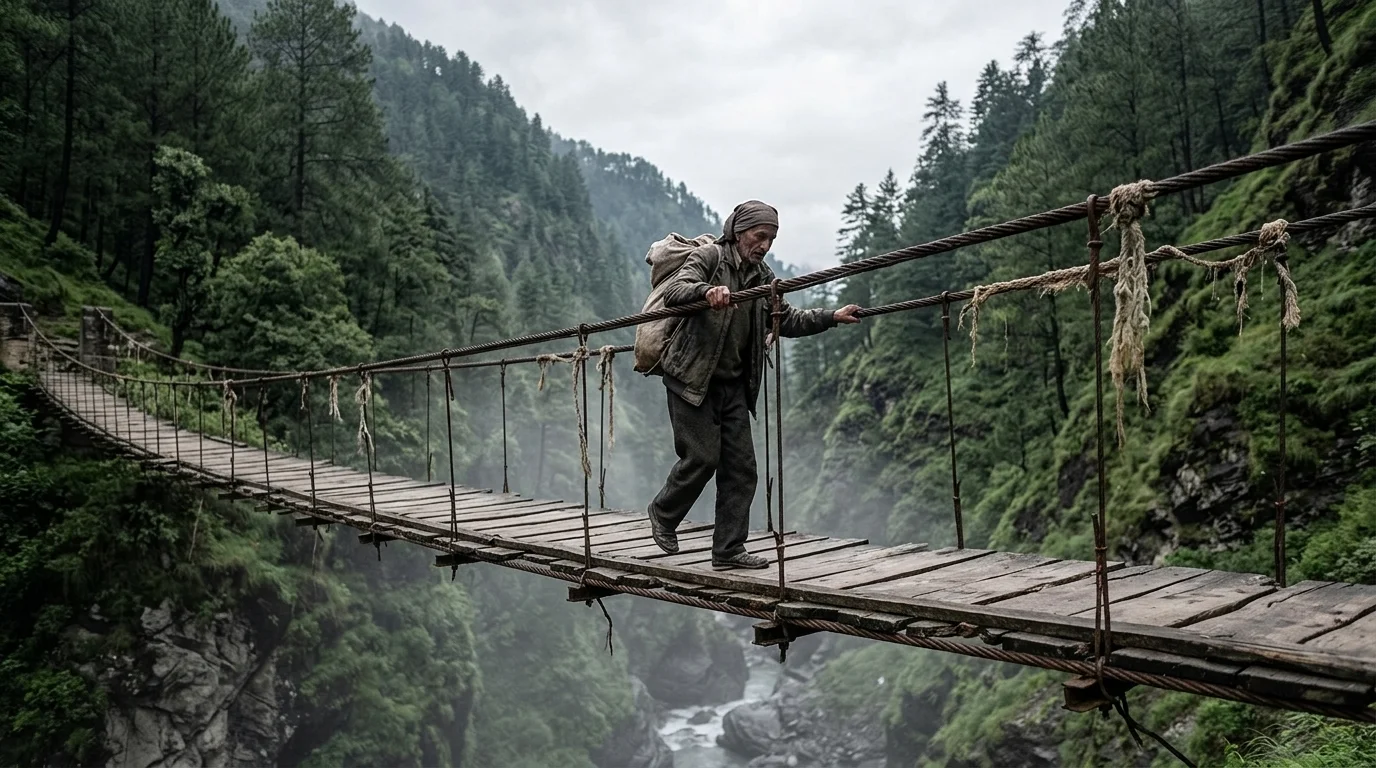
Two small villages in Himachal Pradesh, India are set to gain their first reliable crossing after decades of seasonal isolation, as the state moves to build a rope-based footbridge connecting Bagga and Pangliur.
For residents of both hamlets, the stakes are immediate and practical. In a state where monsoon rains between June and September routinely trigger landslides that sever foot trails for days or weeks at a time, a fixed pedestrian bridge represents reliable access to schools, primary health centers, and markets year-round. Without one, a crossing that might take 30 minutes with a bridge can stretch into a half-day ordeal, or become impossible entirely.
Rope suspension bridges, known locally as jhula pul, are the standard solution across the lower and middle Himalayas, where the terrain makes motorable road construction geologically impractical or prohibitively expensive. Himachal Pradesh, a mountainous state of roughly 7 million people where more than 89% of the population lives in rural areas, has hundreds of such crossings scattered across valleys carved by the Beas, Sutlej, Ravi, and their tributaries.
Source: NationGraph.
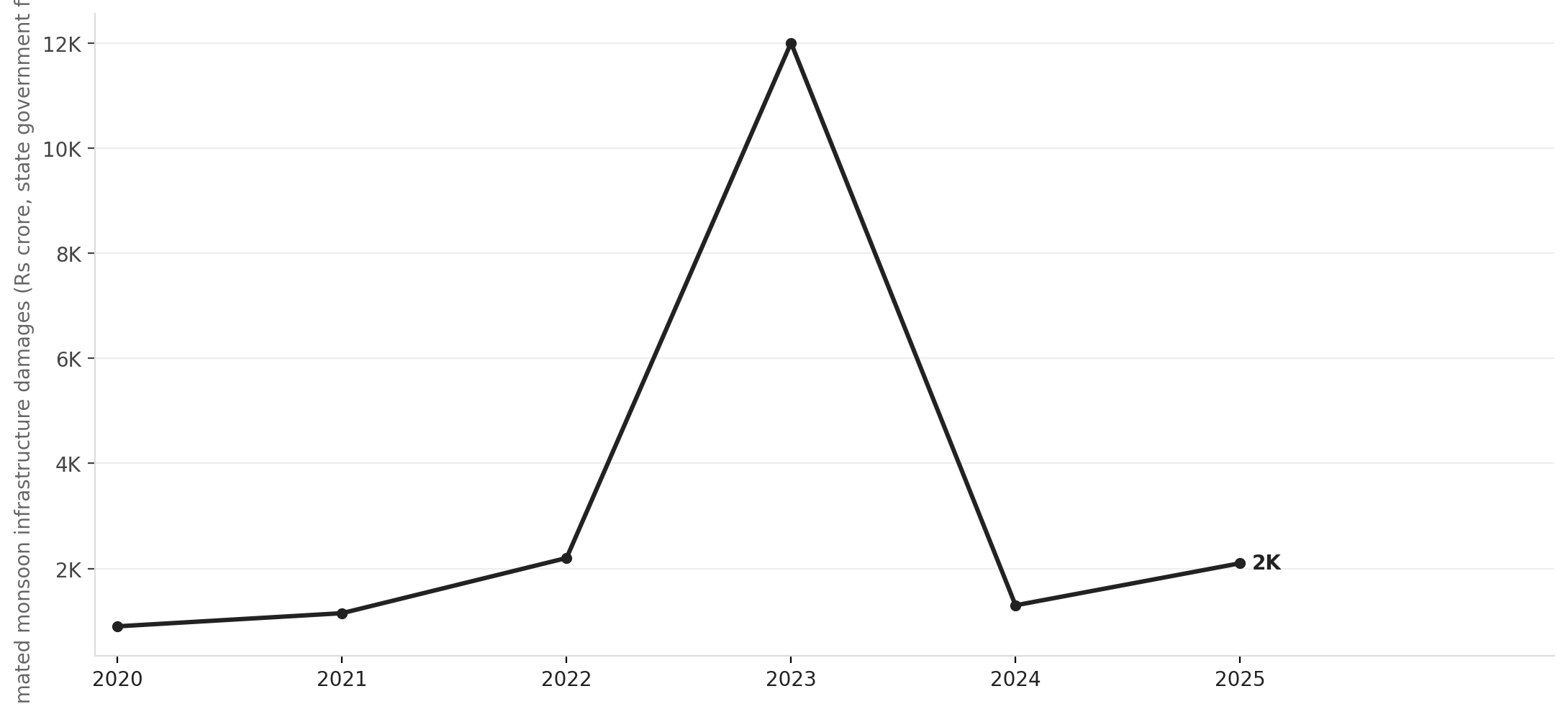
The urgency around footbridge construction in the state has grown sharply since the catastrophic 2023 monsoon, which killed more than 400 people across Himachal Pradesh, destroyed hundreds of bridges and roads, and caused infrastructure losses the state government estimated at over 12,000 crore rupees. Subsequent cloudbursts in 2024 and 2025 in districts like Mandi and Kullu again left villages cut off for weeks, renewing political pressure on the state government to prioritize last-mile connectivity.
The exact district, span length, contract value and construction timeline for the Bagga-Pangliur bridge are not specified in the tender posted to Himachal Pradesh's state e-procurement portal. Those details, including which state agency will oversee construction, would clarify whether the project is tied to post-2023 disaster reconstruction funds, a backlog under the central government's Pradhan Mantri Gram Sadak Yojana rural roads scheme, or a tribal development allocation.
If the build follows the design approach the state has used widely elsewhere, it would employ prefabricated steel-cable construction modeled on programs like Nepal's Trail Bridge Programme, which has linked thousands of remote Himalayan communities over the past three decades. Whether Bagga and Pangliur will have their crossing in place before the 2027 monsoon season remains to be seen.