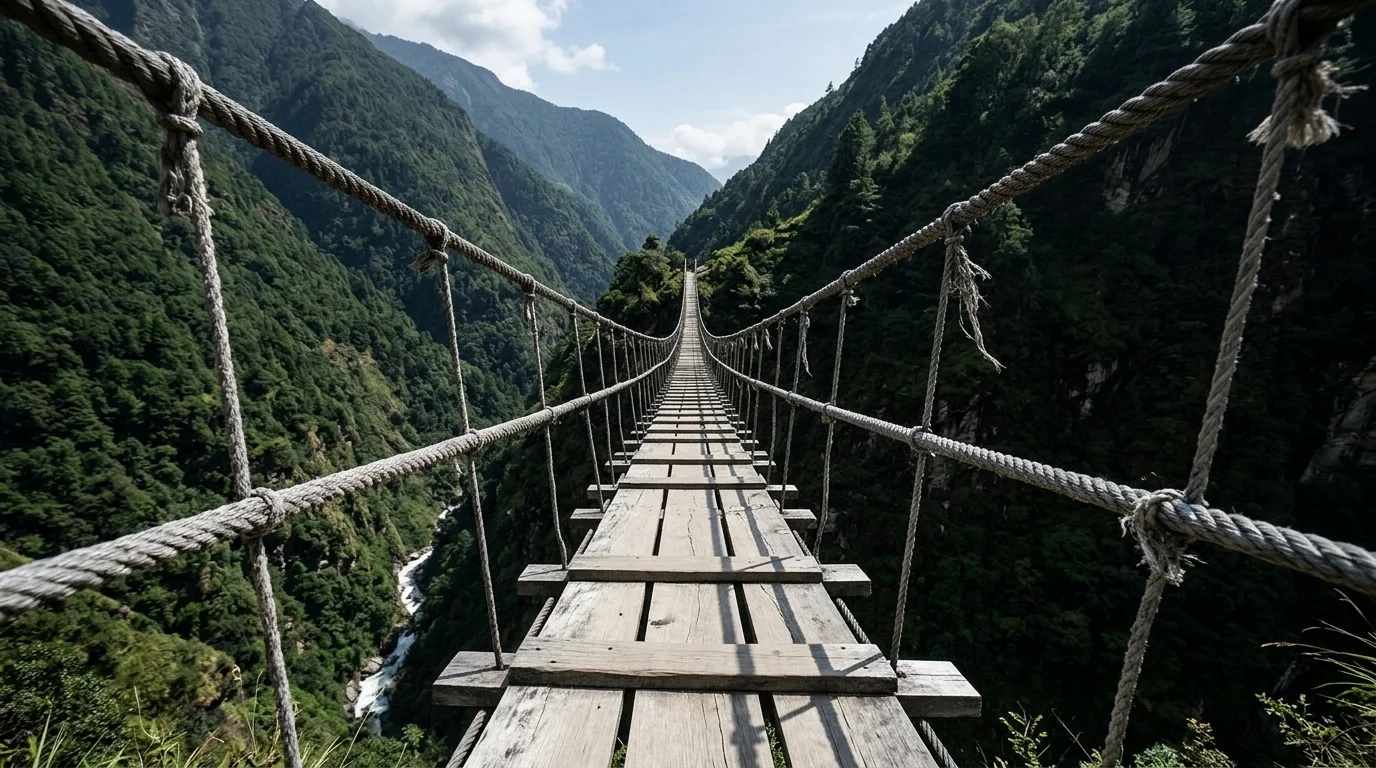
Two small villages in Himachal Pradesh, India, are getting their first proper pedestrian bridge, a rope-based footbridge spanning the gorge between Bagga and Pangliur that has long forced residents to take hours-long detours or cross on improvised log structures.
The state posted the construction tender on its e-procurement portal on June 20, 2026. The contract value and precise district have not been published in the available record, but place names suggest an interior location, possibly Kullu, Mandi or Chamba, where small hamlets are routinely separated from schools, health centers and markets by deep river valleys.
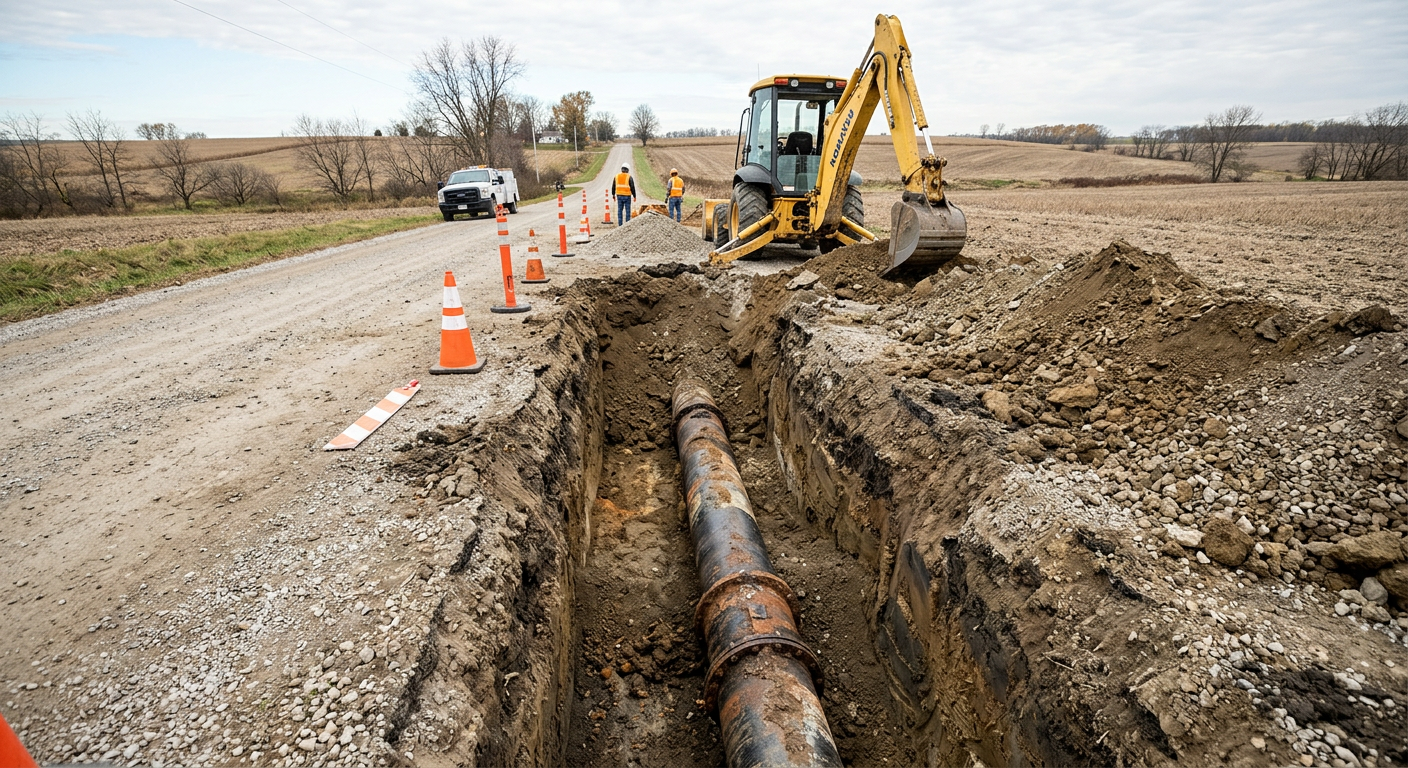
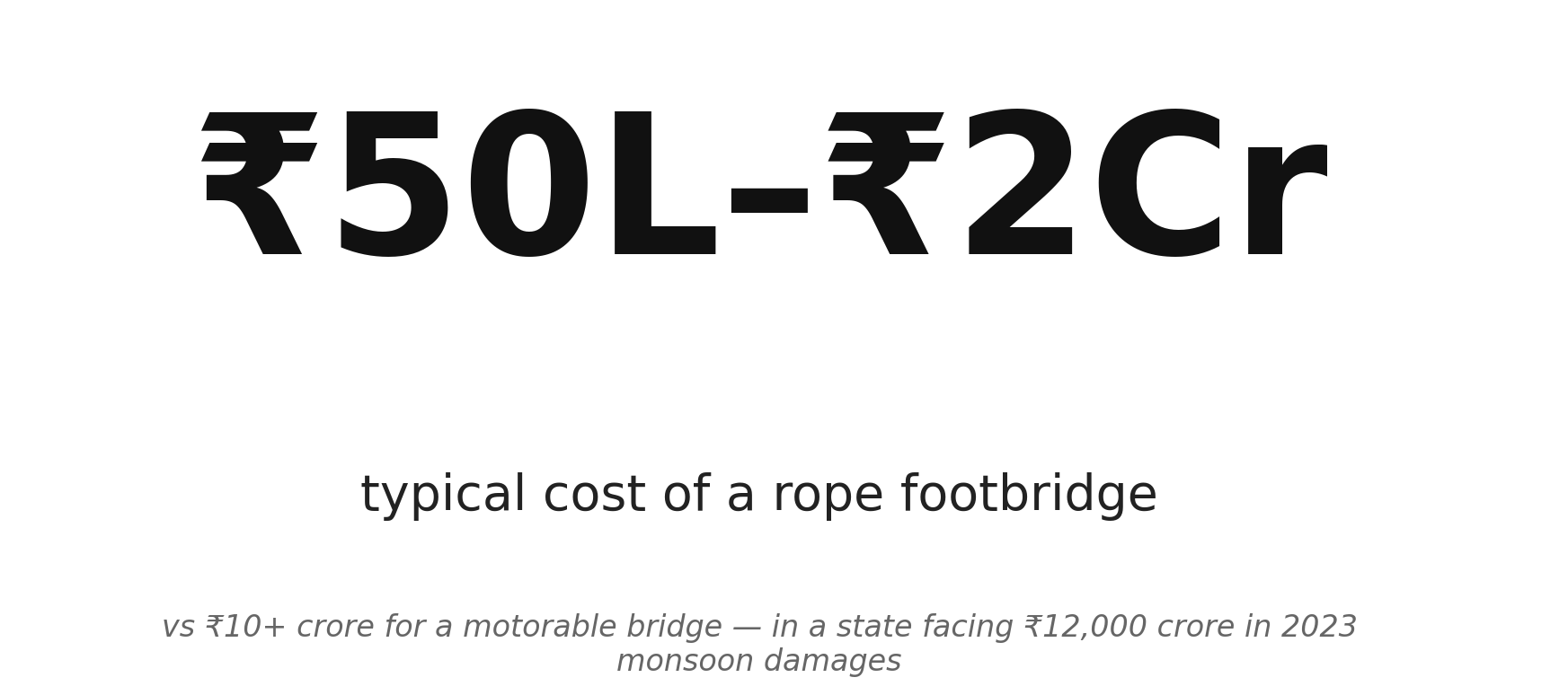
The project fits into a broader emergency infrastructure push that Himachal Pradesh has been running since the catastrophic monsoon of July and August 2023, which killed more than 400 people, destroyed or damaged over 2,000 roads and bridges, and caused an estimated ₹12,000 crore in damages. For the state government, rope footbridges have become a practical answer to an enormous backlog: they typically cost between ₹50 lakh and ₹2 crore, far less than the ₹10 crore or more required for a motorable bridge, and they can be built faster and in terrain where cutting a new road would be geologically risky.
Source: NationGraph.
The human cost of missing bridges in this part of India is well documented. Regional reporting from outlets including The Tribune and Hindustan Times has described students walking three to five hours to reach school and pregnant women dying en route to hospitals in villages where no crossing exists. A rope footbridge does not solve every problem, but it can collapse that journey to minutes.
Himachal Pradesh, home to roughly 7 million people across some of the most rugged terrain in South Asia, has hundreds of habitations still classified as unconnected despite decades of rural road programs. The central government's Pradhan Mantri Gram Sadak Yojana, now in its third phase, has increasingly funded pedestrian bridges where roads are not feasible.
The contract award and a construction timeline should become public as the tender process concludes.