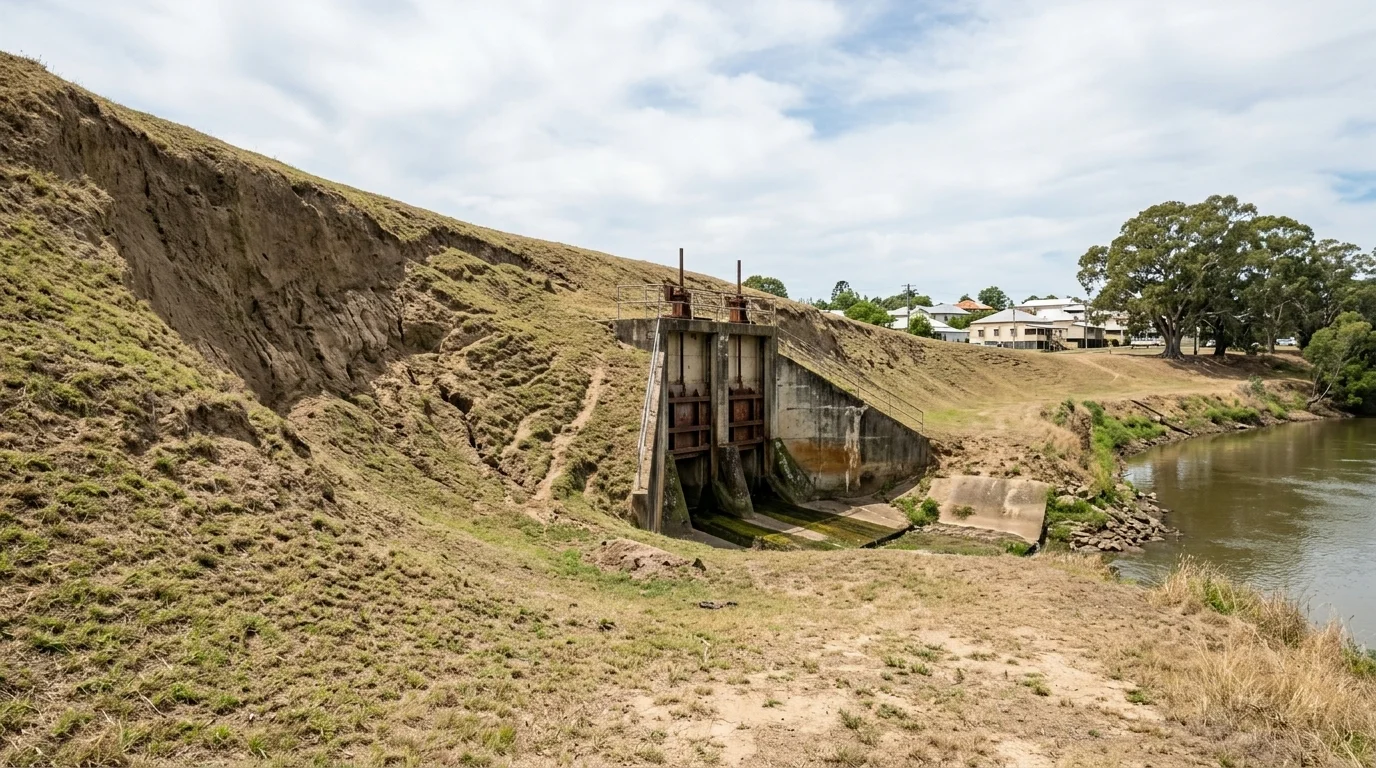
Clarence Valley, in northern New South Wales, is moving to repair flood levees at 20 sites across the Grafton area, nearly five years after floodwaters came within centimetres of inundating the town's CBD in one of Australia's most dramatic near-misses.
In February 2022, the Clarence River peaked at 7.66 metres at Grafton, just 34 centimetres below the levee crest. The entire town was evacuated, but the levee held. Downstream communities were not as fortunate: South Grafton, Maclean, Ulmarra, and other villages along the river suffered significant flood damage, and the disaster exposed years of deferred maintenance on the valley's secondary levees, floodgates, and drainage structures.
The 2022 floods, part of a broader Northern Rivers disaster that caused an estimated $5.8 billion in insured losses across New South Wales, triggered the federal-state Disaster Recovery Funding Arrangements and ultimately led to the creation of the NSW Reconstruction Authority. Clarence Valley Council, which serves around 53,000 residents across Grafton, Maclean, Yamba, and dozens of smaller river communities, has since been working through a multi-year assessment and rebuild program. The 20-site Grafton area repair package is a central piece of that effort.
The scale of the task reflects a challenge that goes beyond any single flood event. The Grafton levee itself was built up piecemeal from the 1960s onward and raised to its current height following the 1976 flood. Many of the secondary levees and associated structures across the valley have never received the same attention, leaving smaller communities with patchwork protection. The NSW Flood Inquiry report in 2022 recommended significant reinvestment in levee integrity statewide, and insurers and federal reviewers have increasingly argued that spending on mitigation upfront is cheaper than funding disaster recovery afterward.
Local frustration over the pace of repairs since 2022 has remained a live political issue in the Clarence and Page electorates, where flood mitigation carries consistent community and political weight. The council relies heavily on state and federal grants to fund infrastructure at this scale.
The repair contract, listed on the NSW Government procurement portal, covers both final design and physical construction across all 20 sites under a single arrangement. A contract value was not disclosed in the procurement record. With the next wet season approaching, how quickly work can get underway will be a closely watched measure of whether the post-2022 recovery process is finally delivering on the ground.