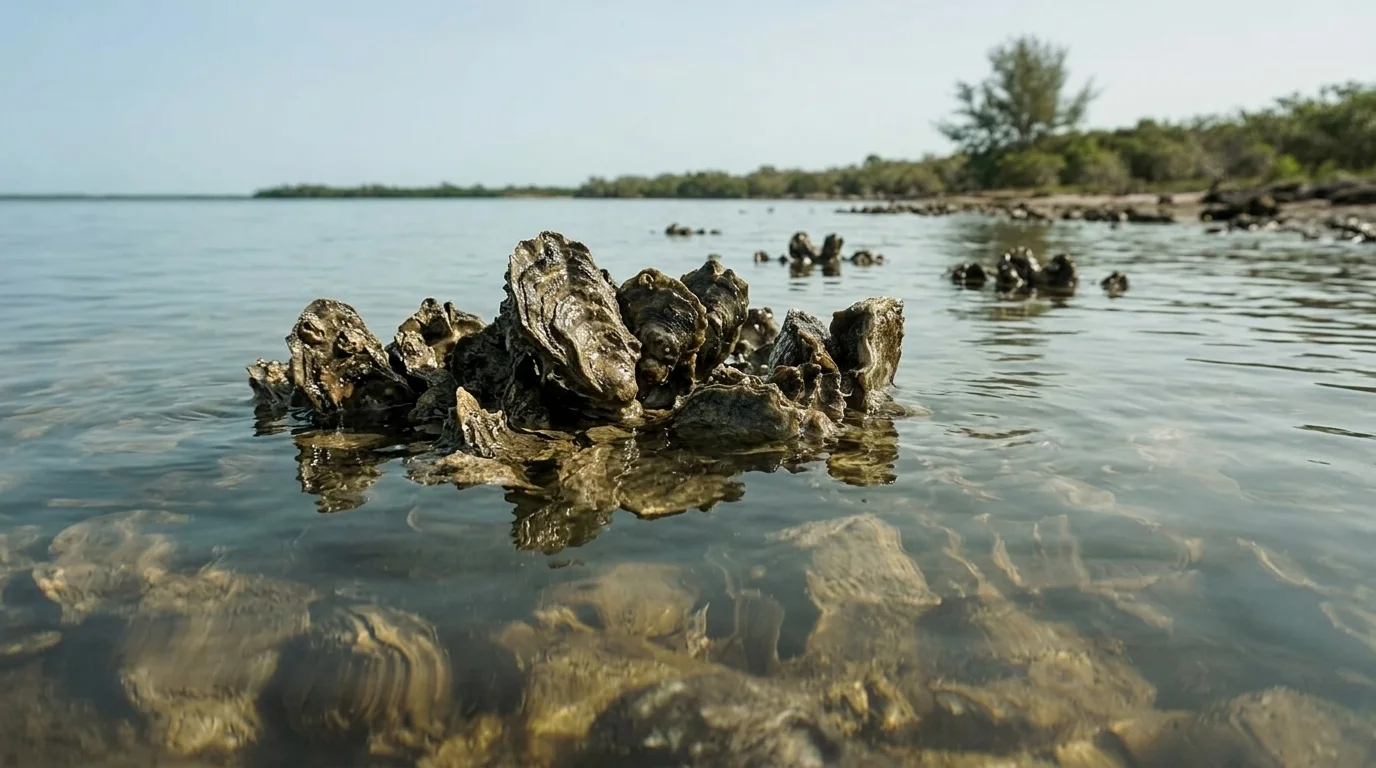
Manatee County, Florida is moving forward with an oyster restoration project aimed at rebuilding the coastal reefs that once filtered the bay waters surrounding Bradenton, Anna Maria Island and Longboat Key, reefs that have largely disappeared over decades of dredging, pollution and development pressure.
The effort comes as the county's coastal waters are still recovering from compounding disasters. In March 2021, 215 million gallons of polluted wastewater from the Piney Point phosphate plant flooded into Tampa Bay, triggering a red tide event that killed an estimated 1,600 tons of marine life. Since then, hurricanes Idalia, Helene and Milton have repeatedly battered the coastline, accelerating shoreline erosion and degrading whatever habitat remained.
Oysters are a proven tool for addressing both problems. A single adult oyster filters up to 50 gallons of water daily, pulling nitrogen, sediment and algae out of the water column. Oyster reefs also build vertical structure along the shoreline, absorbing wave energy and reducing storm surge damage, a growing priority as the Gulf Coast faces more intense hurricane seasons. Tampa Bay has already lost roughly 95% of its historic oyster reef coverage.
The county has posted a solicitation for contractors to carry out the restoration work. The specific project sites and contract value are not listed in the public posting, and the county has not yet released those details.
Manatee County sits between Tampa Bay and Sarasota Bay, both designated by the EPA as estuaries of national significance and both under serious ecological stress. The county's population of roughly 440,000 is growing fast, adding runoff and nutrient pollution to waters already strained by legacy industrial contamination.
Funding for oyster restoration in the region has historically come from a mix of federal, state and local sources, including NOAA's Restoration Center, BP oil spill settlement funds under the RESTORE Act, and the Southwest Florida Water Management District. Which funding sources are backing this project has not yet been announced.
Once a contractor is selected, the scope and timeline of the restoration work will come into sharper focus.