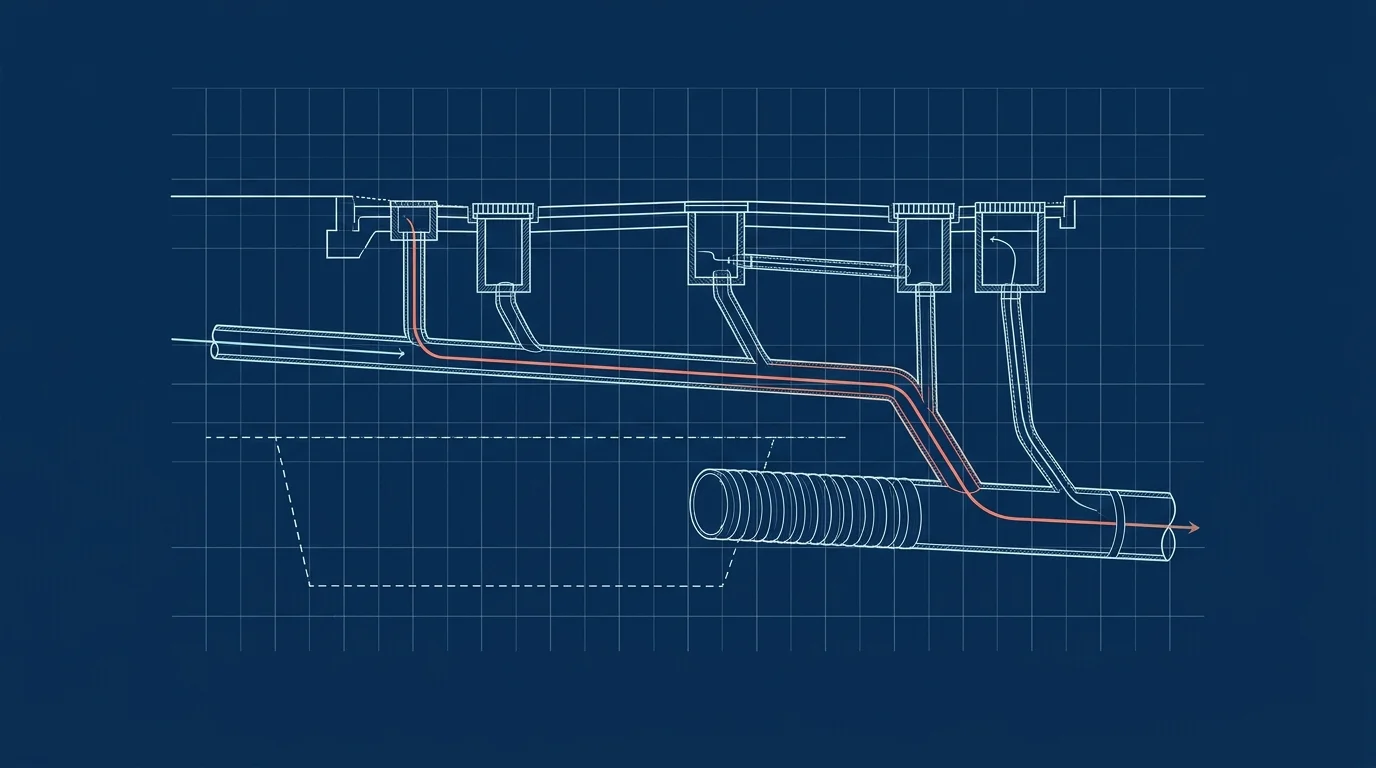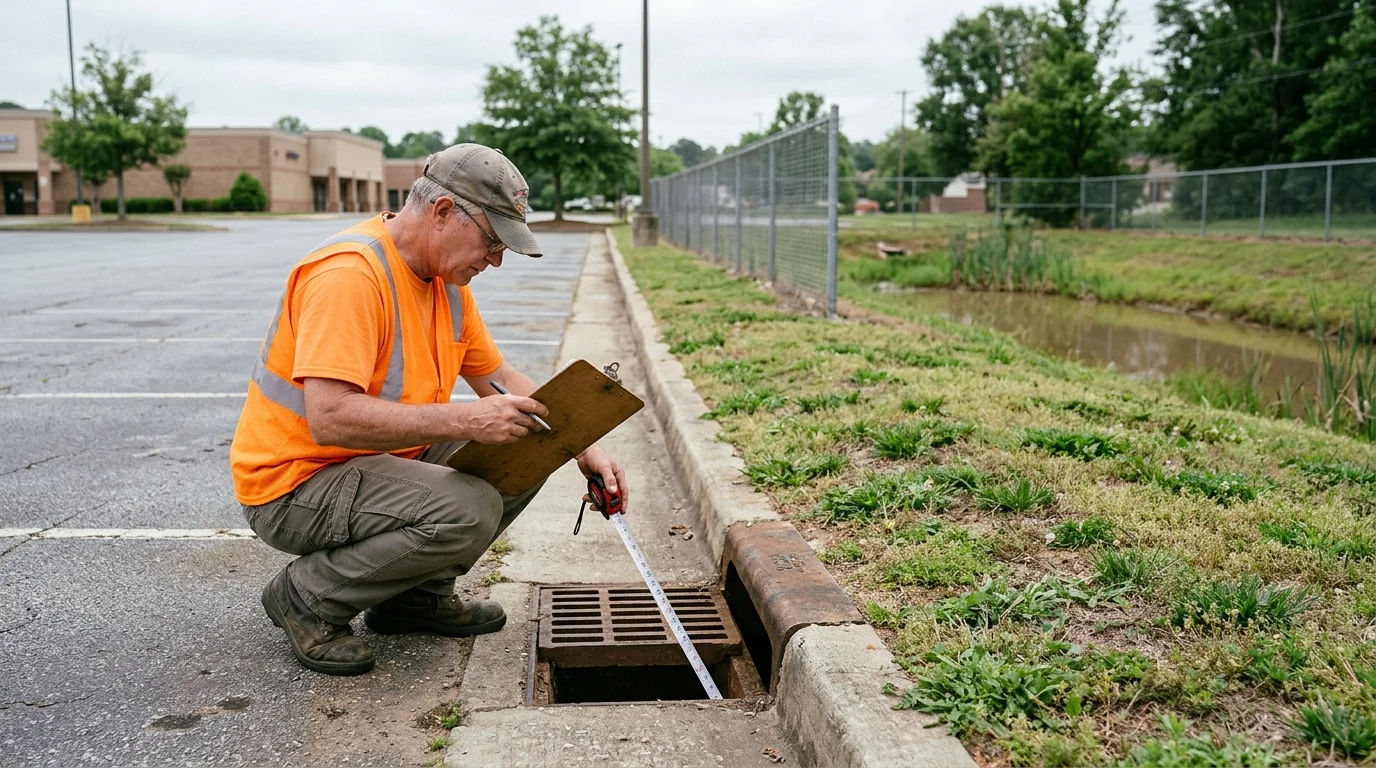
Stormwater procurement RFPs in Georgia have been running at roughly three to four times their historical monthly average for most of 2026, reaching peaks of 50 to 60 filings in a single month earlier this year. The activity is not concentrated in Atlanta or any single agency. It is spread across two dozen municipalities, from Gainesville and Covington to Statesboro, Baxley, Dunwoody, and Alpharetta, all moving on roughly the same schedule. The reason is a pair of regulatory clocks counting down toward the same calendar window.
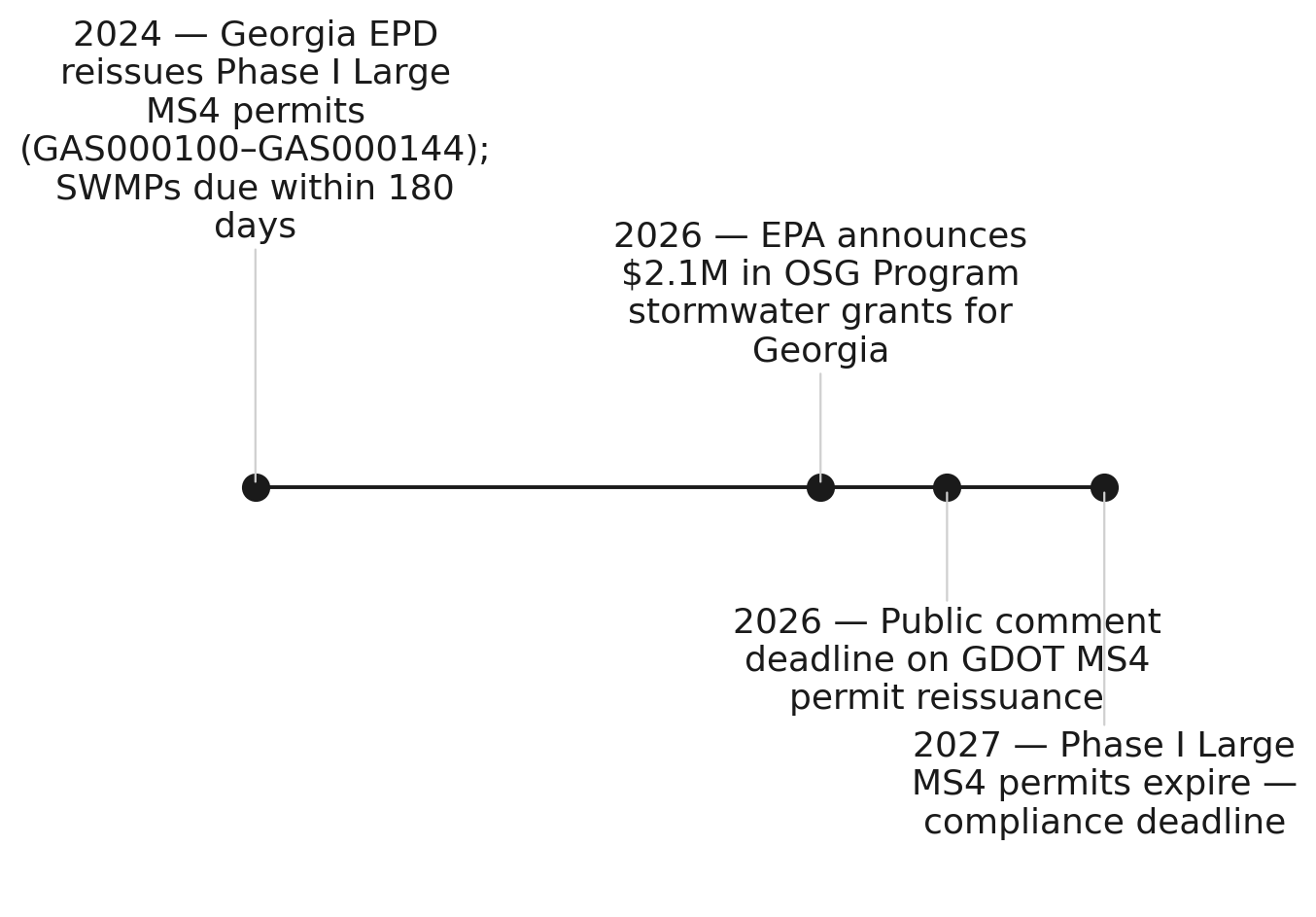
Georgia EPD reissued its Phase I Large MS4 NPDES Permits (GAS000100 through GAS000144) on June 11, 2024, with an expiration date of April 11, 2027. Those permits require each covered municipality to maintain and update its own Stormwater Management Program, with new SWMPs due within 180 days of the effective date. Separately, the GDOT MS4 Permit (GAR041000), which governs stormwater discharges from state transportation infrastructure rather than municipal drainage systems, expires January 2, 2027. Georgia EPD held a public stakeholder meeting on its reissuance on September 1, 2026, with a written comment deadline of October 2, 2026. Both permits operate under the same Clean Water Act NPDES authority, but they cover different permittees and trigger different types of procurement work: cities are upgrading drainage systems and best-management-practice infrastructure, while GDOT-related contracts address right-of-way stormwater controls. The two deadlines should not be read as a single program. They are converging independently.
That convergence is what the RFP volume is measuring. Georgia has more than 500 municipalities and counties, many holding MS4 permits under Phase I or Phase II designations. Rapid suburban growth in outer-ring Atlanta counties, including Gwinnett, Cobb, Newton, and Hall, has steadily expanded impervious surface coverage, making stormwater compliance more expensive and technically complex with each permit cycle. Unlike Florida's coastal hardening push or Texas's disaster-recovery spending, Georgia's stormwater wave is primarily regulatory in origin. There is no single hurricane or federal disaster declaration behind it. The procurement is happening because permits expire and enforcement follows.
Source: NationGraph.
Federal money has entered the picture, though it accelerates compliance rather than causes it. According to an EPA press release, the agency announced $2.1 million in Sewer Overflow and Stormwater Reuse Municipal Grants for Georgia on April 30, 2026, through the OSG Program, with EPA Assistant Administrator for Water Jess Kramer describing the funding as support for states working to 'upgrade stormwater management systems to address the threat of aging and inadequate infrastructure.' Separately, the City of Roswell received a $3.45 million EPA Congressionally Mandated stormwater grant beginning June 2026 and running through December 2027, and the City of Tybee Island holds a $2.6 million EPA grant active through April 2027. The Georgia Environmental Finance Authority, which administers the state's Clean Water State Revolving Fund, is also financing stormwater projects statewide through low-interest loans, with a 2026 Base and Supplemental Project List currently active.
The OSG grants and CWSRF loans are distinct instruments serving different purposes: the federal grants fund specific planning, design, and construction projects, while the revolving fund provides loan financing that cities repay over time. Neither changes the permit deadlines, but both lower the cost of meeting them, and their availability in the same window as the 2027 expiration dates has made this permit cycle more financially accessible than previous ones.
For residents, the visible result will be construction activity, drainage assessments, and updated local ordinances tied to stormwater runoff, particularly in the fast-growing suburbs where impervious surface is expanding fastest. Compliance work under MS4 permits typically produces improvements to detention ponds, catch basin retrofits, illicit discharge detection programs, and public education requirements. Most of it is unglamorous. Almost none of it generates a single large announcement, which is why the aggregate procurement signal is the clearest way to see what is actually happening.
The next signal worth watching is Georgia EPD's formal reissuance of the GDOT permit. The September 2026 stakeholder comment period has closed. If EPD issues a draft permit for public comment in the coming months, it will set a new compliance timeline for transportation-related stormwater work that could extend procurement activity well into 2028. Municipal permit renewals in 2027 will follow the same pattern. The wave, in other words, does not stop when the current permits expire. It restarts.