Doctors have been telling patients to eat more vegetables for decades. A federal program now scaling up wants to give low-income patients the means to actually do it, by writing prescriptions for fresh produce that work like vouchers at grocery stores and farmers markets.
The Phase 2 Produce Prescription Pilot Program, posted on Grants.gov in late June 2026, is the latest step in a broader federal push to treat food as a medical intervention. The "Phase 2" label matters: it means an earlier pilot showed enough promise to justify scaling up, rather than starting from scratch.
The program falls under the Gus Schumacher Nutrition Incentive Program (GusNIP), created by the 2018 Farm Bill through USDA's National Institute of Food and Agriculture. GusNIP carved out dedicated federal funding specifically for produce prescriptions, separate from the better-known "Double Up" SNAP incentive programs. Phase 2 awards under this track have historically ranged from roughly $500,000 to $3 million over three to four years.
Source: NationGraph.
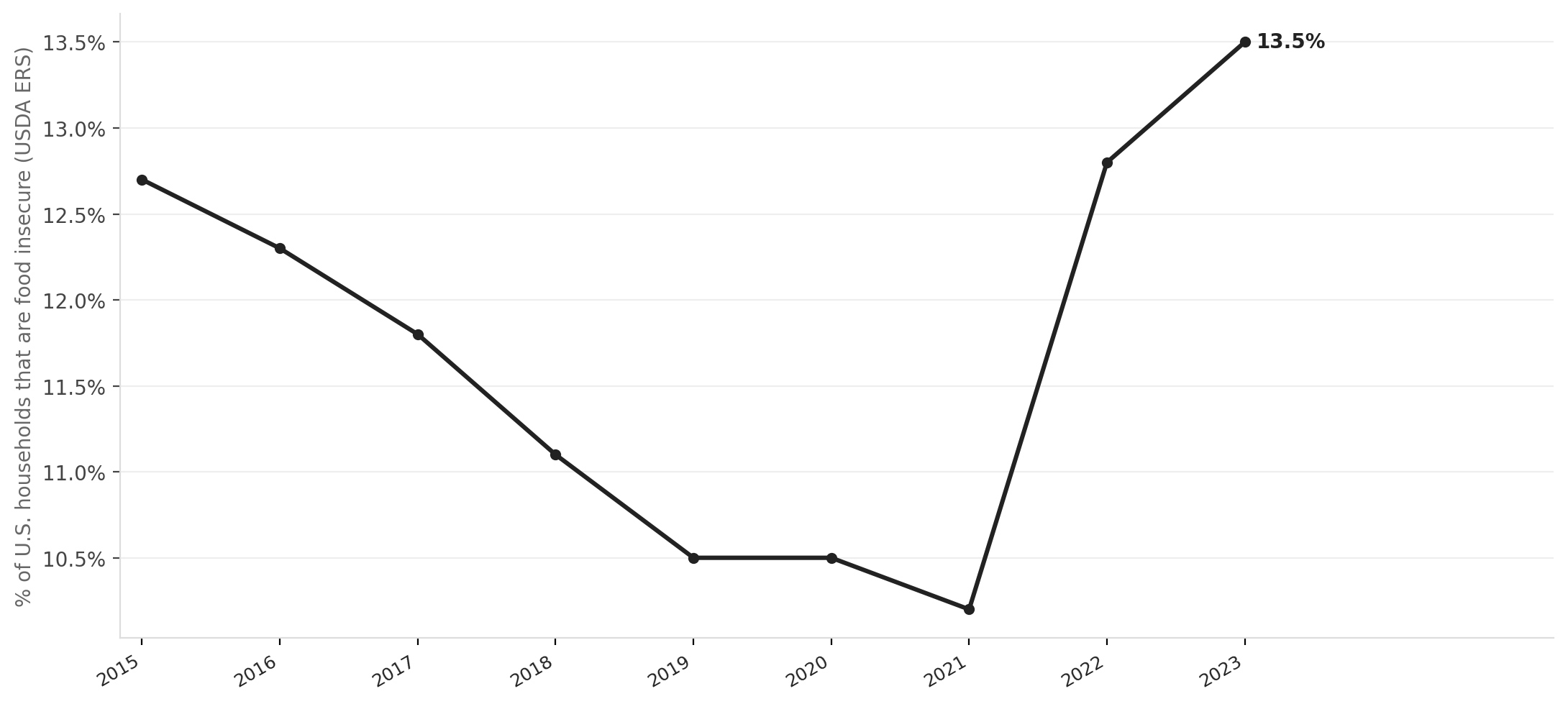
The timing reflects a genuine shift in federal health policy. The September 2022 White House Conference on Hunger, Nutrition, and Health, the first of its kind in over 50 years, named "Food is Medicine" a national priority and set off a wave of state Medicaid waivers that now allow Medicaid dollars to pay for produce prescriptions in states including North Carolina, Massachusetts, California and New York. Meanwhile, food insecurity has remained stubbornly elevated since pandemic-era SNAP emergency allotments ended in March 2023, with USDA reporting 13.5% of U.S. households food insecure in 2023, up from 10.2% in 2021.
The program targets patients with diet-related conditions like diabetes, hypertension and obesity, which collectively cost the U.S. an estimated $1.1 trillion a year. A 2023 study in the American Heart Association journal Circulation found produce prescription participants showed improvements in blood pressure, BMI and food security. Critics have raised questions about whether short-term voucher programs produce lasting behavior change once the prescriptions end, a tension the Phase 2 expansion will need to address.
Note: The agency and jurisdiction fields are not listed in the posted record. Readers and potential applicants should check the Grants.gov listing directly to confirm the administering agency, eligible applicant types, and the geographic area this round will serve.