Doraville, Georgia is moving forward with the next stretch of a long-planned trail that will thread through its residential neighborhoods, linking green space and flood control in a small city that has spent years remaking itself after the closure of its largest employer.
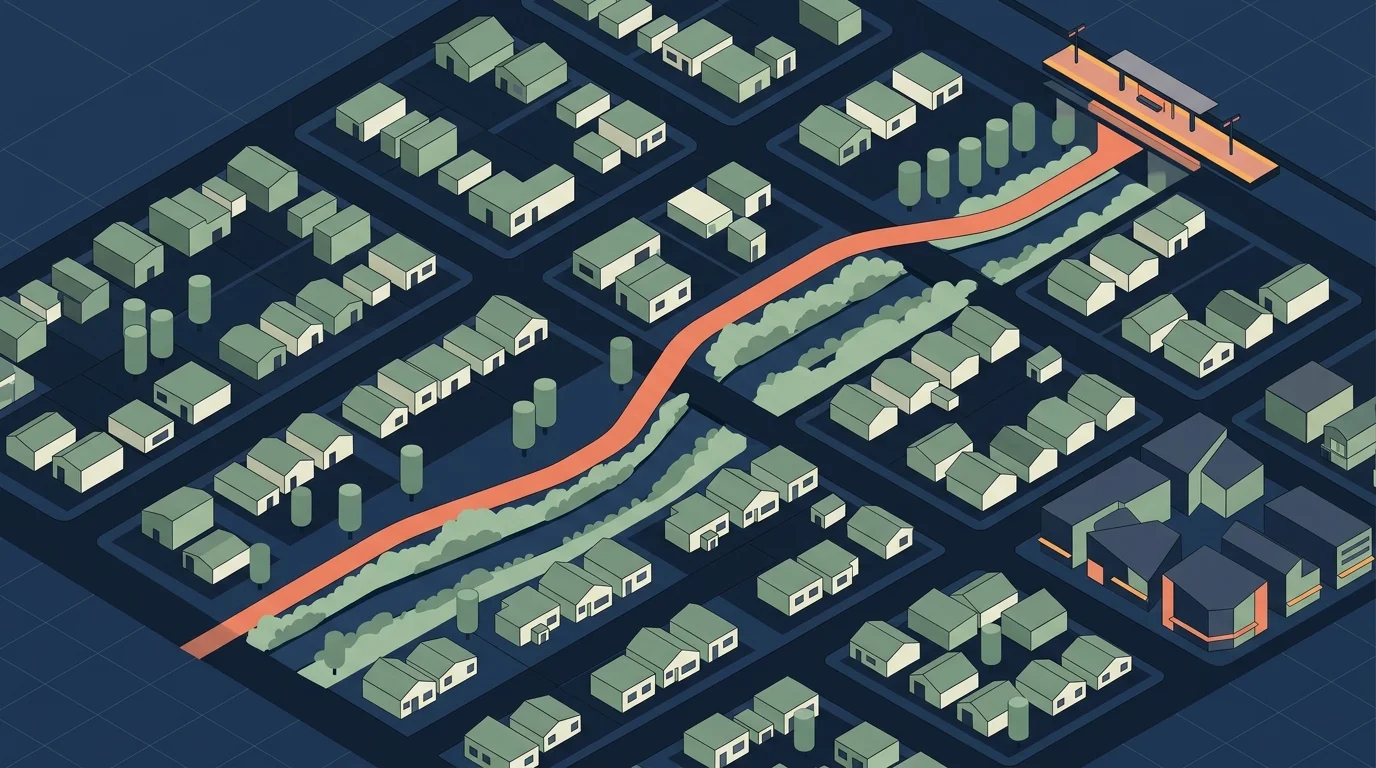
The city is now seeking a construction contractor for Phase 2a of the Peachtree Creek Greenway Doraville Extension, the latest segment of a roughly 12-mile multi-use trail planned to run through DeKalb County, connecting Doraville, Chamblee, Brookhaven, and Atlanta along the Peachtree Creek watershed. The project doubles as green infrastructure, managing stormwater runoff in areas where flooding along Peachtree Creek tributaries has long been a problem for residents.
Doraville, a city of around 10,000 to 11,000 people, is one of metro Atlanta's most ethnically diverse communities, home to large Korean, Latino, and Vietnamese populations concentrated along the Buford Highway corridor. The 2008 closure of a General Motors assembly plant left a 165-acre hole in the city's fabric; that site is now being redeveloped as Assembly Yards, a billion-dollar mixed-use project expected to bring thousands of new residents and workers. The greenway, designed to connect existing neighborhoods to new development and to the Doraville MARTA station, is widely seen as central to that vision.
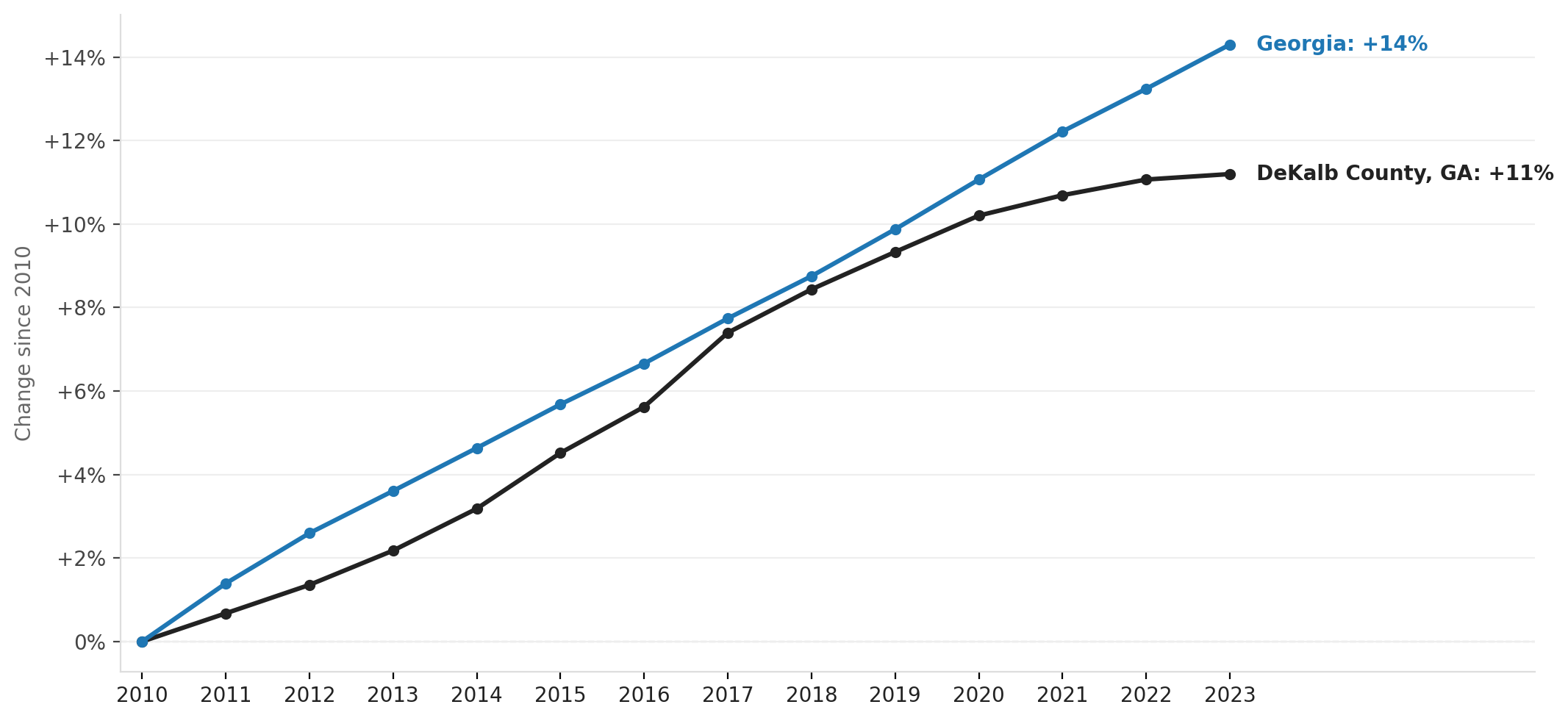
Source: U.S. Census Bureau, American Community Survey.
Earlier segments of the greenway were completed in Brookhaven, establishing the trail's southern foundation. Phase 2a pushes the route northward into Doraville proper, where dedicated green space is scarce and most streets were built around the car. Funding for the project has been assembled from multiple sources, likely including DeKalb County SPLOST revenues, federal transportation grants, and Georgia DOT contributions, a patchwork approach typical for linear trail projects that cross multiple jurisdictions and require incremental right-of-way assembly through developed neighborhoods.
The greenway model has proven out elsewhere in the region. The Atlanta BeltLine has demonstrated that trail infrastructure drives property values and economic activity, a lesson Doraville officials have pointed to in making the case for the project. But that same success has raised questions in some communities about displacement, and similar concerns have surfaced around the Peachtree Creek Greenway as Doraville's redevelopment accelerates.
With the contractor search now underway, construction on Phase 2a is the next concrete step in a buildout that has unfolded over more than a decade. When it will be complete depends on how quickly a contractor is selected and how construction proceeds through a neighborhood corridor that is already in the middle of significant change.