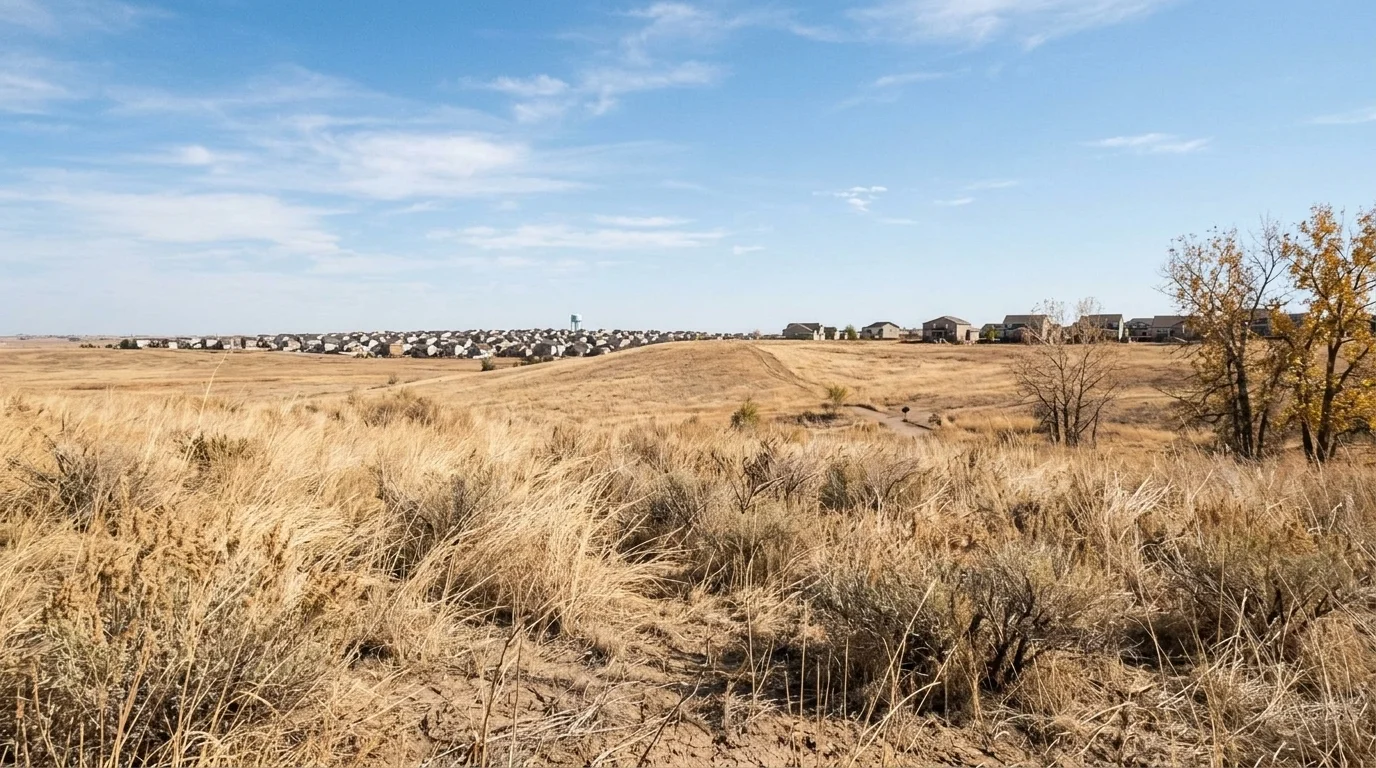
A former chemical weapons facility turned wildlife refuge on Denver's northeastern edge is getting its second round of wildfire fuel reduction work, as federal land managers race to keep pace with suburban growth pressing against one of Colorado's most unusual open spaces.
The Rocky Mountain Arsenal National Wildlife Refuge, a 15,000-acre expanse in Commerce City managed by the U.S. Fish and Wildlife Service, is seeking contractors for the Tram Hills Fuel Reduction Phase 2 project. The work continues a phased effort to cut down the grasses, shrubs, and invasive species that can turn Colorado's Front Range prairies into fast-moving fire corridors. Specific acreage and contract value were not detailed in the posting.
The urgency behind this kind of work crystallized in December 2021, when the Marshall Fire tore through Louisville and Superior driven by hurricane-force winds, destroying more than 1,000 homes and becoming the most destructive wildfire in Colorado history. It was a grassland fire, not a forest fire, and it moved through suburbs in hours. That disaster forced a reckoning among Front Range land managers: open prairie near dense housing is not a firebreak. It is fuel.
The Arsenal sits squarely in that risk zone. Commerce City's population has roughly doubled since 2000 to more than 62,000, and new housing developments now border the refuge directly. A fast-moving grass fire ignited under drought and wind conditions could threaten thousands of homes across Denver's northeast neighborhoods.
The refuge's own history adds another layer of complexity to any ground-disturbing work there. From the 1940s through the 1980s, the site manufactured mustard gas, napalm and industrial pesticides, earning a grim reputation as one of the most contaminated places in the country. A $2.1 billion Superfund cleanup preceded its conversion to a wildlife refuge in 2004. Today it hosts bison, deer and raptors, and serves as one of the few large natural areas accessible to Denver's diverse northeast communities.
Fuel reduction work at refuges like this one has received a significant boost in recent years. The Bipartisan Infrastructure Law and the Inflation Reduction Act together directed roughly $4.8 billion toward wildfire risk reduction on federal lands, and the Fish and Wildlife Service has been steering portions of that money to refuges in high-risk wildland-urban interface zones along the Front Range.
The phased approach at Tram Hills reflects how modern fuels management works: repeated treatments over multiple years using a combination of mowing, mechanical clearing, prescribed burns and sometimes targeted grazing to reduce fuel loads while encouraging native shortgrass prairie species to crowd out invasive plants like cheatgrass, which ignites and spreads more aggressively than native grasses.
Contractor selection is underway, with treatment work expected to follow. No completion timeline was specified in the solicitation.