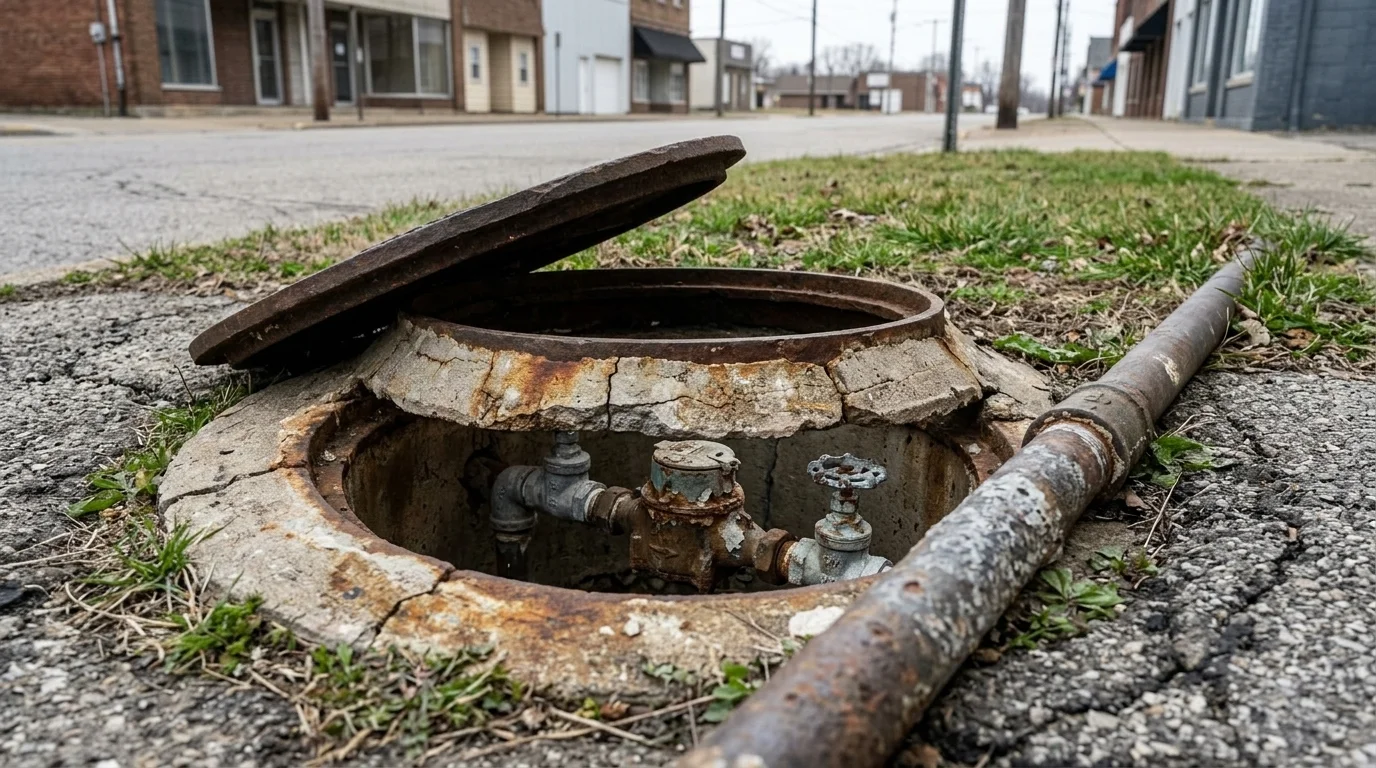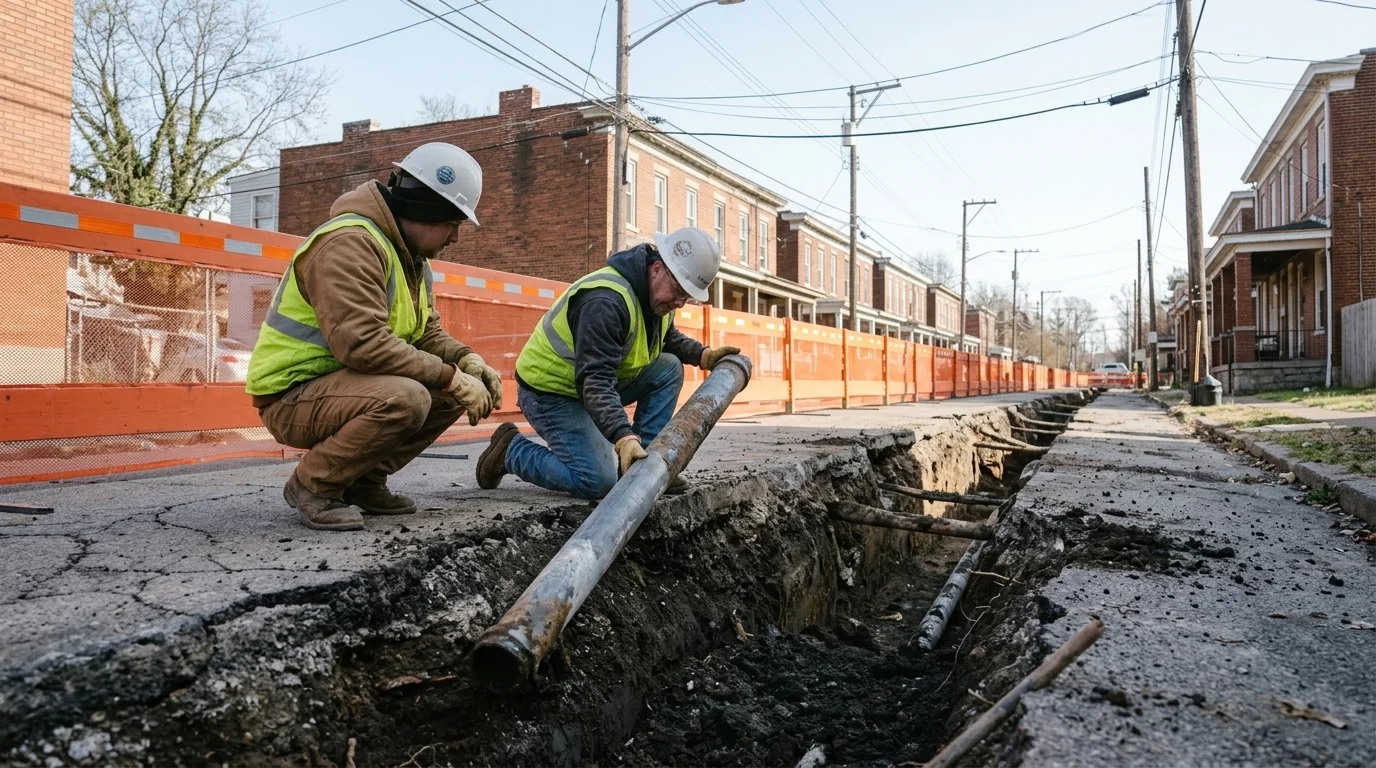
Cincinnati is pushing deeper into one of the largest public health infrastructure efforts in its history: ripping lead water pipes out of the ground before a 2037 federal deadline requires every last one to go.
Greater Cincinnati Water Works, which supplies drinking water to roughly 1.1 million people across Hamilton County and parts of surrounding counties, has been working on lead line replacement since 2016, when the utility launched a voluntary cost-sharing program in the wake of the Flint, Mich. water crisis. But the pace is now shifting. The city has posted a second lead service line replacement contract for 2026 as it moves from early-stage replacements into the kind of sustained, multi-contractor operation needed to hit federal targets.
The scale of the problem is significant. GCWW estimates roughly 40,000 known or suspected lead service lines remain in its system, concentrated in neighborhoods with older housing stock built in the late 1800s and early 1900s, when lead pipes were standard. Communities like Lower Price Hill, the West End and parts of Avondale carry a disproportionate share of that burden, a legacy of decades of disinvestment.
For years, homeowners in Cincinnati faced bills of $2,000 to $8,000 to replace the private portion of a lead line on their property. Federal money from the 2021 Bipartisan Infrastructure Law, which set aside $15 billion nationally for lead pipe removal, has allowed GCWW to move toward covering the full cost in many cases. Ohio, with its dense concentration of aging industrial cities including Cleveland, Toledo, Akron and Youngstown, received one of the larger state allocations through the EPA's Drinking Water State Revolving Fund.
The legal pressure is just as significant as the funding. The EPA finalized its Lead and Copper Rule Improvements in October 2024, requiring water systems across the country to replace essentially all lead service lines within 10 years. The rule is considered one of the most consequential public health regulations in decades, though utilities have watched closely as the Trump administration's posture toward it has introduced uncertainty into long-term planning.
Cincinnati's acceleration mirrors efforts underway in other cities facing similar timelines. Philadelphia is in a second phase of its own replacement program, and Redford Township in Michigan has pushed into a third phase as Rust Belt communities race to catch up with decades of deferred work.
The dollar value and number of lines targeted under this contract were not specified in public procurement documents. Residents can follow the city's progress and contractor selection through Cincinnati's procurement portal.