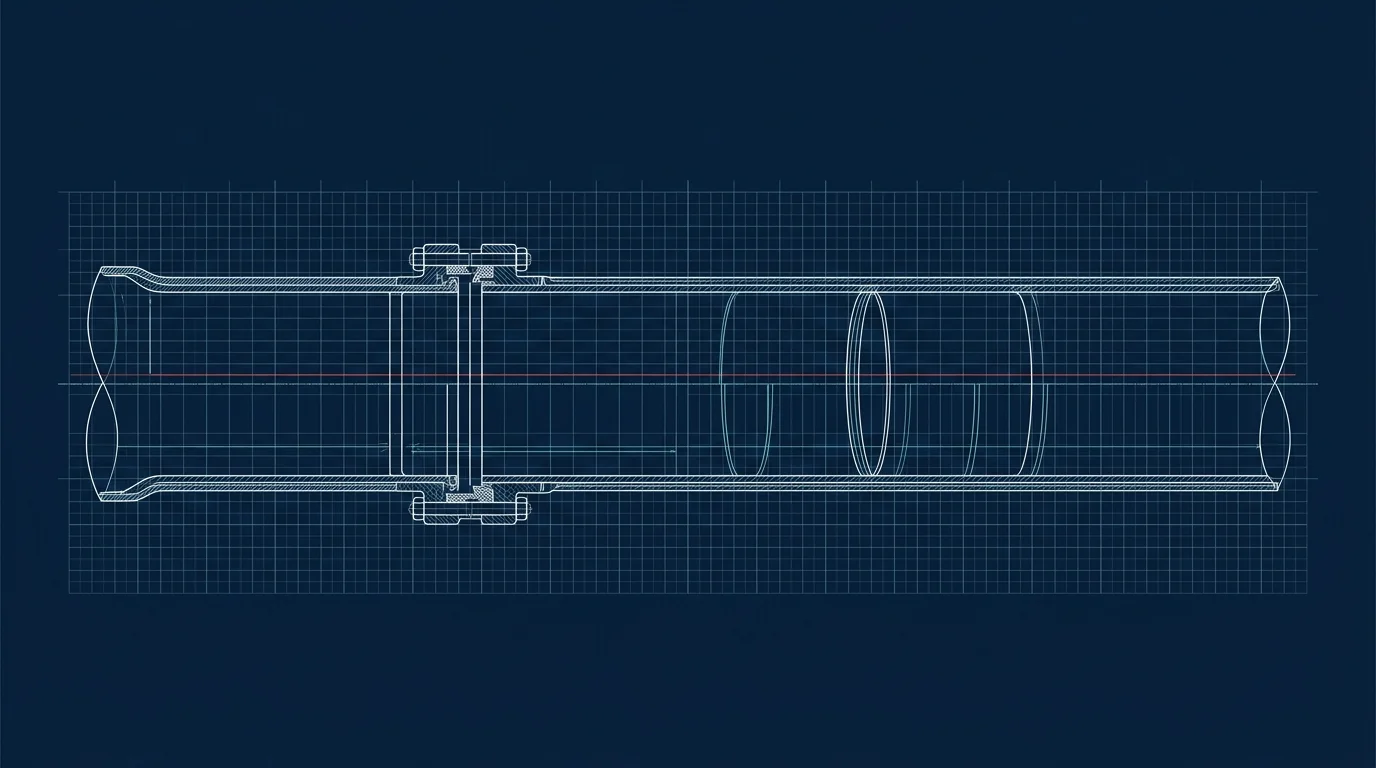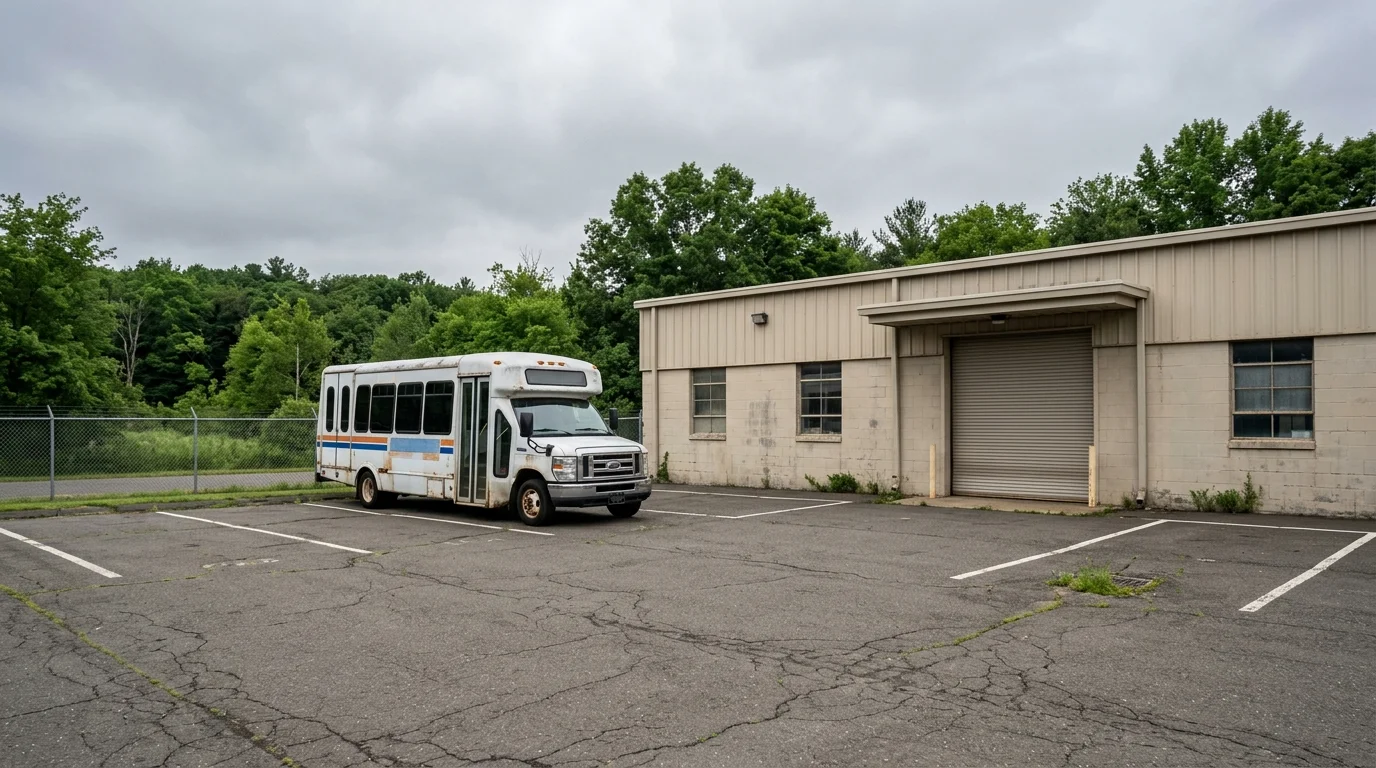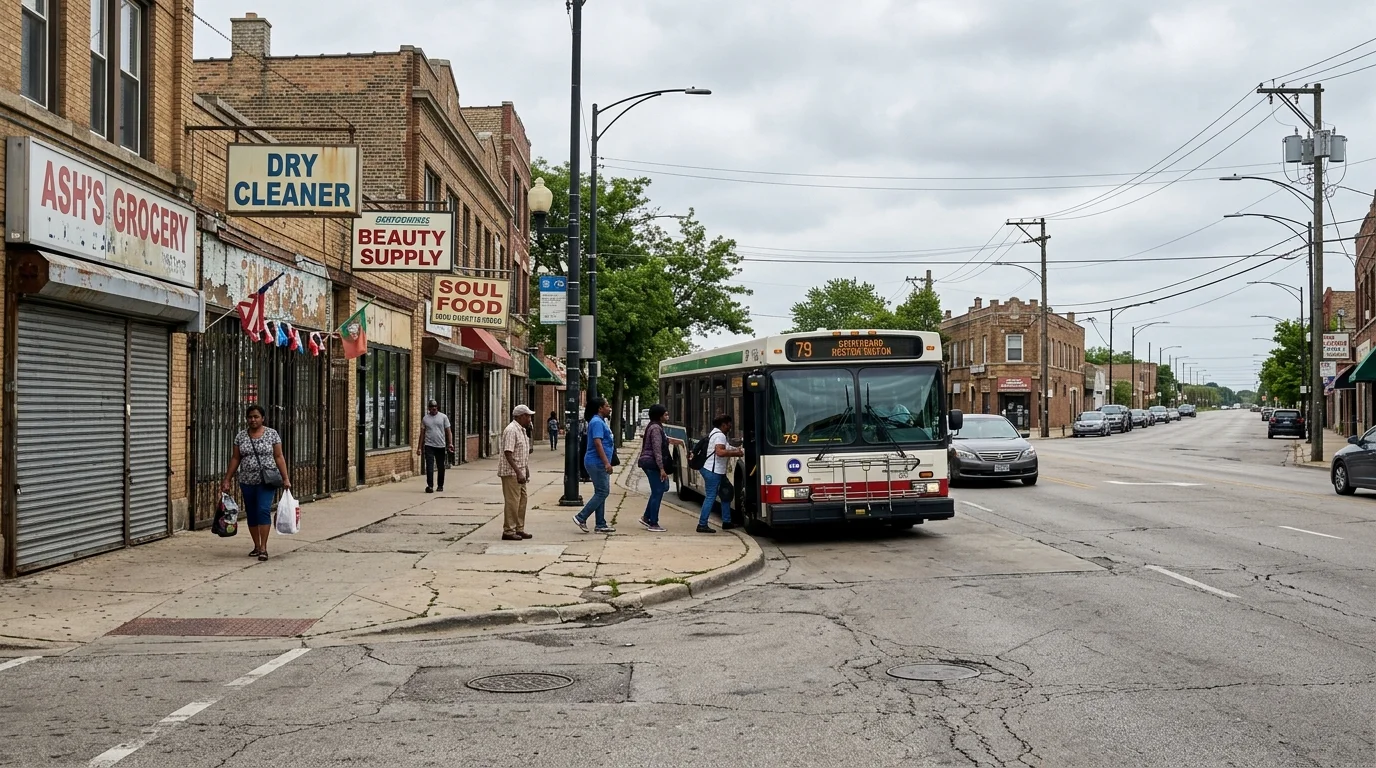
The 79th Street corridor in Auburn Gresham, Chicago's commercial spine dotted for decades with shuttered storefronts and deteriorating pavement, is finally getting a physical rebuild as the city moves forward with the first phase of a multi-phase street and transit overhaul.
The project targets one of the far South Side's most heavily used arterials. The No. 79 bus, which runs along 79th Street, is among the CTA's highest-ridership routes, carrying transit-dependent riders through a neighborhood where car ownership is lower than the citywide average. Pedestrian conditions on the corridor have long been a concern: Chicago's traffic fatalities hit a 15-year high in 2021 and remain elevated, with a disproportionate share concentrated on South and West Side arterials like this one.
Auburn Gresham, a majority-Black community of roughly 44,000 residents, was named one of 10 priority neighborhoods under Mayor Lori Lightfoot's INVEST South/West initiative when it launched in October 2019. The program promised coordinated public and private capital to reverse decades of disinvestment tied to redlining, manufacturing collapse, and population loss that cut the neighborhood's headcount nearly in half between 1970 and 2010. A $10 million Chicago Prize from the Pritzker Traubert Foundation followed in 2020, anchoring the Healthy Lifestyle Hub at 79th and Halsted, which opened in 2023. Street infrastructure was always supposed to come next.
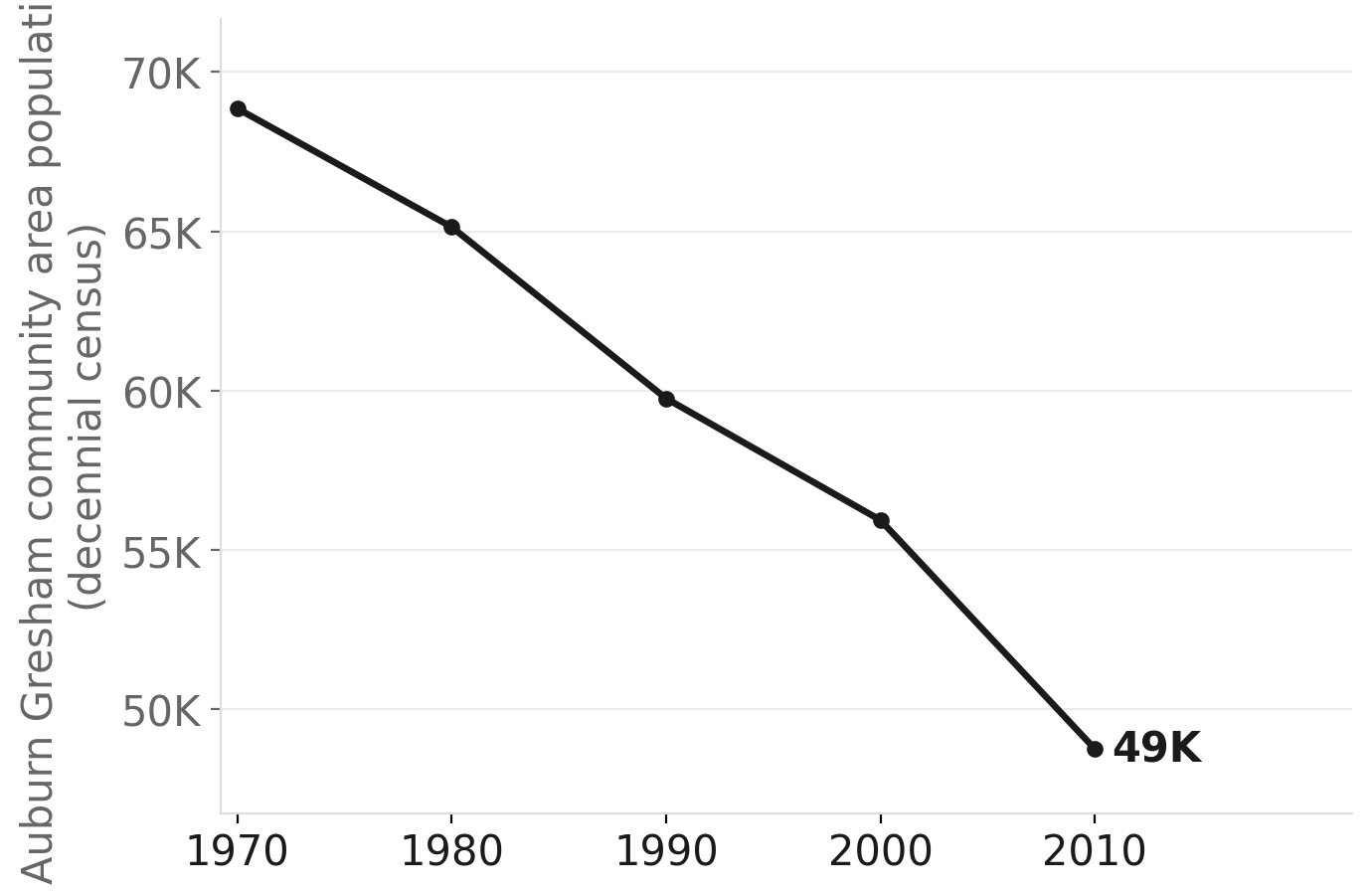
Source: NationGraph.
Now, six years after that designation, Chicago's Department of Transportation is soliciting contractors for the corridor work, with the "Section 1" label signaling this is the opening move in a longer, phased rebuild. Federal dollars from the 2021 Infrastructure Investment and Jobs Act have expanded Chicago's capacity for exactly this kind of corridor-scale project.
The effort arrives as Mayor Brandon Johnson navigates a tight city budget with a projected structural deficit, raising questions about whether South Side commitments inherited from the Lightfoot era will be fully honored. Ald. David Moore and the Greater Auburn-Gresham Development Corporation have pressed for years for the kind of visible, durable street investment that signals long-term commitment to a neighborhood. This project is also unfolding as the city pursues other major South Side transit investments, including a planned Red Line extension further south.
How quickly construction begins, and whether subsequent phases follow without the delays that have plagued other CDOT corridor projects, will determine whether 79th Street's transformation matches the ambition of the announcements that preceded it.