Oklahoma's most active housing developer right now is not the Oklahoma City Housing Authority, not the Oklahoma Housing Finance Agency, and not a private developer. It is Cherokee Nation, a sovereign government operating under its own construction program, its own federal loan instrument, and a decade-long blueprint for filling a $1.75 billion housing gap.
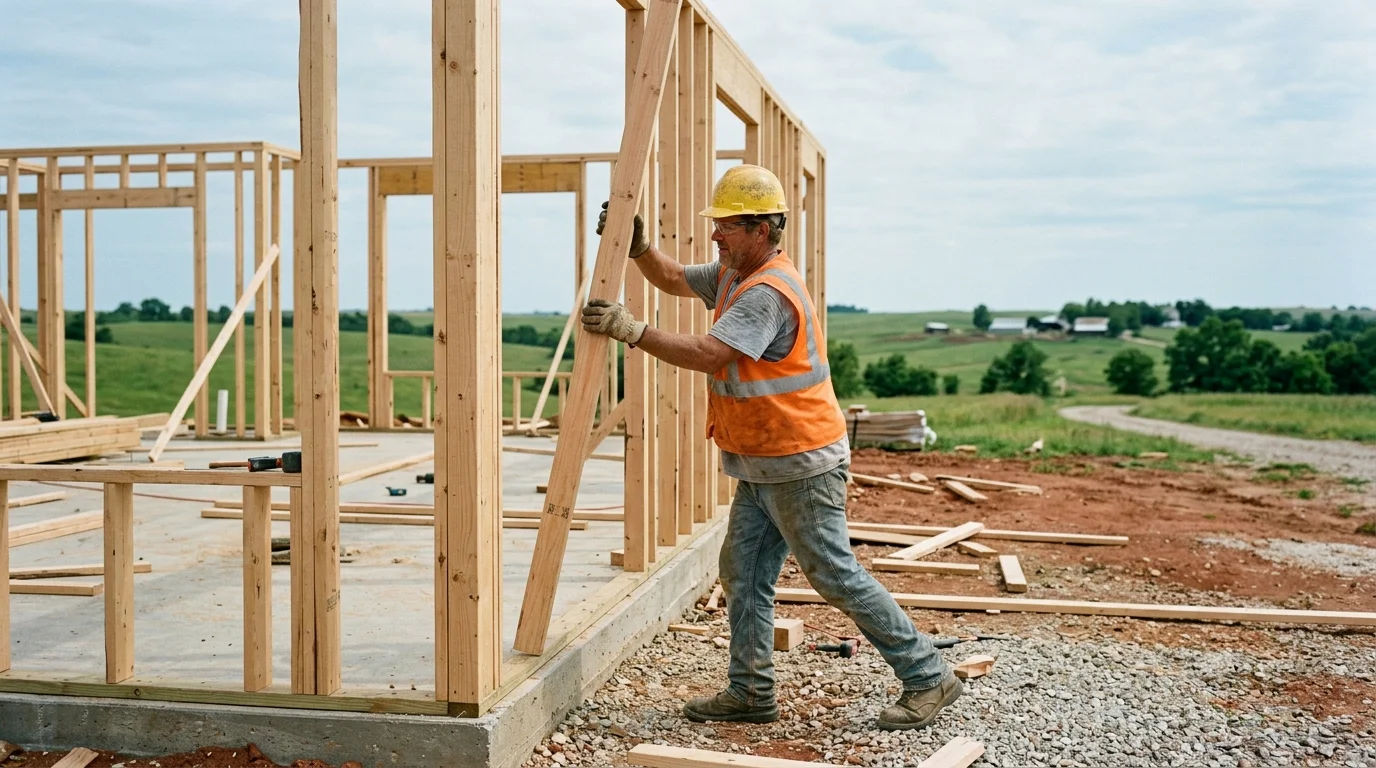
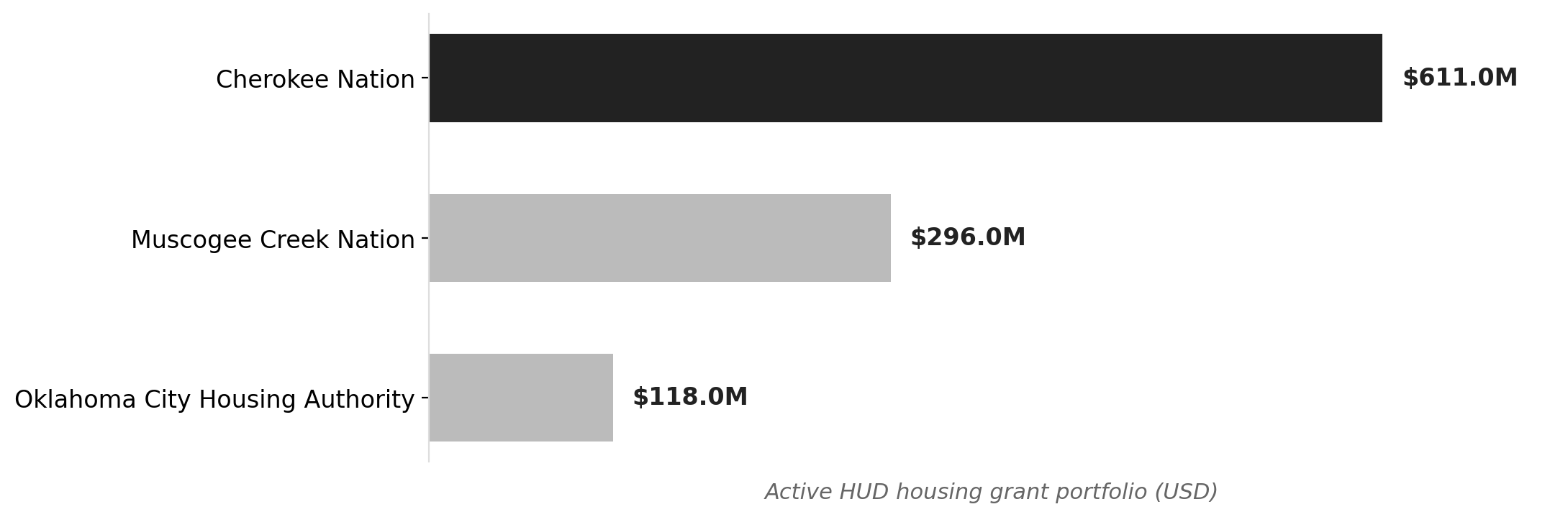
The tribe issued roughly 38 housing rehabilitation solicitations in the last 30 days alone, spread across Adair, Cherokee, Sequoyah, Delaware, Ottawa, Rogers, and Wagoner counties. That procurement pace is the visible edge of a much larger fiscal commitment. The Nation currently holds $611 million in active HUD housing grants, the largest housing-grant portfolio of any entity in Oklahoma, more than double the Muscogee Creek Nation's $296 million and more than five times the Oklahoma City Housing Authority's $118 million.
Two policy decisions explain why the activity is concentrated now. In September 2024, the Cherokee Nation Tribal Council permanently reauthorized the Housing, Jobs and Sustainable Communities Act, committing $40 million every three years drawn directly from tribal business profits, removing the uncertainty of annual legislative renewal and allowing multi-year construction contracts to be structured with confidence. Then in March 2026, Principal Chief Chuck Hoskin Jr. announced that Cherokee Nation had become the first tribe in the United States approved to administer HUD's Section 184 Skilled Workers Demonstration Loan Program, a federal instrument designed to house the construction and healthcare workers the Nation needs to keep its own economy running. The combination, sovereign capital locked in for three years, a new federal loan tool in hand, created the conditions for a sustained procurement surge rather than a one-month spike.
Source: NationGraph.
The tribal housing study driving the urgency is unambiguous: 8,800 to 9,400 units are needed across the reservation over the next decade, representing $1.75 billion in unmet need. That figure, cited by Hoskin in a March 2026 op-ed in Indianz.com, frames the RFP volume not as aggressive expansion but as a catch-up effort against a documented deficit.
The backdrop in Oklahoma City makes the tribal activity starker. The 2026 state legislative session ended without advancing any major housing reform, according to the Oklahoma Policy Institute. SB 1209, which would have excluded Sundays from eviction notice timelines, failed 35 to 53 in the House. SB 1393, an office-to-housing conversion tax credit, stalled in committee. The legislature's one eviction-reform bill of the prior session, SB 128, was vetoed by Gov. Kevin Stitt in 2025. Oklahoma has a shortage of more than 84,000 rental units affordable to extremely low-income renters, an eviction filing rate that reached 48,000 cases in 2024, and home sale prices that have climbed more than 29 percent since 2017 against wage growth of roughly 5 percent.
One detail in the grant data underscores what is actually driving the procurement surge. New federal housing grants to Oklahoma over the last 90 days total $37.7 million across 49 awards, down sharply from $126.5 million in the same window a year earlier. The tribal build-out is not being fueled by a new wave of federal money. It is being funded by the permanent tribal appropriation and by existing HUD commitments already in Cherokee Nation's portfolio, sovereign fiscal capacity substituting for a federal pipeline that has thinned.
National legislative movement adds context without explaining the Oklahoma-specific acceleration. A bipartisan home affordability bill passed the U.S. House 396 to 13 on May 20, 2026, encouraging homebuilding and placing a cap on corporate landlord acquisitions. The Oklahoma Housing Finance Agency is separately administering a $40 million Oklahoma Housing Stability Program for consumer down payment assistance. Both matter at the margins, but neither accounts for the tribal procurement volume.
The practical question for residents in northeastern Oklahoma is whether the units get built fast enough to matter. The RFP volume says Cherokee Nation has the procurement machinery running. The Section 184 Skilled Workers program is designed to house the tradespeople needed to do the construction. The permanent $40 million appropriation removes the stop-start dynamic that has historically slowed tribal housing programs elsewhere.
What to watch next: whether the 2026 federal housing bill clears the Senate with its key provisions intact, and whether the Oklahoma legislature's 2027 session opens with any housing bills that survive past committee. If neither happens, the gap between tribal housing activity and state housing policy will widen further.