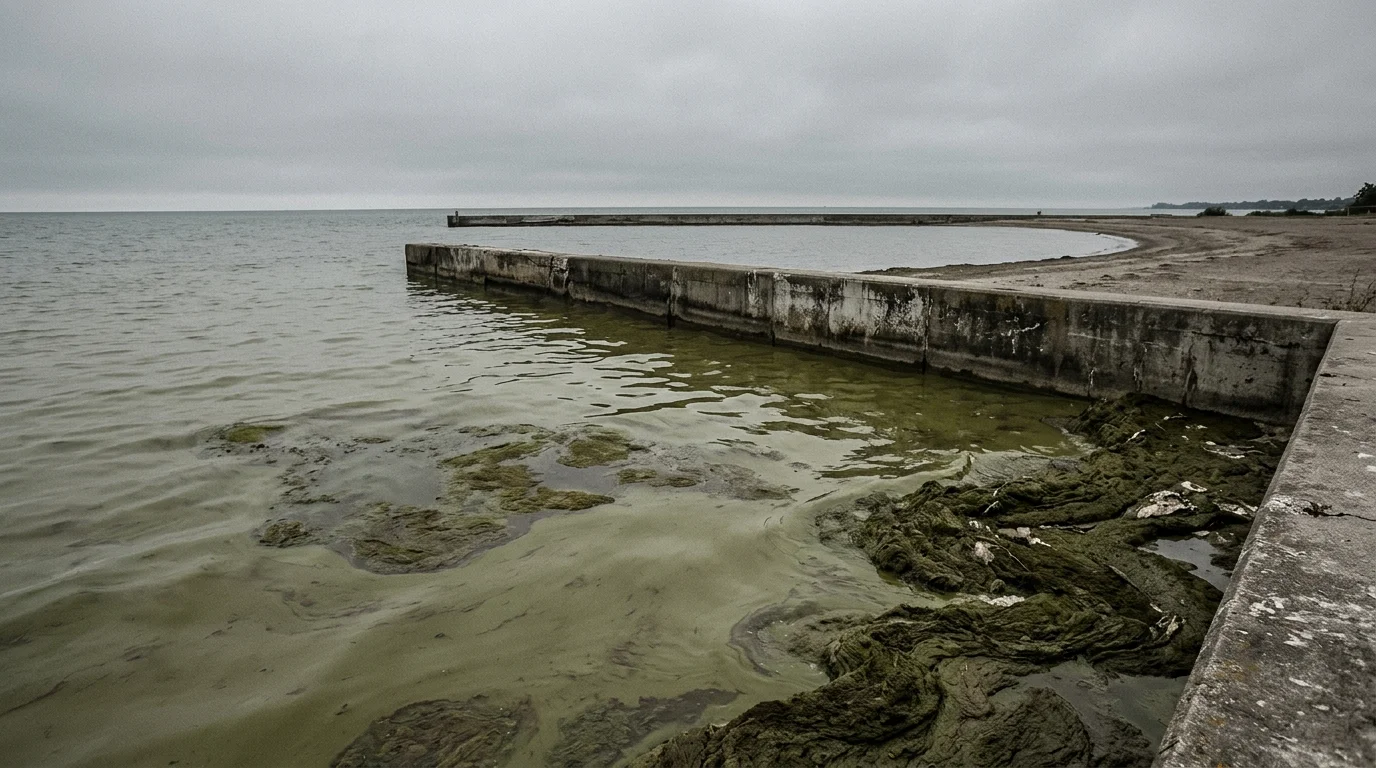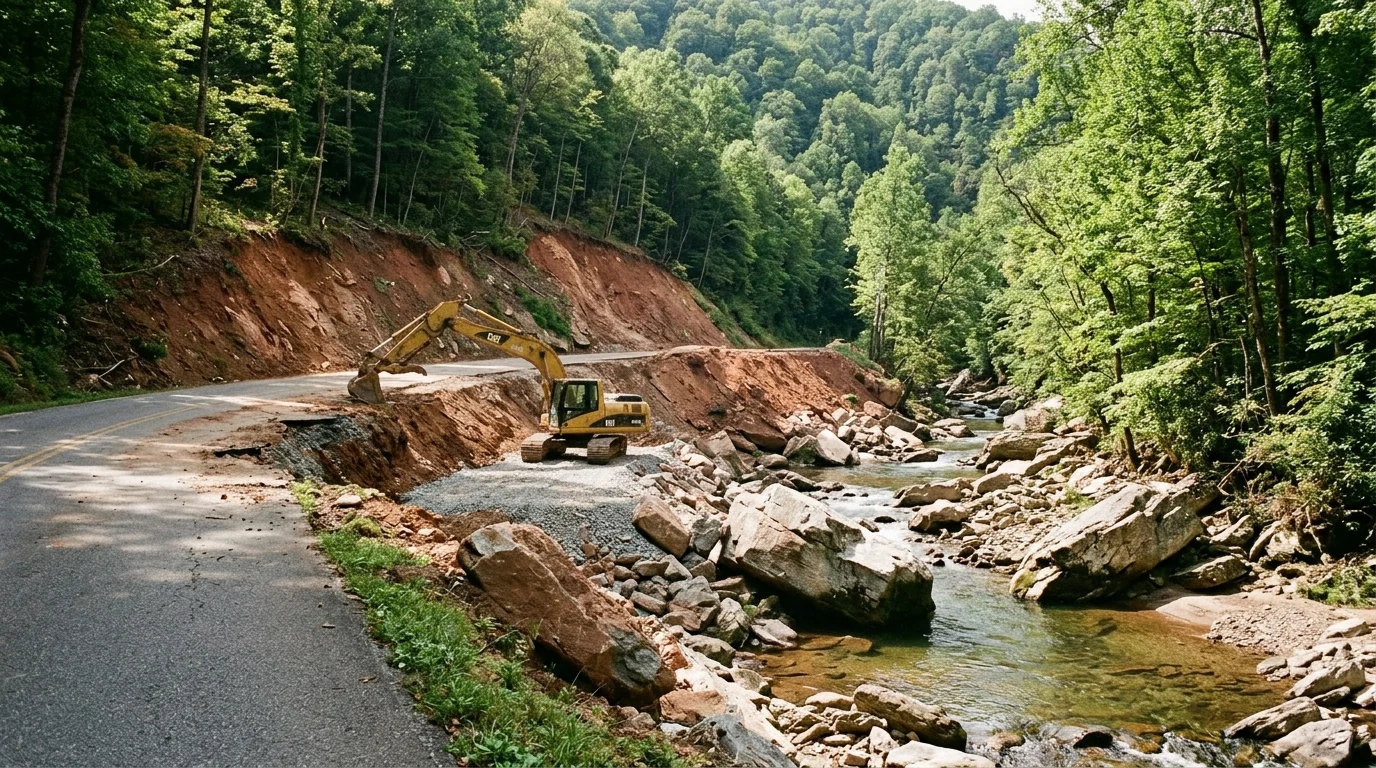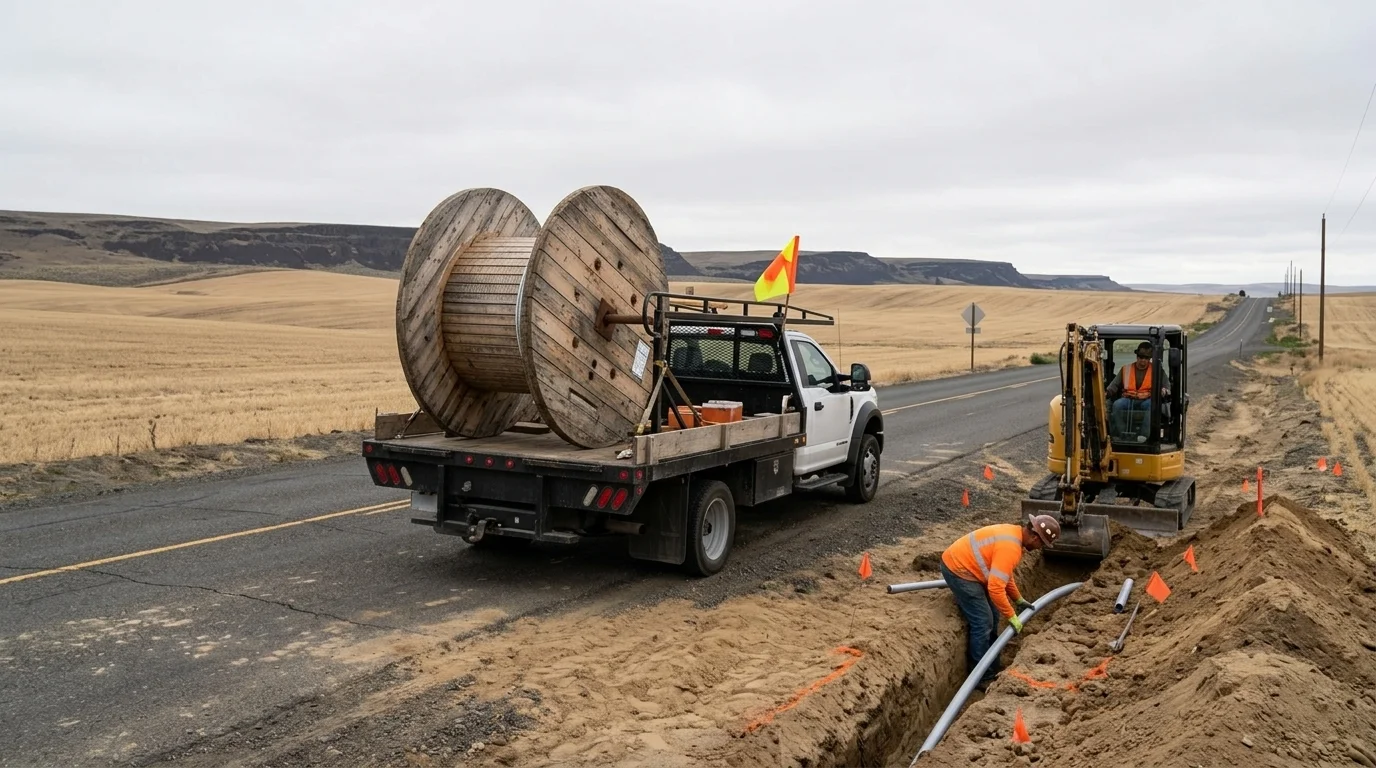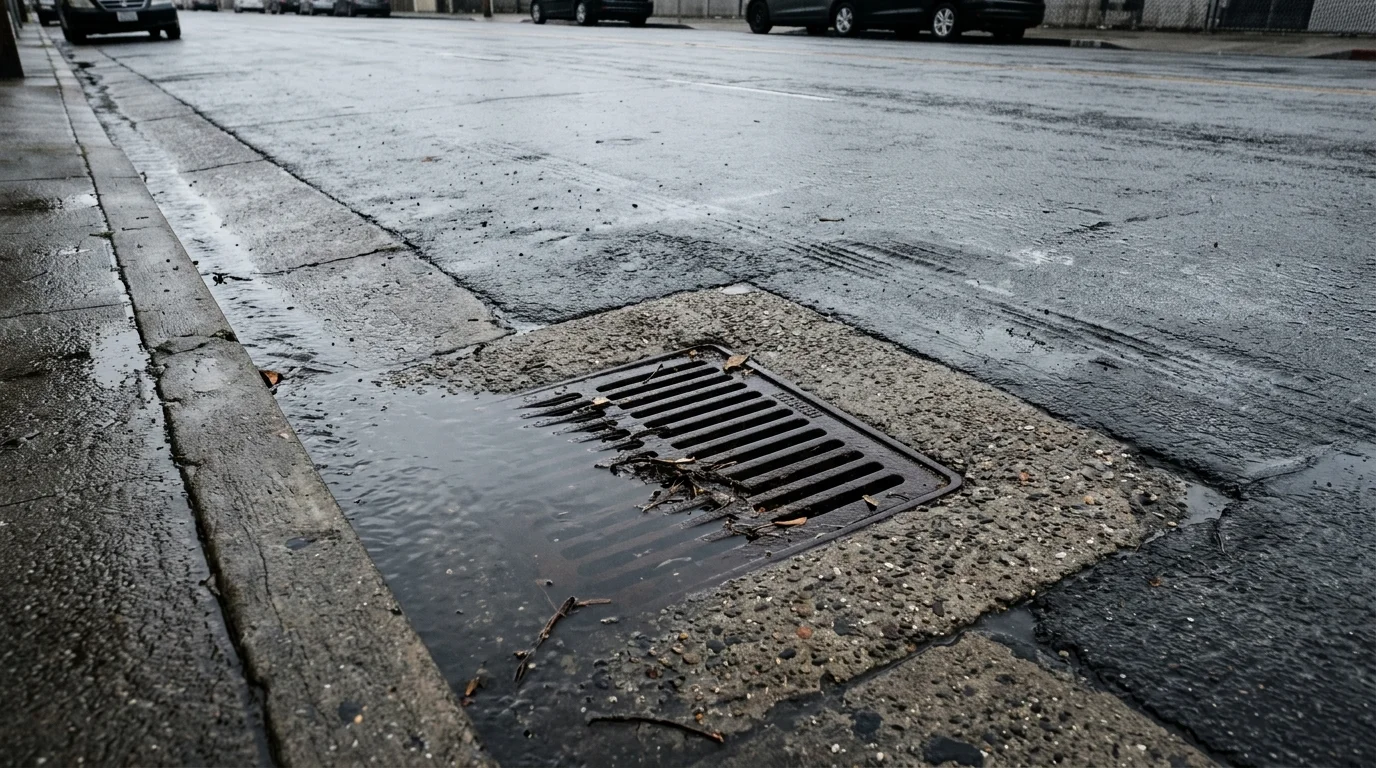
Nineteen California public institutions issued a stormwater management RFP for the first time in more than 12 months during the past 30 days, agencies that had been completely out of the procurement market suddenly rushing to hire consultants, engineers, and program managers at the same moment. The sprint spans 13 counties, from San Diego to Marin, and it is arriving with roughly $200 million in federal stormwater grants already committed to California but only about $14 million actually disbursed. The money is there. The programs are not.
The ignition switch is a pair of converging deadlines that have compressed a years-long compliance runway into a matter of weeks. The Santa Ana Regional Water Quality Control Board is barreling toward an August 21, 2026 adoption hearing for a consolidated Regional MS4 Permit (NPDES No. CAS618000) that would, for the first time, unify three separate permits covering Orange, Riverside, and San Bernardino counties, permits that date to the 1990s and have governed stormwater discharge from dozens of municipalities ever since. A public comment deadline falls on July 20, with a workshop scheduled for July 24 in the City of Orange. For every municipality in that watershed, the clock is no longer abstract. According to the Santa Ana Regional Water Quality Control Board, the new consolidated order is designed to strengthen end-of-pipe accountability, a posture reinforced by a 2025 U.S. Supreme Court ruling that, as Orange County Coastkeeper has noted, shifted stormwater liability toward measurable discharge metrics, giving dischargers fewer places to hide under best-effort arguments.
At the other end of the state, the San Francisco Public Utilities Commission activated a new enforcement schedule on July 1, 2026: $1,111 per day for each non-compliant acre under its Stormwater Management Ordinance, with the October start of the rainy season set as the practical compliance deadline. The SFPUC itself is among the 19 newly active issuers, posting RFPs for underground tunneling and stormwater construction management services in the same window it began levying fines.
Source: NationGraph.
The named issuers read like a cross-section of California's entire public sector. The Los Angeles Community College District entered the market with a storm water drainage implementation contract at East Los Angeles College. The City of Los Angeles issued an on-call engineering RFP specifically for Stormwater Toxic Total Maximum Daily Load Compliance Projects, with proposals due August 11. The City of San Marcos posted for municipal stormwater program implementation; Palos Verdes Estates sought MS4 permit compliance support; San Clemente issued for regulatory support services. Monterey County added flood control maintenance. That a community college district and a small coastal city are entering the stormwater procurement market simultaneously with Los Angeles and San Francisco signals how broadly the 2026 compliance pressure is radiating.
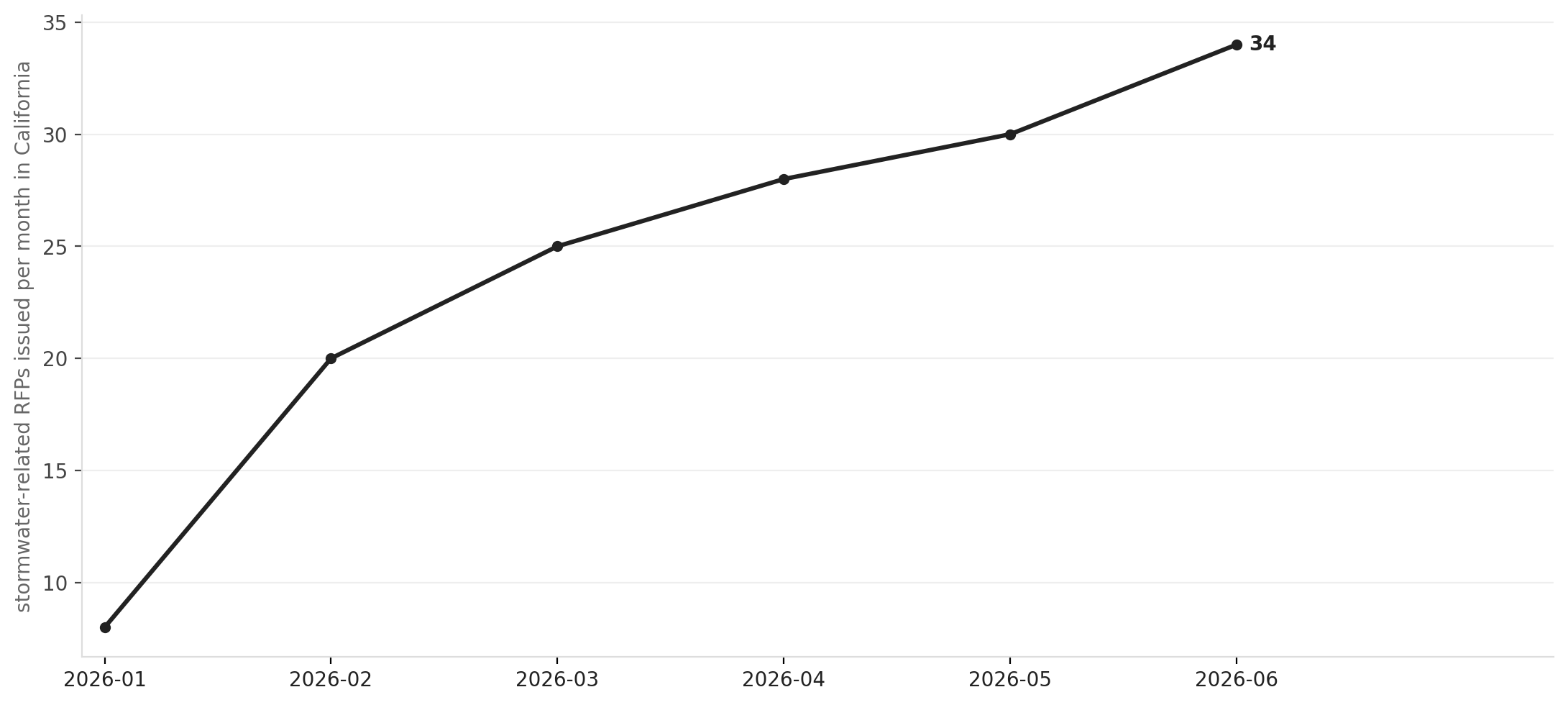
This burst is the sharpest spike in what has already been a sustained ramp. Monthly stormwater RFP volume in California ran between 20 and 34 solicitations per month from February through June 2026, following a quiet January that produced just 8. The current 30-day surge, which added 19 first-time issuers on top of returning ones, rides that wave rather than creating it from nothing. Industry observers have described 2026 as a watershed year for industrial stormwater compliance as the state's Industrial General Permit operates under administrative extension while a replacement is drafted, adding another layer of uncertainty that is pushing institutions to shore up their programs now rather than wait.
The gap between obligated and disbursed federal dollars is worth holding. Approximately $200 million in federal stormwater grants is committed across 51 California grants, but only about $14 million has moved. That ratio suggests programs are being stood up, not yet run, and the agencies now posting RFPs are largely in the stand-up phase, hiring the technical staff and outside firms needed to spend the money they already have. The urgency is not finding funding; it is building the organizational capacity to use it before enforcement begins and before the first winter storm creates a compliance test no one can postpone.
What the August 21 adoption hearing produces will matter well beyond the Santa Ana watershed. If the consolidated permit passes as drafted, it establishes a regional consolidation model that other California water boards are watching. The next signal to track is whether the public comment period, closing July 20, produces substantive revisions to the permit's numeric effluent limits, changes that could reset compliance timelines for the municipalities that are already scrambling to hire.