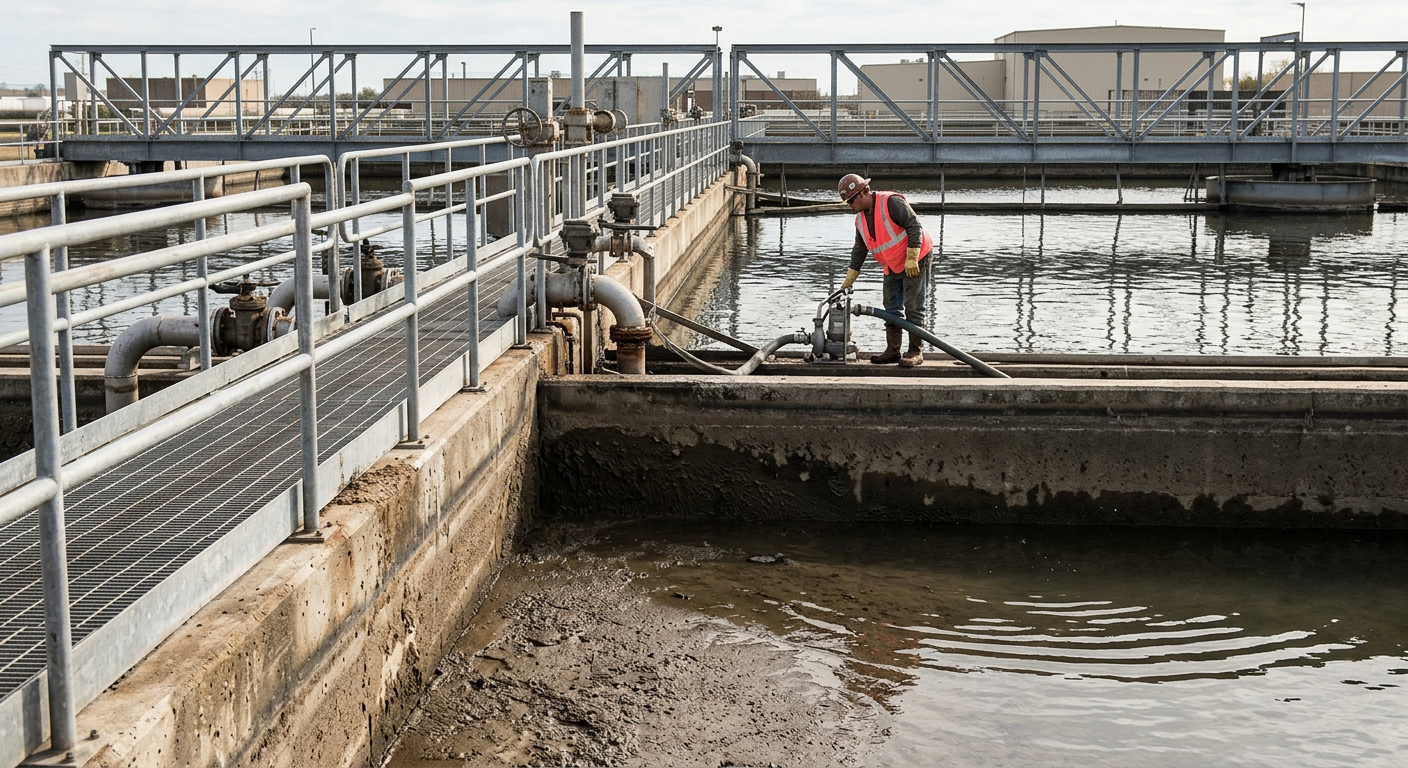
Keeping tap water safe in a county that has doubled in population over two decades requires more than just building new pipes. It also means scraping out the muck that accumulates inside the plants that treat the water in the first place.
Brunswick County, North Carolina, is seeking a private contractor to remove sludge from its 211 Water Treatment Plant, a key facility in the coastal county's drinking water system. The buildup is a normal byproduct of water treatment, where chemicals cause impurities to clump together and settle into basins. But if that residue isn't cleared regularly, it can reduce a plant's capacity and degrade the quality of finished water flowing to homes and businesses.
The work may sound unglamorous, but for a county stretched thin by growth, it matters. Brunswick County, situated between Wilmington and Myrtle Beach along North Carolina's southeastern coast, has ballooned from roughly 73,000 residents in 2000 to more than 150,000 today. Communities like Leland, Ocean Isle Beach, Sunset Beach, and Calabash have drawn waves of retirees and new families, and every new household puts additional demand on treatment infrastructure. Higher water demand means sludge accumulates faster and needs to be removed more frequently.
The county is turning to the private market because sludge removal typically requires specialized vacuum trucks, dewatering equipment, and disposal logistics that many mid-sized utilities don't maintain in-house. At least one addendum has already been issued to the solicitation, suggesting the county received questions from potential vendors about the scope of work.
The maintenance comes against a backdrop of heightened water quality awareness across southeastern North Carolina. The GenX contamination crisis that emerged in 2017, when PFAS compounds from a Chemours facility were found in the Cape Fear River, put water treatment operations regionwide under a microscope. Brunswick County draws from different source waters, but the episode left residents across the area more attuned to how their drinking water is handled.
Nationally, the challenge is widespread. The American Society of Civil Engineers has given U.S. drinking water infrastructure grades hovering around C- and D, and the EPA estimates more than $625 billion in investment is needed over the next 20 years. The 2021 Bipartisan Infrastructure Law directed $55 billion toward water and wastewater systems, and North Carolina has received a share through State Revolving Fund dollars, but the gap between funding and need remains significant, especially for fast-growing counties juggling expansion and upkeep simultaneously.
Brunswick County has not disclosed the contract's dollar value in the public posting. Interested contractors can access the full solicitation through the county's procurement portal, and the timeline for selecting a vendor has not been made public.