Maryland is putting $3.5 million toward testing sexual assault kits that have sat untested in police evidence rooms, a program that could unlock DNA evidence in thousands of cases, some stretching back nearly a decade.
The Governor's Office of Crime Prevention and Policy has opened applications for its Sexual Assault Kit Testing Grant Program, which distributes funds to the Maryland State Police and local law enforcement agencies to pay for forensic lab testing of rape kits. Agencies can use the money to outsource testing to private forensic labs or to fund in-house testing through personnel, supplies, and equipment upgrades.
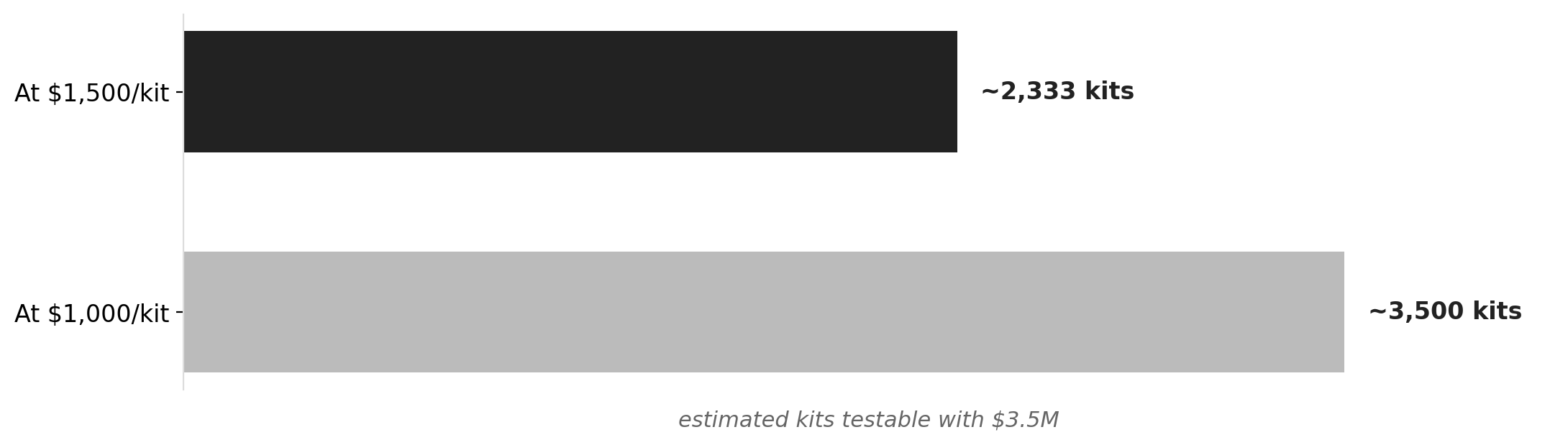
At typical outsourcing costs of $1,000 to $1,500 per kit, the $3.5 million could cover somewhere between 2,300 and 3,500 kits, depending on how agencies choose to spend their allocations.
Source: NationGraph.
The backlog of untested rape kits has been one of the most documented failures in American criminal justice. A 2009 discovery of more than 11,000 untested kits in a Detroit police warehouse set off a national reckoning, and subsequent state audits revealed a problem numbering in the hundreds of thousands of kits nationwide. When jurisdictions finally began testing backlogs, the results often exposed serial offenders whose DNA appeared in multiple cases across different cities and states.
Maryland responded in 2019, when Governor Larry Hogan signed legislation creating a dedicated funding mechanism specifically for kit testing. A statewide audit around that time had found thousands of untested kits across Maryland agencies, and the law established the framework that this grant program continues to fund.
The current round carries an important limitation: funding only covers kits collected since May 1, 2018. Kits collected before that date are not eligible under this particular program, raising questions about whether older cases have been fully addressed through prior funding rounds or remain in limbo. Maryland eliminated its statute of limitations for rape in 2017, meaning DNA hits from pre-2018 kits could still theoretically lead to prosecutions, but only if those older kits are tested through separate funding.
For the kits this program does cover, law enforcement agencies are expected to request amounts based on the number of untested kits they currently hold plus their annual average intake of new kits, building toward sustainable testing capacity rather than a one-time backlog clearance.
The program is administered under Governor Wes Moore's administration, which has emphasized victim services and criminal justice reform since taking office in 2023.