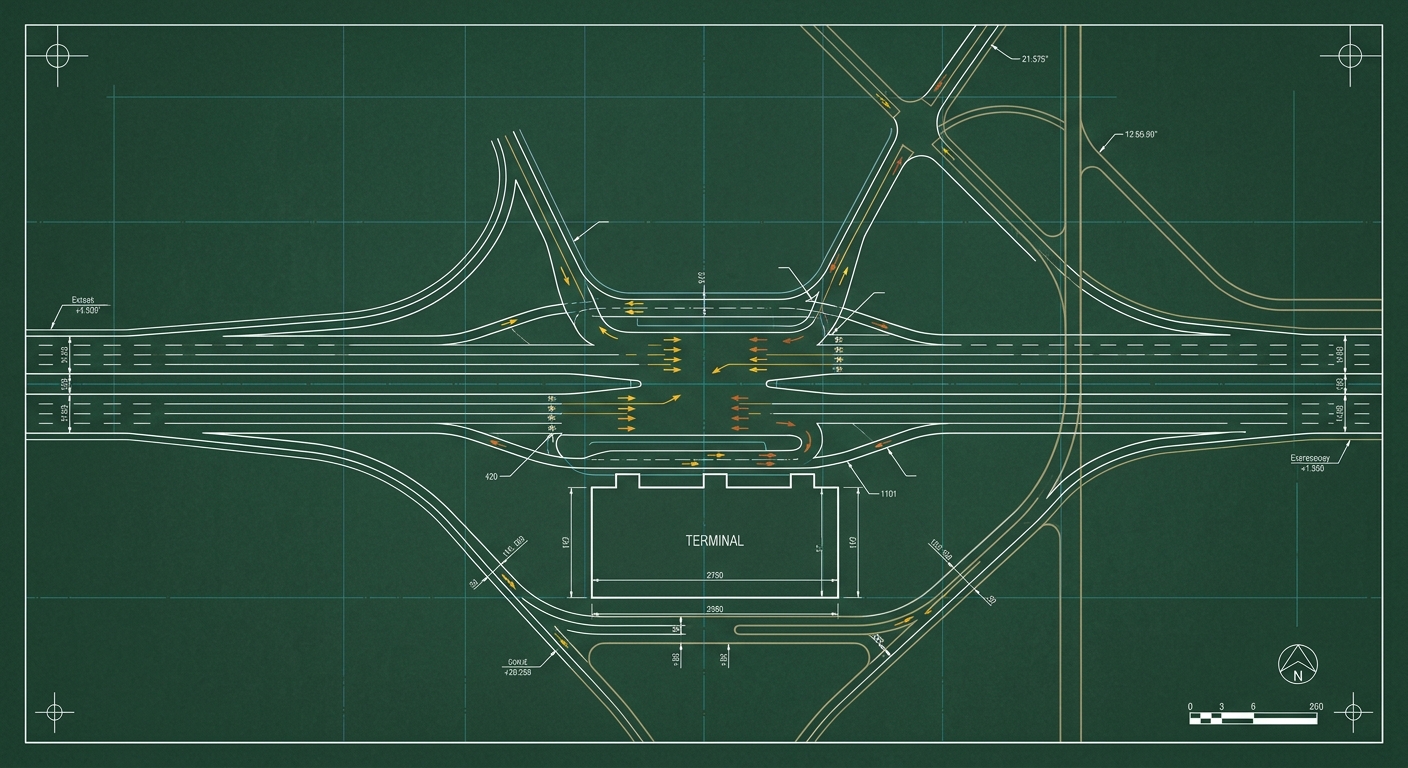
The road most travelers never think about until they're stuck on it is finally getting attention. Florida is directing $2.5 million toward capacity improvements at Jeff Fuqua Boulevard and Station Loop Road, the primary vehicle corridor feeding into Orlando International Airport's terminal complex.
The funding, awarded through the Federal Highway Administration's Highway Planning and Construction program and posted in late January 2026, targets an intersection that has grown increasingly congested as MCO has become one of the busiest airports in the country. The airport set a record of 57.9 million passengers in 2023 and has sustained high volumes since, ranking among the top ten busiest U.S. airports most years.
Jeff Fuqua Boulevard is the main artery linking State Road 528 (the Beachline Expressway) to the terminal, and Station Loop Road serves the curb areas where passengers are dropped off and picked up. That junction bears the full weight of every rideshare, taxi, shuttle, and private vehicle heading in and out of the airport. During peak travel periods, the bottleneck is hard to miss.
The growth putting pressure on that corridor is partly structural. MCO's Terminal C opened in September 2022 after a $2.8 billion construction program, adding capacity for roughly 12 million additional passengers per year. More terminals are in planning. Each one increases ground traffic that the surrounding road network has to absorb, and roadway upgrades have historically lagged behind terminal expansion.
The Orlando metro area compounds the challenge. Orange County adds roughly 50,000 to 60,000 residents per year, and Florida drew around 140 million visitors in 2023, most of them moving by car through a sprawling, flat landscape built almost entirely around road access.
A Brightline high-speed rail extension expected to connect MCO to South Florida will eventually offer travelers an alternative, though road access will remain dominant for the foreseeable future. The federal grant flows through the 2021 Bipartisan Infrastructure Law, which authorized roughly $350 billion for highway programs over five years and specifically expanded eligibility for surface transportation projects serving airports.
FDOT has not publicly detailed the specific improvements planned for the intersection, but the project is classified as an aviation capacity project under the department's capital program, meaning the work is designed to increase throughput rather than simply maintain existing conditions. A construction timeline has not been announced.