Boston is moving to fix the crumbling pathways running through the Back Bay Fens, the 100-acre urban wetland park that has served as the anchor of Frederick Law Olmsted's Emerald Necklace since the 1870s.
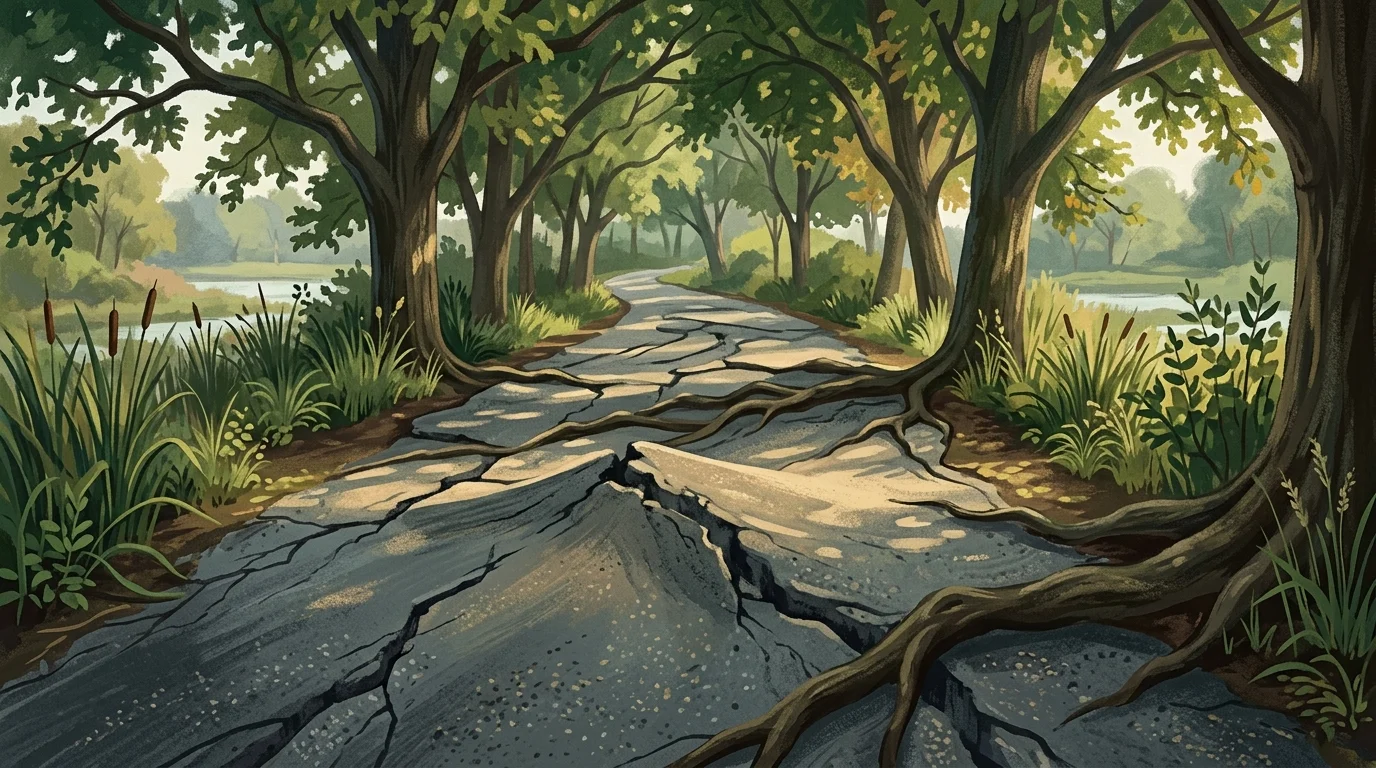
The Fens sits at the center of one of the city's densest neighborhoods, bordered by the Museum of Fine Arts, the Isabella Stewart Gardner Museum, Fenway Park, Northeastern University, and a sprawling medical complex in Longwood. Tens of thousands of residents, students, hospital workers, and visitors pass through it daily. But the pathway network that Olmsted carefully designed to move people through the park has taken a beating over the decades from tree root heaving, winter frost cycles, and relentless foot traffic, leaving stretches cracked and uneven.
The deterioration is part of a longer story. Olmsted began designing the Fens in 1878 as a piece of ecological engineering, transforming what had been a sewage-fouled tidal marsh into a functioning wetland that controlled flooding while serving as public green space. The park changed dramatically after 1910, when the Charles River Dam converted it from saltwater to freshwater, and kept declining through the 20th century as Dutch elm disease stripped the tree canopy, institutions encroached on its edges, and maintenance budgets shrank. The Victory Gardens planted during World War II remain, now recognized as the oldest continuously operating WWII victory gardens in the country.
Source: NationGraph.
The city has been working to reverse years of deferred maintenance across the Emerald Necklace, a push accelerated by climate concerns. The Fens sits in a low-lying area that Boston's climate planning has flagged as vulnerable to stormwater flooding, giving infrastructure investments there a dual purpose: preserving a beloved park while strengthening the city's resilience to heavier rainfall.
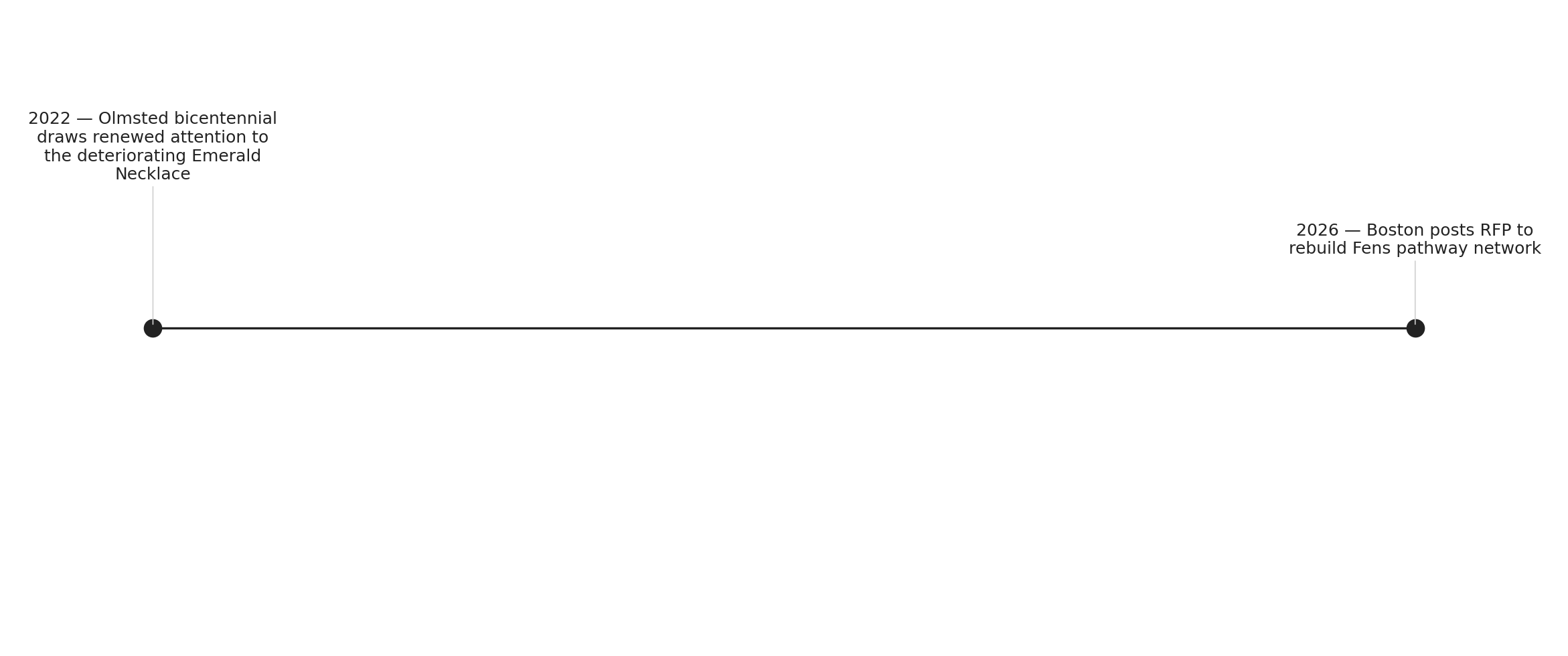
The city has posted an RFP seeking a contractor for the pathway work. The Fens project is part of a broader pattern of investment in the city's open spaces under Mayor Michelle Wu, who has emphasized parks access and climate infrastructure alongside other public works. Boston has also been repairing aging public housing and adding new park space in underserved neighborhoods as part of a wider push to address deferred investment across the city.
Contractor selection will follow the close of the bidding process.