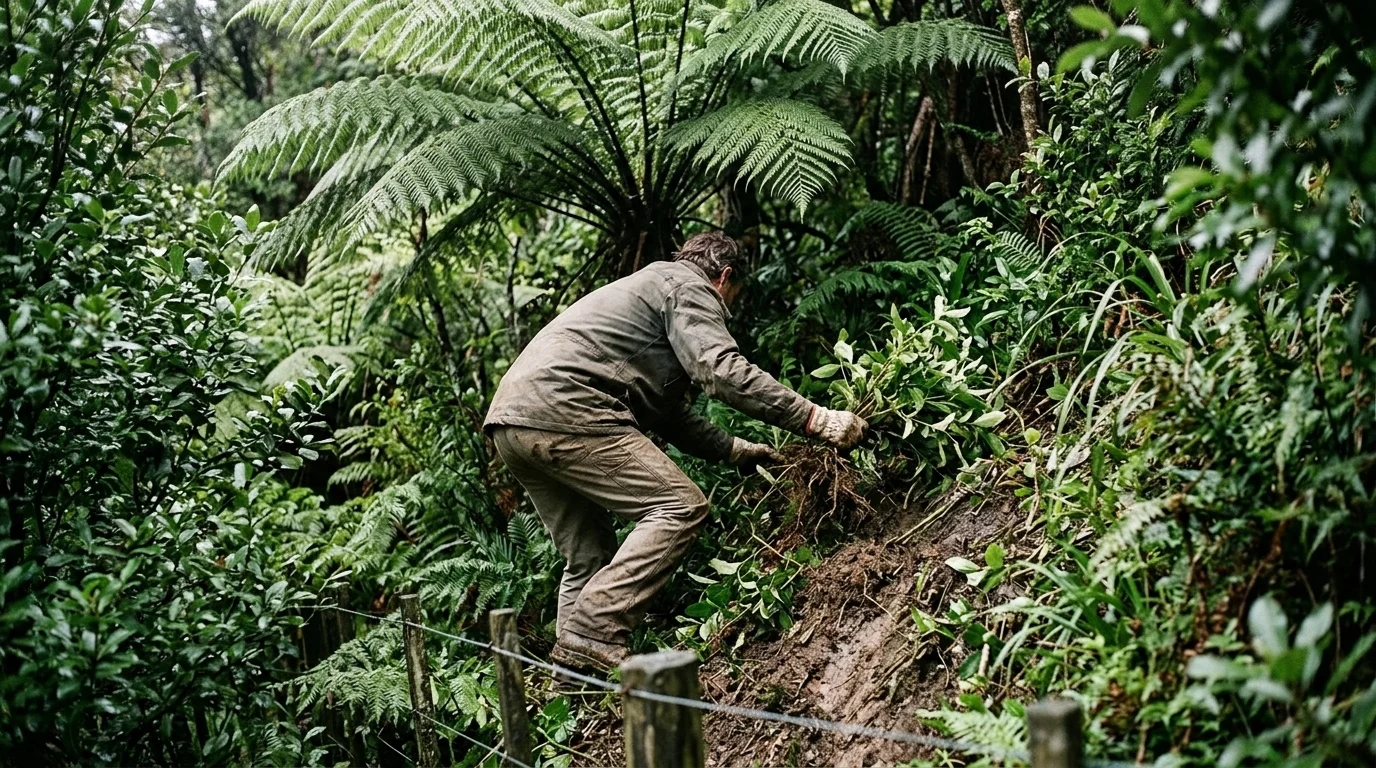
Wellington, New Zealand is formalizing its move away from chemical herbicides, building a pre-approved roster of contractors to manage invasive weeds through ecological restoration rather than spraying.
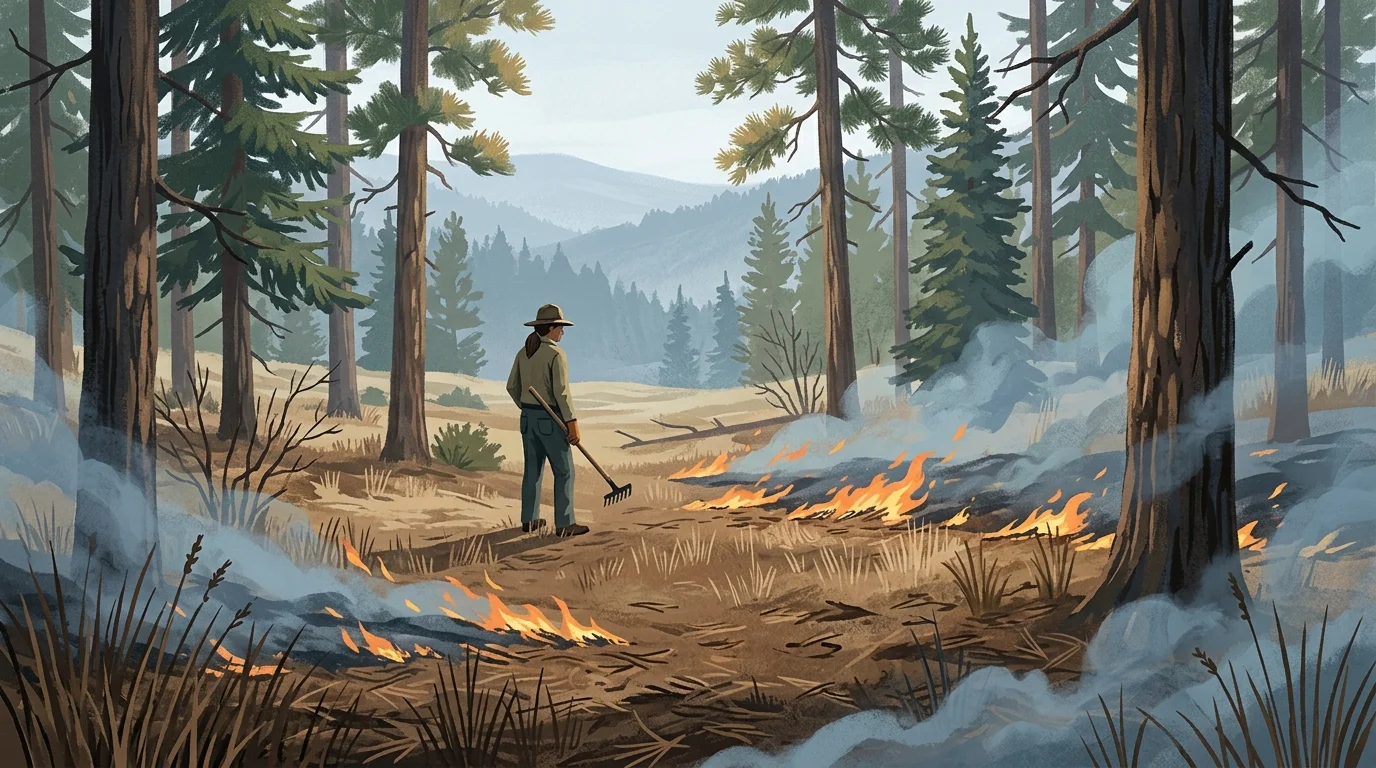
The approach, known as ecosystem-based weed control, replaces broad-spectrum chemicals with methods like manual removal, mulching, steam treatments, native planting and targeted grazing. It is labor-intensive work that requires specialists, and Wellington appears to be assembling a panel of suppliers rather than awarding a single contract, allowing it to call on multiple contractors over time across different sites and conditions.
The shift has been years in the making. Wellington City Council began trialing spray-free zones in the mid-2010s, responding to residents and to its own biodiversity strategy, and has expanded those policies incrementally since. Glyphosate, the world's most widely used herbicide, has faced mounting public pressure since 2015, when the World Health Organization classified it as probably carcinogenic. In the United States, Bayer paid over $10 billion settling lawsuits over its Roundup product. In New Zealand, community groups have pushed councils toward alternatives for more than a decade.
Source: NationGraph.
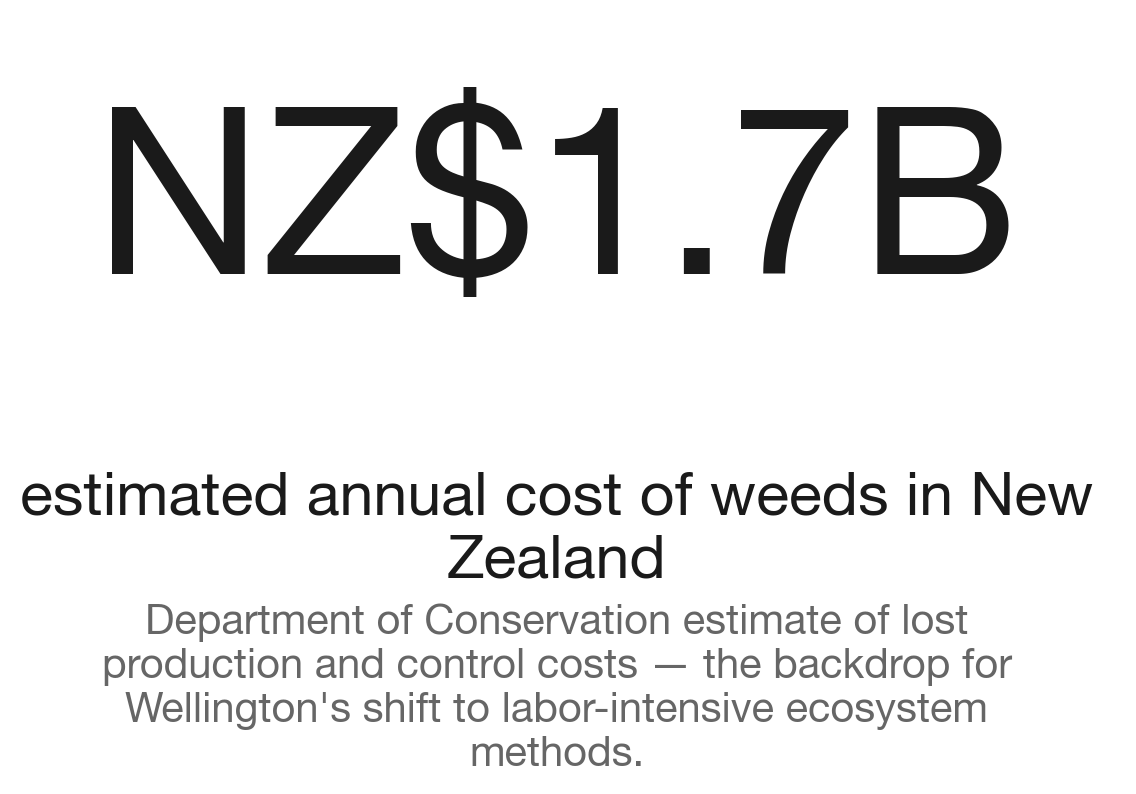
Wellington has particular reason to care. The city sits inside a steep, wet, temperate landscape where invasive plants thrive, and its reserves, coastal areas and town belt create an enormous surface area to manage. New Zealand's isolation as an island ecosystem means native species evolved without aggressive competitors and remain highly vulnerable to invaders like old man's beard, tradescantia and woolly nightshade. The Department of Conservation estimates weeds cost the country roughly $1.7 billion annually.
The city also has a political identity tied to conservation. It is home to Zealandia, the world's first fully-fenced urban ecosanctuary, and a council with a Green-leaning majority that has championed chemical-free public spaces. A national policy statement on indigenous biodiversity, gazetted in 2023, has pushed councils further toward holistic land management that restores native habitat rather than simply killing weeds.
But the approach carries real costs. Ecosystem-based methods are significantly more expensive per hectare than spraying, and Wellington ratepayers have already pushed back against rising rates in 2024 and 2025. Auckland tried a similar shift and reversed parts of it after complaints about overgrown berms. Whether Wellington's model holds will depend on both the contractors it selects and the patience of the residents paying for it.