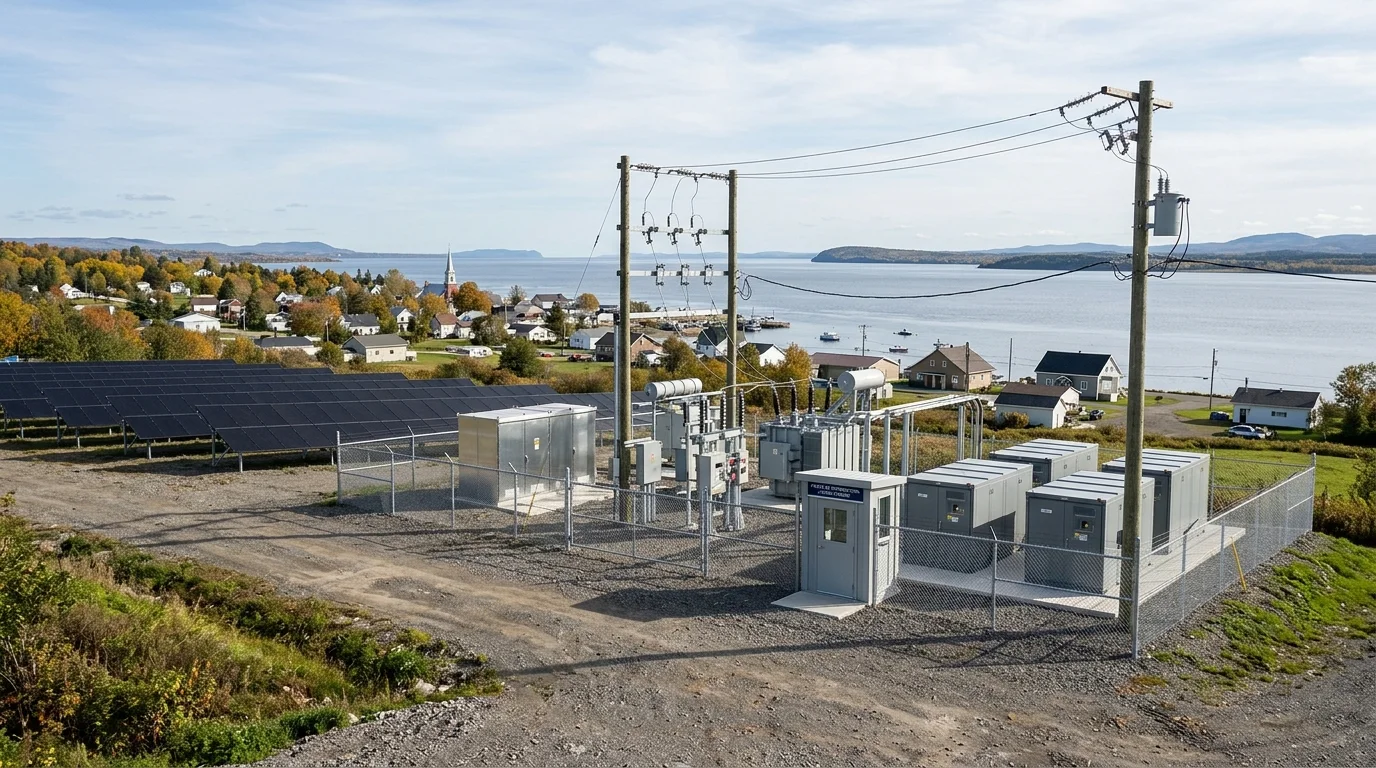
Varennes, Quebec has spent 15 years quietly positioning itself as Canada's clean-energy laboratory. Now the south-shore municipality of roughly 22,000 is taking its most ambitious step yet: building a microgrid designed to keep power flowing locally even when the broader grid goes dark.
The federal government posted a construction tender for the Varennes microgrid project through CanadaBuys, the federal procurement platform, on July 16, 2026. The procurement's prefix suggests Public Services and Procurement Canada is issuing it on behalf of a federal client, likely Natural Resources Canada or a Crown corporation, though the specific department and the project's size, budget and technology mix have not been publicly confirmed.
The timing follows a hard lesson. The April 2023 ice storm knocked out power to more than 1 million Quebec customers, reviving memories of the catastrophic 1998 ice storm and forcing a blunt reckoning with how fragile the province's grid can be, even with electricity that is 95 percent hydroelectric and among the cheapest in North America. Hydro-Québec has since warned of looming supply shortfalls as electric vehicle adoption and industrial electrification are expected to roughly double provincial electricity demand by 2050. Its 2035 Action Plan, released in 2023, identified distributed energy resources and microgrids as critical tools for managing that pressure.
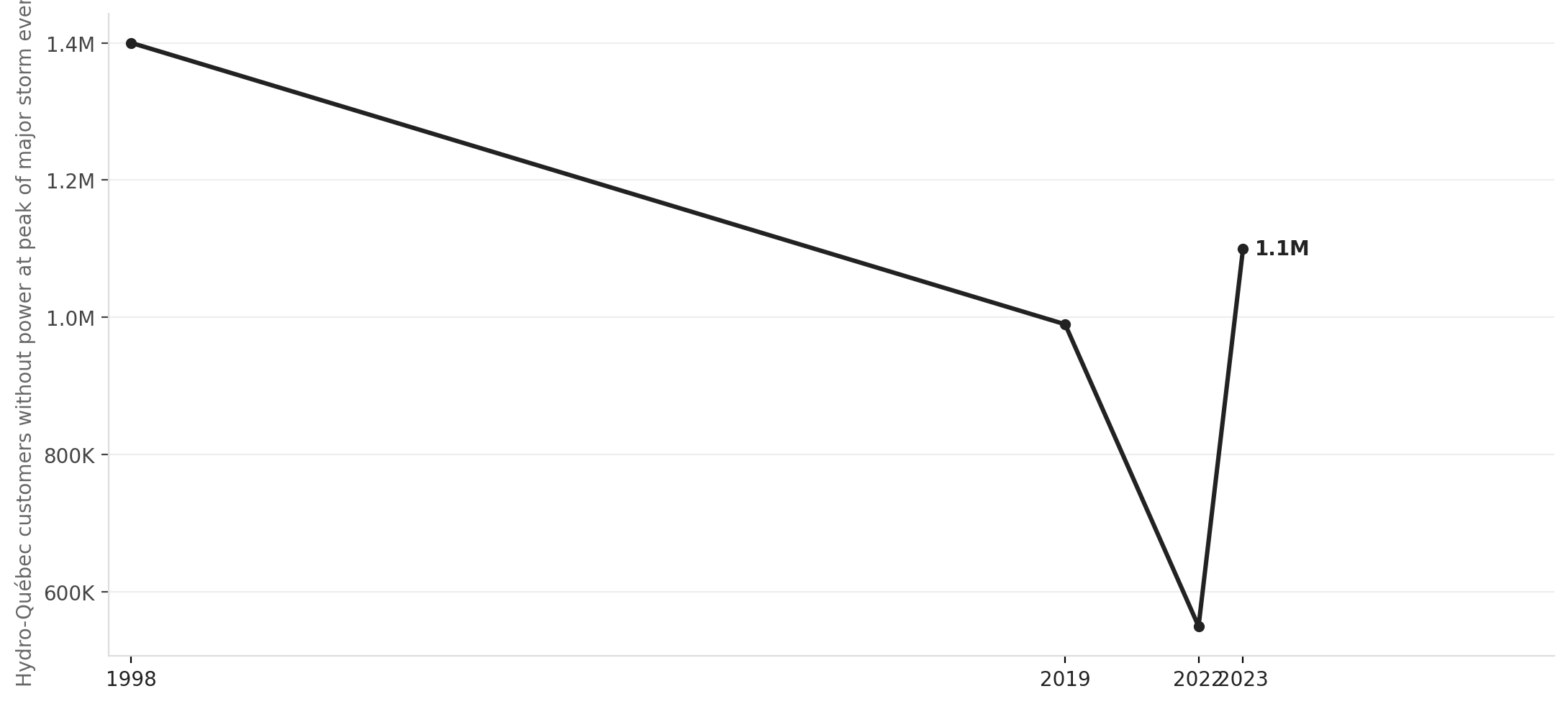
Source: NationGraph.
Varennes is a logical place to test those tools. The town hosts the Institut de recherche d'Hydro-Québec, known as IREQ, Hydro-Québec's main research and development centre, which has been working on microgrid technology for over a decade. In 2016, Varennes opened Canada's first net-zero institutional building, its municipal library, a project that drew national attention and set the tone for the municipality's energy identity. Its economy straddles a legacy petrochemical corridor and a growing cluster of high-tech and research employers, giving clean-energy projects here a political weight that extends beyond the town itself.
For Varennes, the microgrid is primarily about resilience: the ability to island critical facilities and keep essential services running during the kind of prolonged outage that left hundreds of thousands of residents without heat in freezing temperatures in spring 2023. Quebec's grid is already exceptionally clean, so the gain here is reliability, not cleaner generation.
The project also fits within a broader policy push. The federal Smart Renewables and Electrification Pathways Program and Quebec's own 2030 Plan for a Green Economy have together committed billions toward exactly this kind of distributed infrastructure. A working microgrid in Varennes would give both governments a demonstration project to point to as they make the case for scaling the technology elsewhere in the province.
Key details, including the project's capacity, the technologies involved and the construction timeline, are expected to become clearer as the procurement process advances.