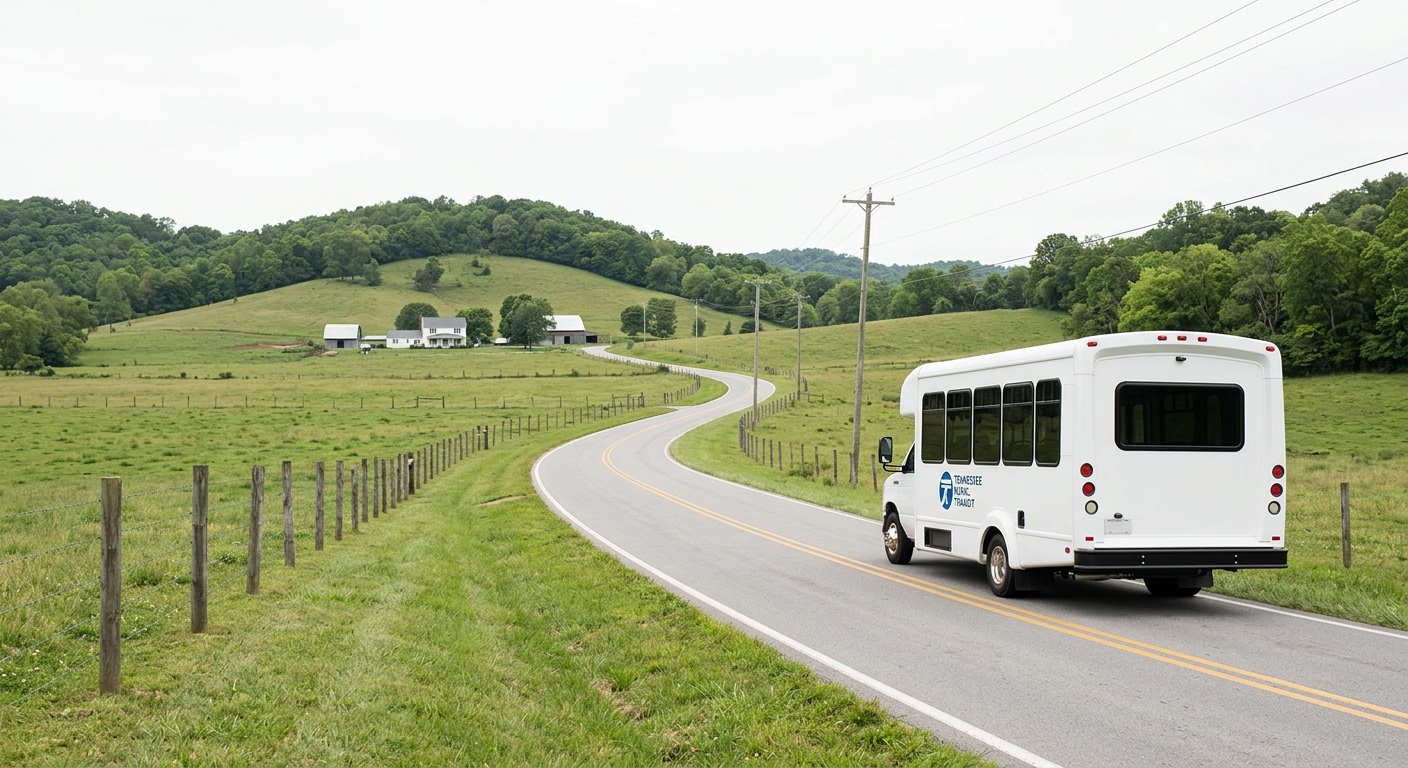
For many older and disabled residents in rural Tennessee, a bus run by a local human services agency is the only way to reach a doctor's appointment, a pharmacy, or a grocery store. That network is getting a significant boost from a $3.75 million federal grant awarded to the Tennessee Department of Transportation in March 2026.
The money will fund the purchase of 33 thirty-foot buses distributed across 13 rural agencies statewide. Eight of those agencies are adding vehicles to expand service capacity. Six others are replacing buses that have worn out, a constant pressure in rural transit where rough roads and high mileage mean vehicles typically last only five to seven years.
Four additional agencies will receive funding for mobility management programs, which focus on coordinating rides across providers, reducing duplication, and connecting residents to the full range of transportation options in their area.
The stakes are high in a state where roughly 17 percent of the population is 65 or older and that share is growing faster than the national average. Tennessee's disability rate, around 16 percent, also exceeds the national figure, driven in part by high rates of chronic disease in rural and Appalachian counties. Most of the state's 95 counties have no fixed-route public transit at all, leaving demand-response services run by regional human resource agencies as the de facto transit system for tens of thousands of residents.
The grant flows through the Federal Transit Administration's Section 5310 program, which was created in 1975 specifically to address the mobility gap for elderly and disabled Americans in areas without traditional transit. Funding for the program increased under the Bipartisan Infrastructure Law signed in 2021, which authorized roughly $1.6 billion nationally for Section 5310 over five years.
Tennessee requires a 20 percent local match on capital grants like this one, meaning the 13 agencies and their regional partners will need to contribute roughly $937,000, bringing the total investment to nearly $4.7 million.
Even with the new buses, rural transit advocates have cautioned that demand outpaces supply in many counties, where waitlists and trip denials remain common. A separate challenge: rural transit providers across Tennessee reported driver shortages in 2024 that limited service even when vehicles were available. How quickly these 33 buses translate into new trips will depend in part on whether agencies can staff them.