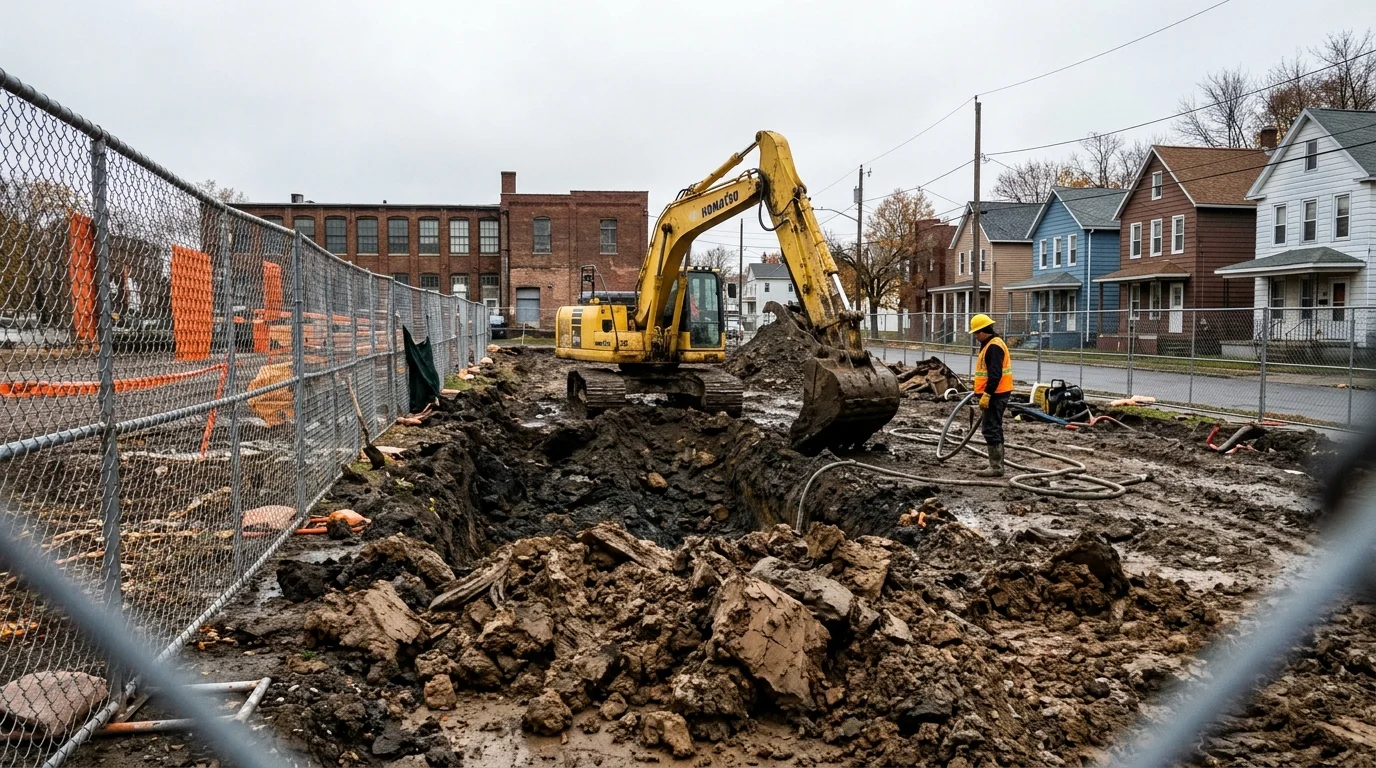
Rome, New York is moving to clean up a contaminated parcel on Lawrence Street, the latest installment in the small city's long effort to reclaim industrial land that private developers won't touch without government help.
The site at 701 Lawrence Street sits in a mixed industrial-residential corridor near some of Rome's older neighborhoods. Contamination was identified through earlier environmental investigations, and the city is now in the active remediation phase, focused on removing or treating polluted soil. The specific contaminants and the total cost of the project have not been publicly disclosed; the city posted the remediation contract on BidNet Direct on Oct. 8.
The cleanup reflects a decades-long reality for Rome, a city of about 32,000 in Oneida County that has spent 30 years dealing with the fallout from its industrial past. Copper and brass manufacturing, textile mills and, above all, Griffiss Air Force Base defined the local economy for most of the 20th century. When Griffiss was shuttered in 1995 under the federal Base Realignment and Closure process, Rome lost thousands of jobs and was left with a sprawling inventory of contaminated land it couldn't afford to clean up on its own.
Since then, the city has leaned heavily on state and federal programs to chip away at that legacy. New York's Environmental Restoration Program typically covers up to 90% of eligible cleanup costs for municipalities, and the state's Brownfield Cleanup Program offers tax credits and liability relief to encourage redevelopment. Federal money has also ramped up: the 2021 Bipartisan Infrastructure Law added $1.5 billion to EPA brownfields grants, sending record funding to post-industrial communities across the Rust Belt, including Rome.
The city has used those programs before, clearing parcels along the Erie Canal corridor and the former Rome Cable site, as well as portions of the old Griffiss footprint, now redeveloped as the Griffiss Business and Technology Park. Lawrence Street is the next address in line.
For nearby residents, the stakes are immediate. Contaminated soil in a residential-adjacent neighborhood can affect property values and health for years before cleanup begins. What happens to the site after remediation is complete hasn't been announced, and the specific contaminants and funding sources for this project remain unclear. The city is expected to select a contractor in the coming weeks.