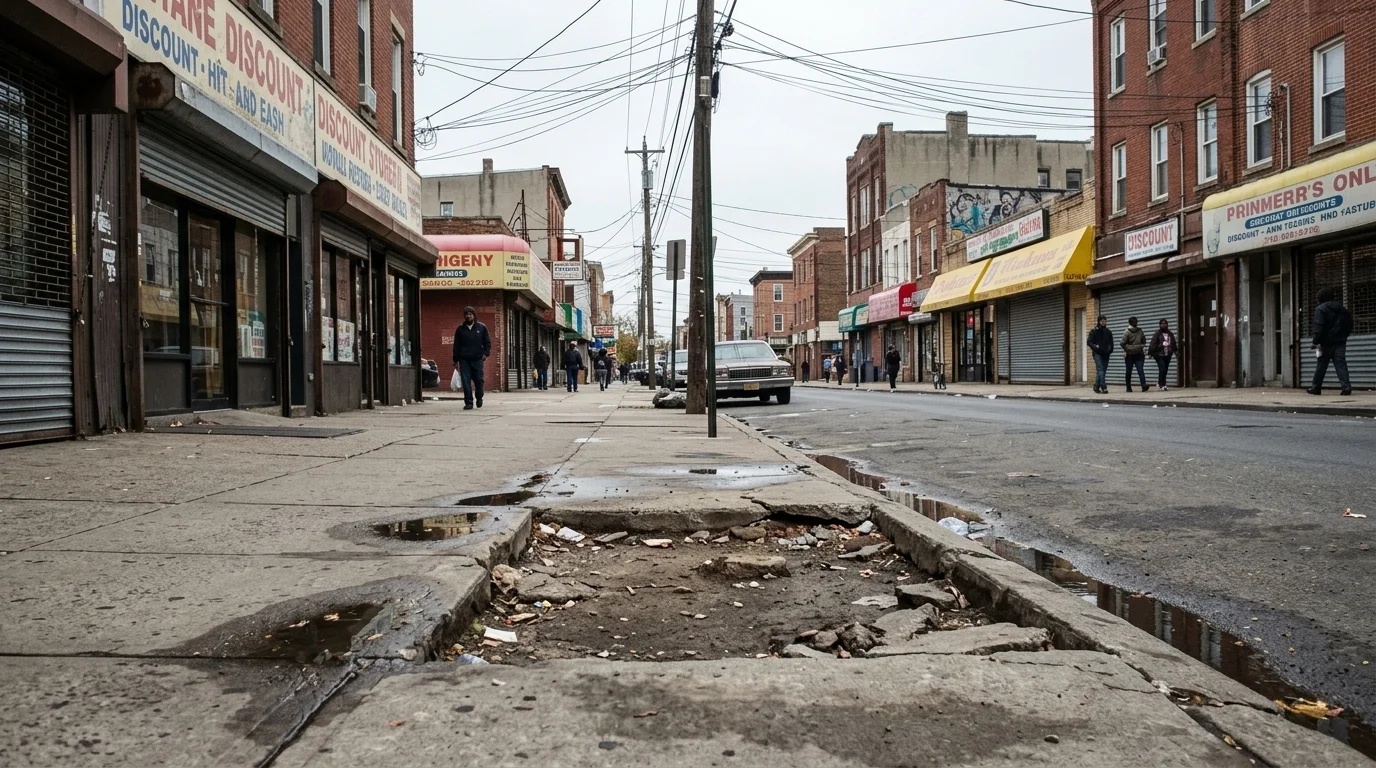
Revere, Massachusetts is testing an underground engineering approach on Shirley Avenue that promises to tackle two chronic problems at once: streets that flood during heavy rainstorms and a neighborhood that has never had enough trees.
The city is moving forward with a soil cell pilot program on the densely built commercial corridor, one of the most culturally significant streets in a city where roughly half of residents are Hispanic, Latino or immigrant. Soil cells are structural underground frameworks installed beneath sidewalks that create large pockets of uncompacted soil, allowing street tree roots to spread and mature while capturing, filtering and slowly releasing stormwater runoff. Cities including Boston and Cambridge have deployed them on major corridors, but Revere's pilot would bring the technology to an environmental justice neighborhood that has historically been passed over for this kind of investment.
Shirley Avenue sits in one of the city's lowest-lying areas and has seen repeated flooding from increasingly intense rainstorms, a pattern Revere's own 2021 Climate Action and Resilience Plan flagged as a top risk. The stormwater that rolls off the avenue ultimately reaches the Pines River, Rumney Marshes and Broad Sound, all waterways already listed as impaired under the Clean Water Act. Massachusetts's stormwater permit requires Revere, like all municipalities in the state, to reduce the pollutant load flowing into those waters. Green infrastructure like soil cells offers a cheaper compliance path than rebuilding or expanding pipes.
There's also a tree equity dimension. Street trees planted in standard concrete tree pits typically die within a decade because compacted urban soil suffocates their roots. Cities end up replanting repeatedly without ever gaining meaningful canopy. Soil cells solve that problem by giving roots somewhere to go. Shirley Avenue, a dense commercial strip with minimal shade, has been identified in city planning documents as critically underserved for tree canopy.
The project is structured as a pilot, meaning the city plans to evaluate performance before any broader rollout. Revere has a limited tax base compared to wealthier suburbs and has relied heavily on state and federal grants to fund climate infrastructure. The city is seeking contractors through its purchasing portal, with the solicitation posted Oct. 8, 2026.
If the pilot performs as hoped, it could become a template for similar investments along other flood-vulnerable corridors in a city that sits largely at or near sea level, fronting the Atlantic just north of Boston.