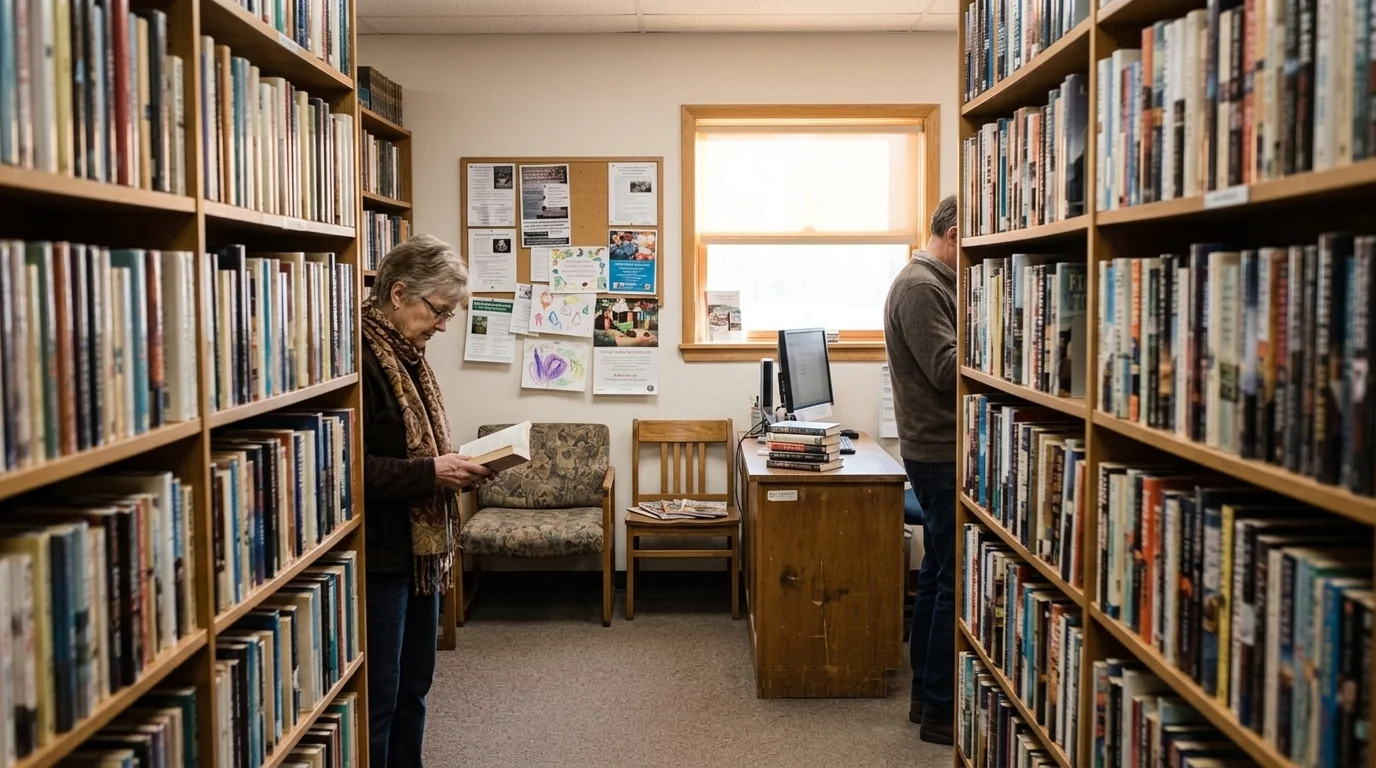
San Rafael, Calif., is moving to overhaul the Pickleweed Branch Library in the Canal neighborhood, putting $2 million toward a redesign of one of the most undersized public facilities in Marin County.
The library at 50 Canal Street has just 2,000 square feet to serve a community of more than 12,000 residents, a per-capita footprint dramatically smaller than the city's main Downtown Library, which covers roughly 18,000 square feet for a comparable population. The Canal neighborhood itself is a striking outlier in one of the wealthiest counties in the United States: a dense, predominantly Latino immigrant community where poverty rates run several times higher than the county average, in a county with a median household income of more than $130,000.
The project, for which the city has posted a design services solicitation, aims to reconfigure the library's interior to create more usable space for both staff and the public and to make the building feel welcoming to all. The branch is tucked inside the Albert J. Boro Community Center complex in Pickleweed Community Park, a campus that functions as the neighborhood's primary public hub.
For Canal residents, the library's limitations have long been more than inconvenient. The neighborhood is physically enclosed by water on three sides and Highway 101 on the fourth, making the downtown library a difficult alternative. Many residents have limited English proficiency, and the branch has served as a point of access for multilingual programming, digital services and civic resources that matter as much as the book collection itself. COVID-19 sharpened that picture: the Canal neighborhood recorded some of the highest per-capita case rates in the Bay Area, exposing how thin the neighborhood's public infrastructure was.
The $2 million investment moves forward while the city's broader library modernization remains stalled. San Rafael voters rejected a systemwide library bond, Measure C, in 2018, forcing the city into project-by-project funding. The downtown library has been flagged as seismically deficient for years, and plans for a new library and community center at Albert Park are still taking shape. The funding source for the Pickleweed project has not been publicly detailed, a question worth watching given the ongoing tension between equity commitments and the city's piecemeal financing approach.
The city is now selecting an architectural and engineering team to carry out the redesign. Once a firm is chosen, design work will shape how the fixed 2,000 square feet gets reorganized to do more for a neighborhood that has waited a long time for the investment.