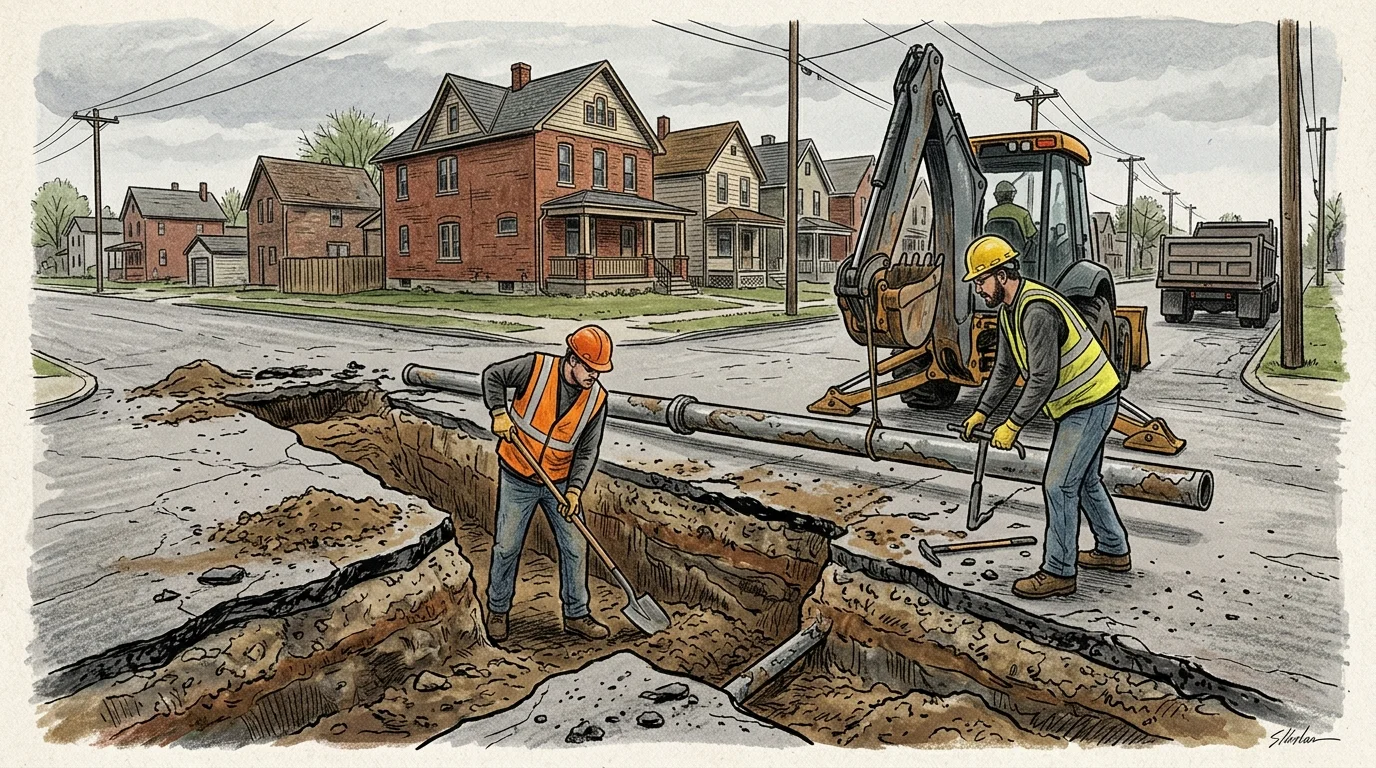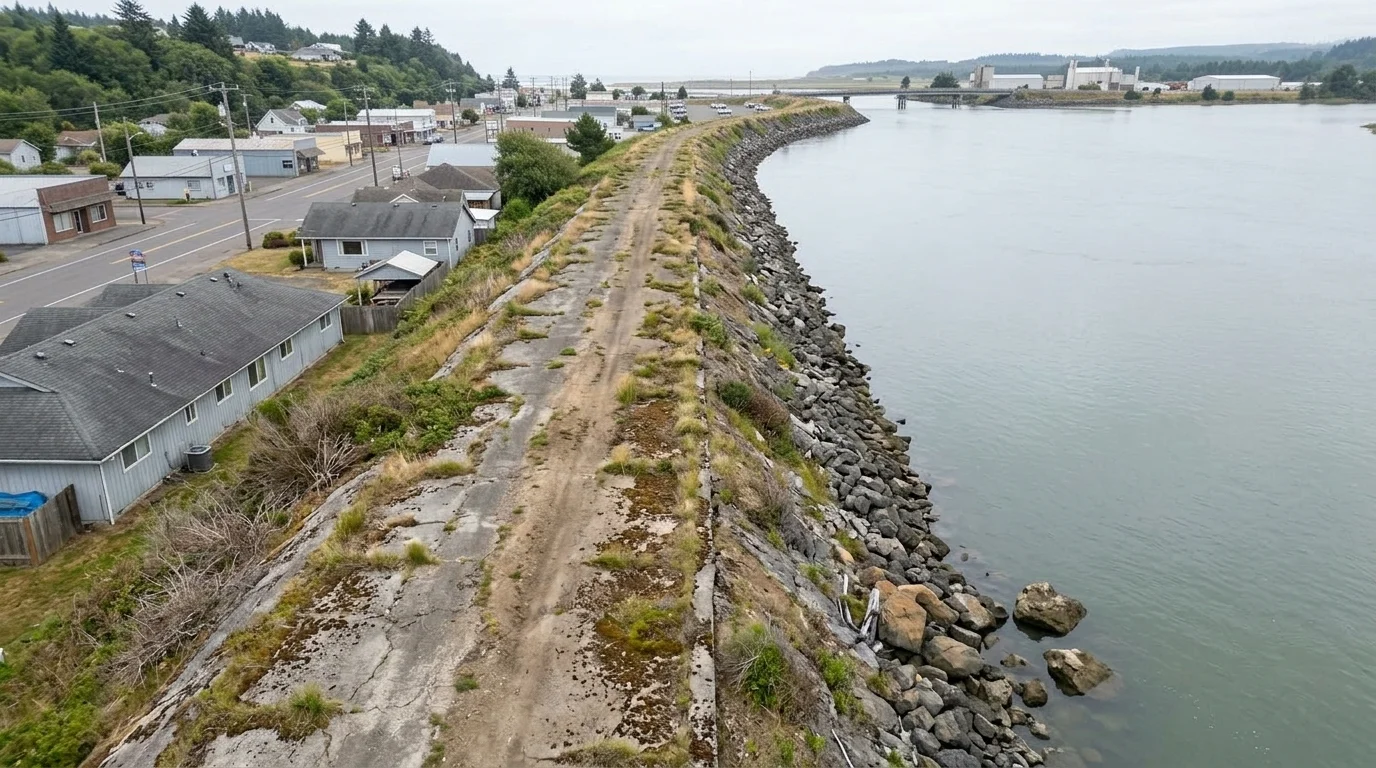
Reedsport, Ore. is moving to upgrade the aging levee system that keeps its downtown from flooding, a critical project for a coastal city of about 4,100 people that sits below river level in places and is protected by infrastructure built more than 50 years ago.
The city has posted a bid solicitation for the first phase of what appears to be a multi-phase levee improvement effort, labeled "Schedule A" in city documents. The specific contract value has not been publicly disclosed, but the project's framing around climate resilience suggests it draws on federal funding streams opened up by the 2021 Bipartisan Infrastructure Law, including FEMA's Building Resilient Infrastructure and Communities program.
The stakes for Reedsport are unusually high. The city was built on floodplain at the confluence of the Umpqua and Smith rivers on Oregon's south coast, and its current levee system was constructed by the U.S. Army Corps of Engineers in the 1970s following the catastrophic "Christmas Flood" of 1964, which devastated much of western Oregon. That infrastructure is now reaching or exceeding its design life.
In the years since Hurricane Katrina exposed the dangers of aging levees nationwide, FEMA has been reassessing flood protection systems across the country. Communities whose levees no longer meet federal certification standards face a painful consequence: residents get pushed into mandatory, expensive flood insurance and new construction can be frozen. For Reedsport, where the local economy never recovered from the closure of the International Paper mill in 1999, that kind of regulatory pressure could be devastating.
Climate change is compounding the pressure. Scientists project heavier rainfall and more intense atmospheric river storms along the Oregon coast, along with gradual sea-level rise, all of which increase the load on levees designed for a different era. The Cascadia Subduction Zone adds a separate threat: a major earthquake along that fault could cause the coastline to drop several feet almost instantly, overwhelming flood defenses that were never engineered to survive a seismic event.
Reedsport cannot fund major levee reconstruction on its own. Its tax base has shrunk steadily since the mill closure, and median household income sits well below the Oregon average. The current project exists primarily because of the federal infrastructure funding pipeline that became available after 2021.
The city has not released a full construction timeline. Whether additional phases follow will likely depend on how this first phase performs and whether federal and state funding remains available.