Nearly four decades after Portland, Oregon helped pioneer modern American light rail, TriMet is confronting the mounting cost of keeping that system running. The agency is now moving to rehabilitate track across its entire MAX light rail network, targeting infrastructure that in some corridors has been in service since the original Eastside Blue Line opened in 1986.
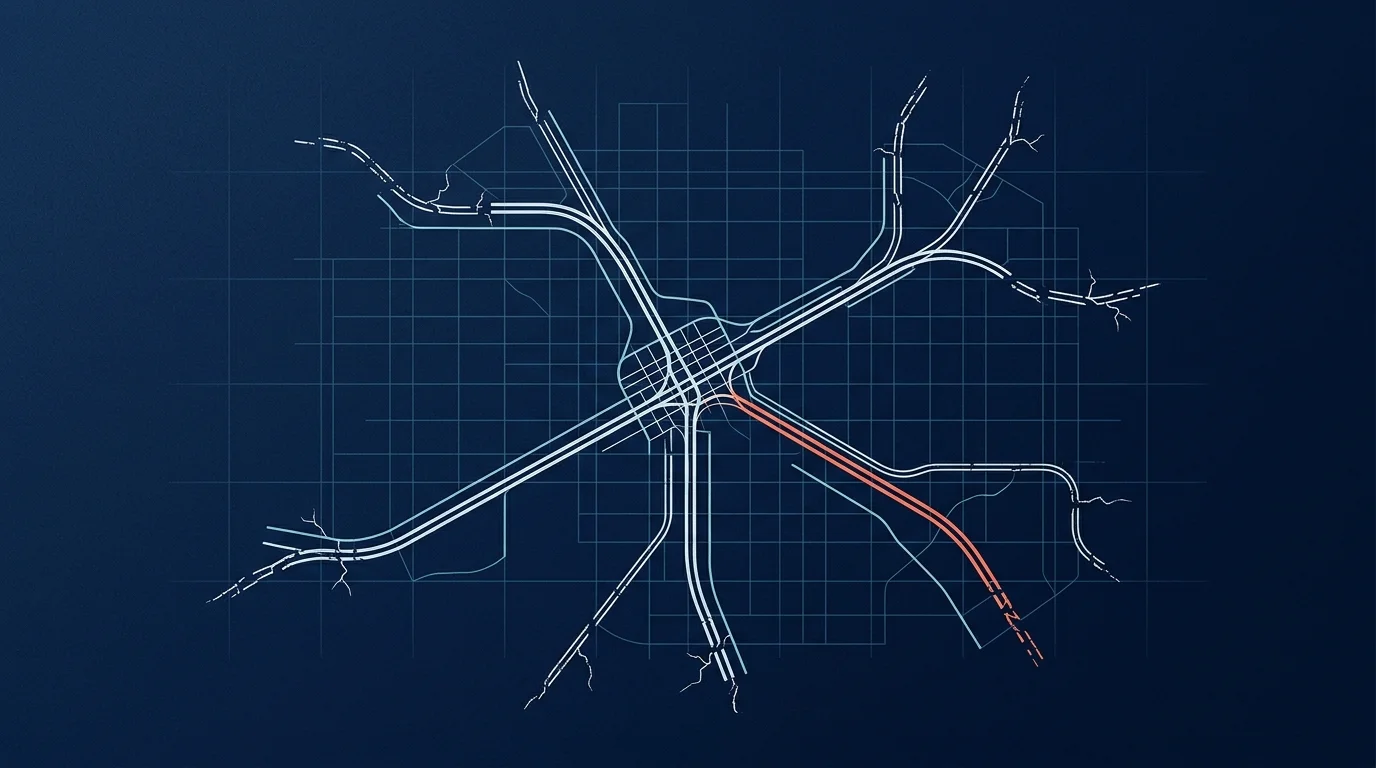
The MAX system today spans roughly 60 miles and five lines, connecting downtown Portland to the airport, Beaverton, Hillsboro, Gresham, Milwaukie, and North Portland across a three-county region of about 1.8 million residents. Rail transit track typically requires major rehabilitation every 25 to 30 years, meaning TriMet's oldest alignments are well past that threshold. Deferred work leads to speed restrictions, increased derailment risk, service disruptions, and higher long-term costs.
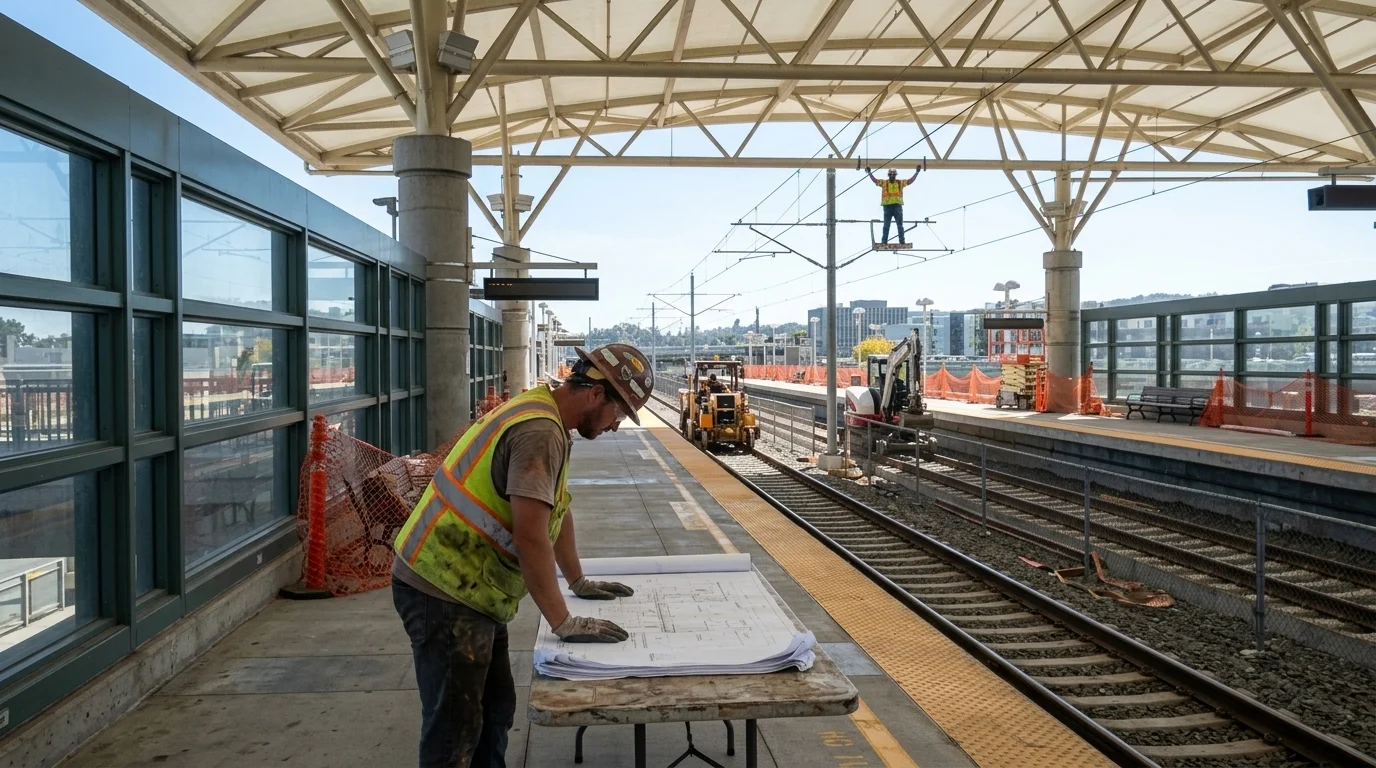
TriMet has posted a solicitation for a construction manager to work alongside its design team using a Construction Manager/General Contractor (CMGC) approach, a method favored for complex rehabilitation work on active rail corridors where construction and ongoing train service must coexist. By bringing the contractor in before designs are finalized, TriMet can catch cost and scheduling problems early, a key advantage when work spans an operating transit system.
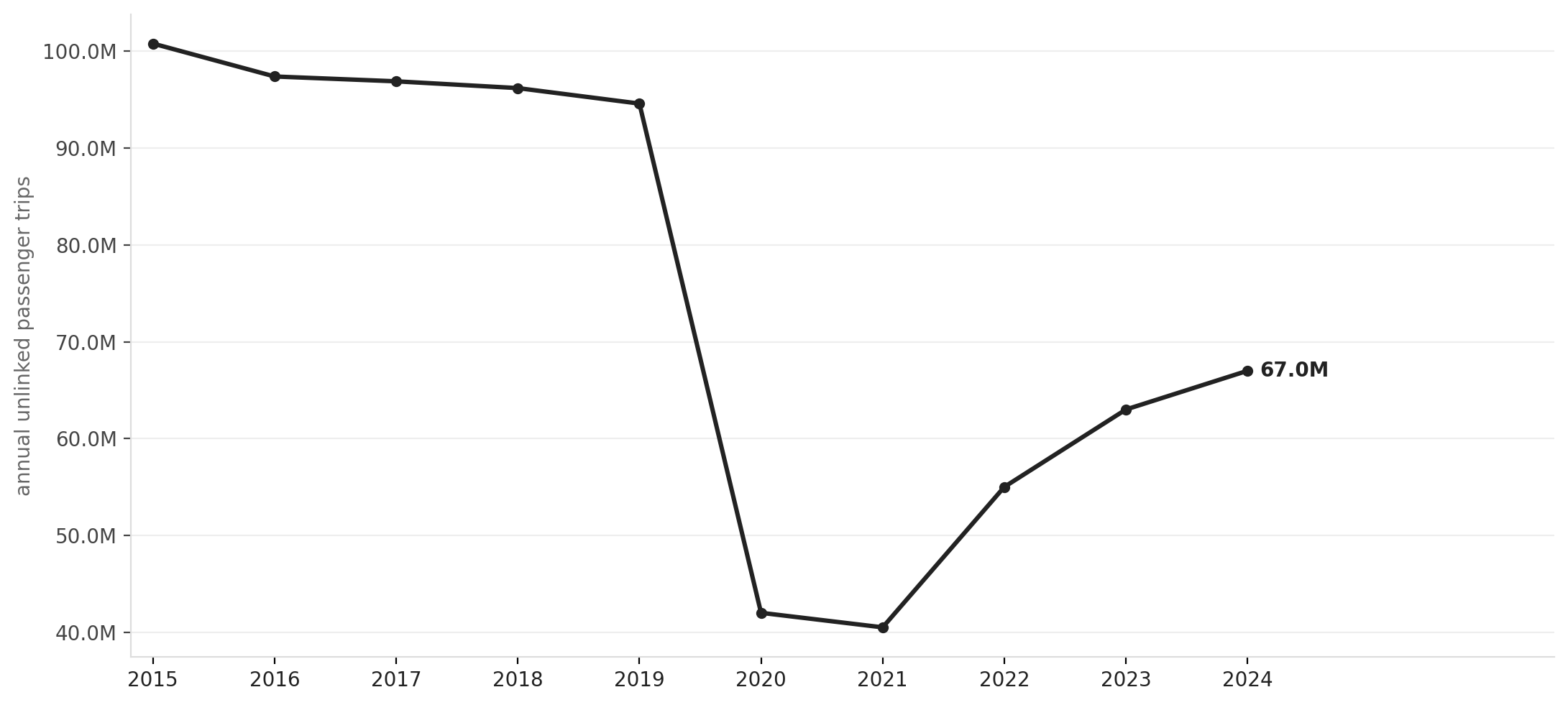
Source: NationGraph.
The effort reflects both a local urgency and a national crisis. The Federal Transit Administration has documented a multi-billion-dollar state-of-good-repair backlog across U.S. transit systems, and agencies from Washington's WMATA to Boston's MBTA have faced service failures tied to aging infrastructure. TriMet's own 2022 capital needs assessment identified billions in unfunded maintenance needs over the next two decades. The federal Infrastructure Investment and Jobs Act, passed in 2021, expanded funding available for exactly this kind of work, giving TriMet a window to act.
The stakes are high politically as well. MAX ridership remains at roughly 60 to 70 percent of pre-pandemic levels, and TriMet has faced sustained public pressure over safety and reliability. A major rehabilitation that requires service disruptions will require careful handling with riders and local officials already skeptical of the agency's performance. How TriMet manages construction impacts on an already-strained system will be one of the first tests of this program.
The agency is in the early procurement phase, and details on total project cost and a construction timeline have not yet been released publicly.