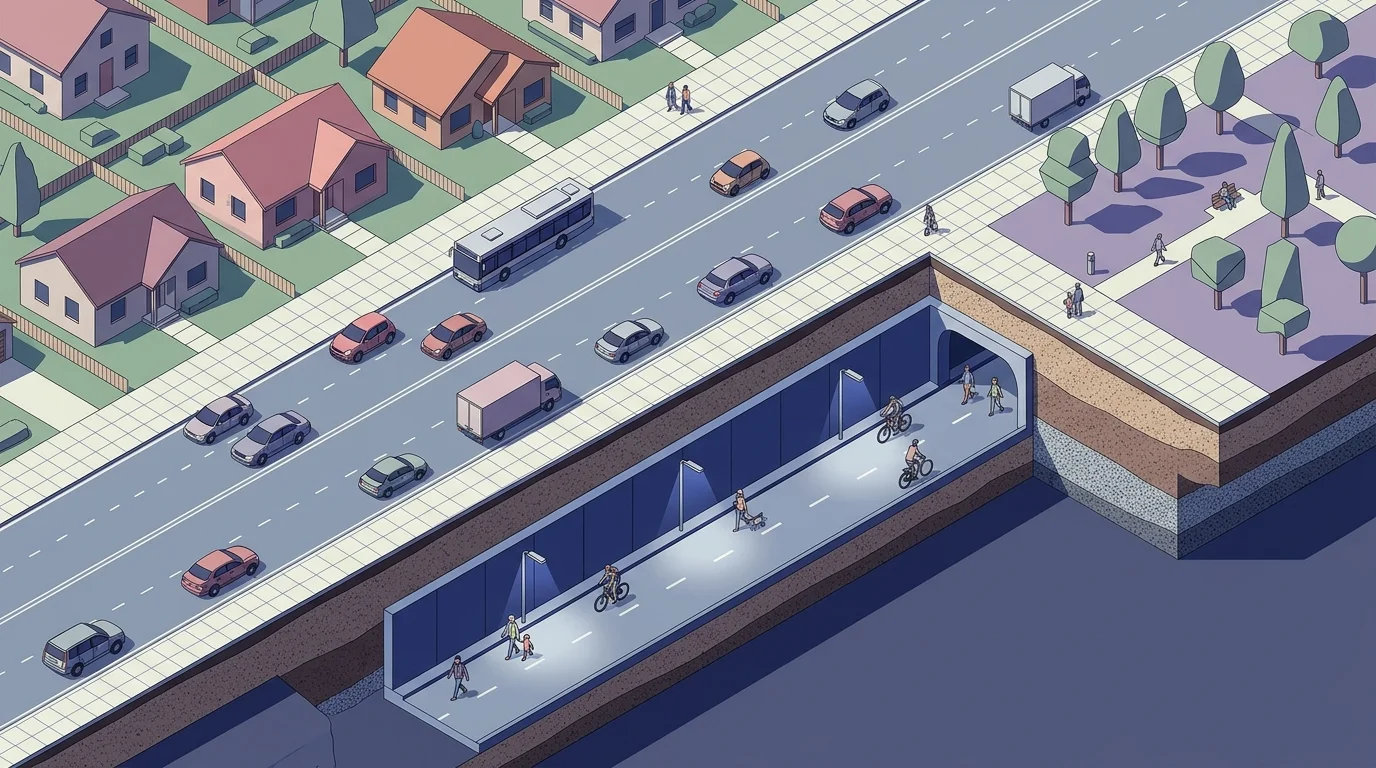
Amarillo, Texas is getting a rare piece of pedestrian infrastructure: an underground trail crossing beneath one of the city's busiest west-side corridors, funded by a $2.2 million federal grant through the Surface Transportation Block Grant program.
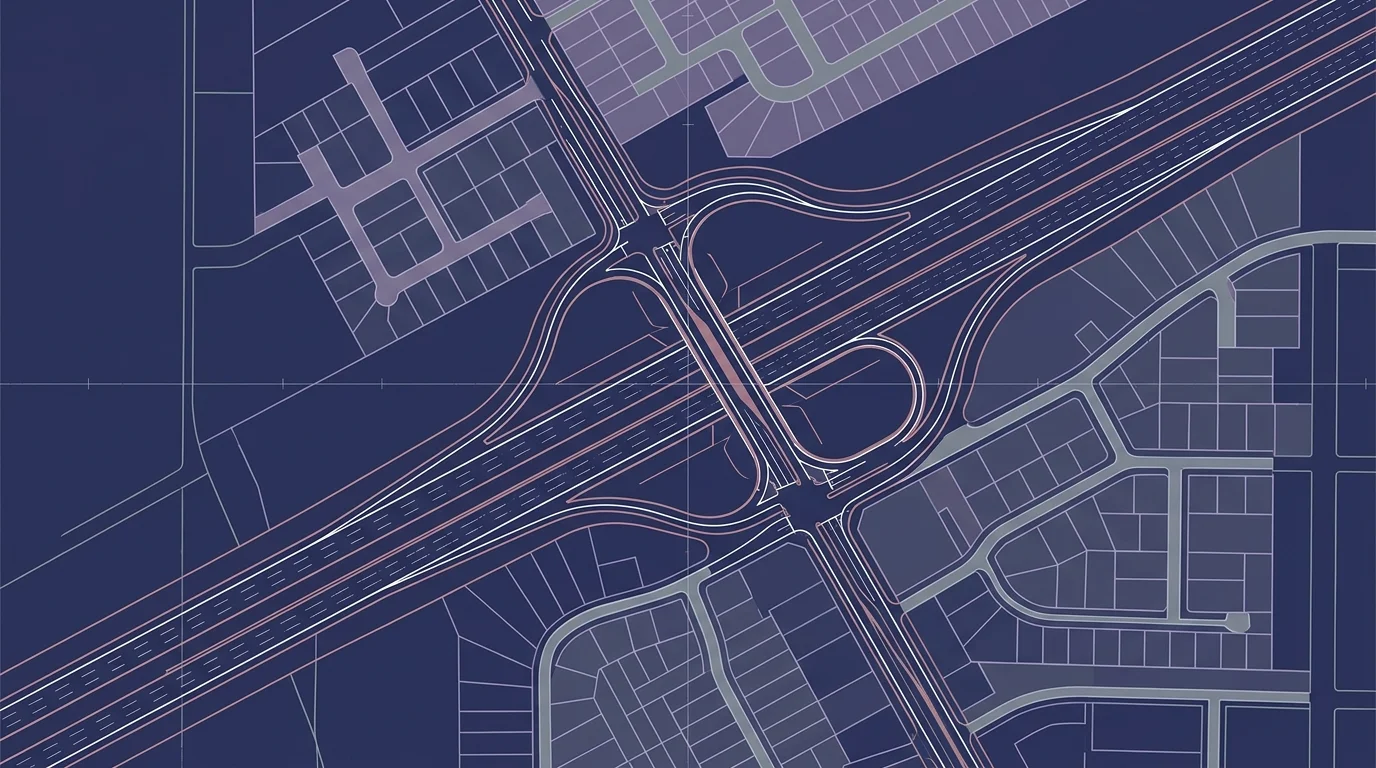
The project runs approximately 700 feet along FM 2220, building a bike and pedestrian path that connects the Houston Avenue and Ware Road area to Westside Park and Field. The centerpiece is an underground crossing at Houston Avenue and Ware Road itself, where the path dips beneath vehicle traffic rather than crossing it at grade. That kind of grade separation is expensive, the project works out to roughly $3,200 per linear foot, but it eliminates the most dangerous moment of any pedestrian trip: crossing a fast-moving road.
FM 2220 was originally designed as a Farm-to-Market road, built for agricultural traffic. As Amarillo's west side has grown, the road has become an urbanized corridor with few accommodations for anyone not in a car. Westside Park serves as a key recreational asset for nearby neighborhoods, many of which are home to working families in a county where the median household income runs below the Texas state average. Without safe, connected infrastructure, reaching the park on foot or by bike means navigating roads with no real room for pedestrians.
Texas ranks among the most dangerous states in the country for pedestrians and cyclists, recording 829 pedestrian fatalities in 2022 alone, second-highest nationally. Amarillo's flat terrain and grid street layout are actually well-suited for cycling, but the infrastructure to support it has largely been absent. The Amarillo metropolitan area receives a smaller share of federal transportation dollars than Texas's major metros, making grants like this one a significant piece of what's available for non-motorized improvements.
The grant flows through the Federal Highway Administration's Texas Division and is administered by TxDOT. The Surface Transportation Block Grant program, reauthorized and expanded under the 2021 Bipartisan Infrastructure Law, is one of the few federal funding streams flexible enough to pay for bike and pedestrian projects alongside traditional highway work. Texas has historically directed a small fraction of that flexibility toward non-motorized infrastructure, making this project a notable example of federal dollars reaching a community that rarely sees them spent this way.
No construction timeline has been announced publicly.