Harrison County, Mississippi is using $2.6 million in BP oil spill penalty money to upgrade a freight transfer facility that officials hope will draw manufacturers and distributors to the Gulf Coast, nearly 15 years after the Deepwater Horizon disaster reshaped the region's economy.
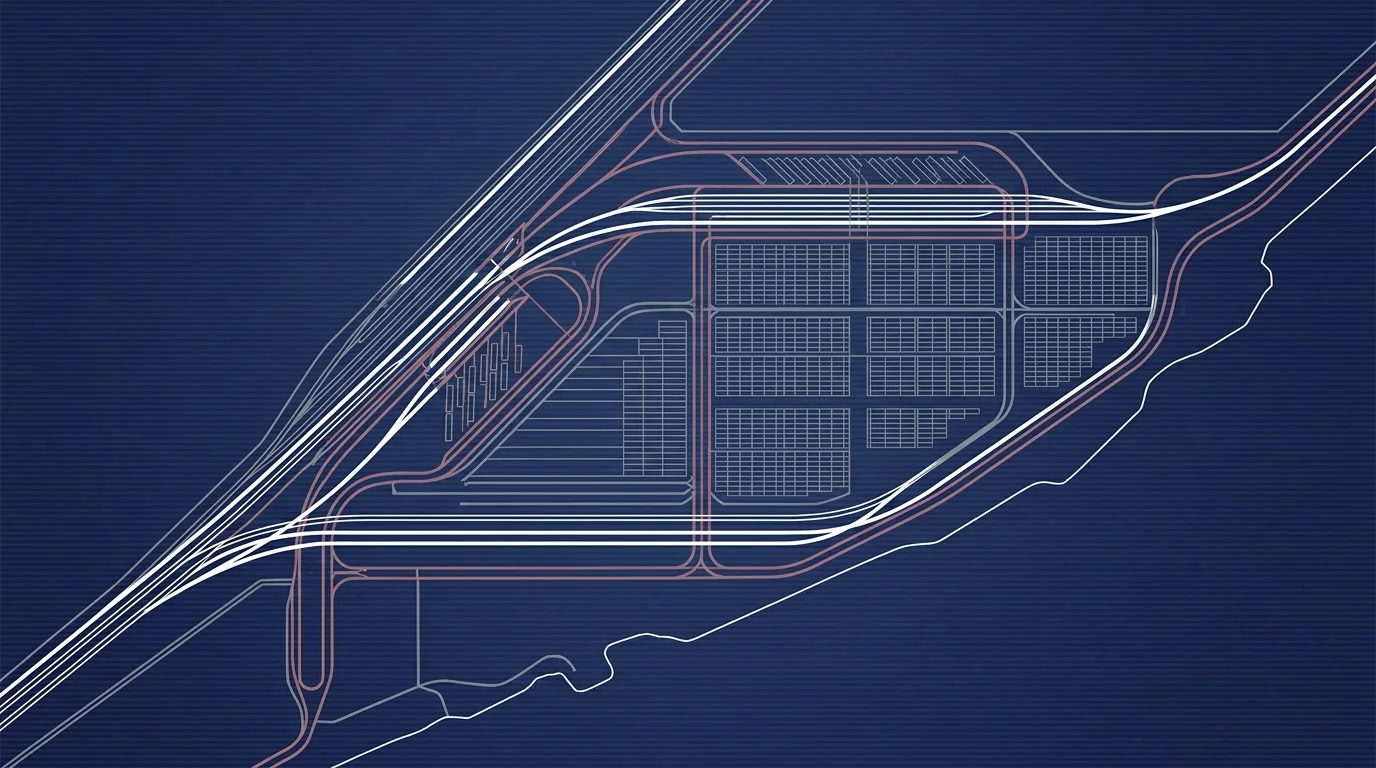
The grant, awarded through the federal RESTORE Act program, will fund engineering, design, and construction upgrades at the Seaway Rail Truck intermodal transload site, a facility that allows goods to move between freight trains and trucks. The Harrison County Development Commission will manage the project, with the Mississippi Department of Environmental Quality overseeing the funds.
The investment reflects a deliberate pivot. Rather than simply restoring what the 2010 spill damaged, fishing, tourism, marine industries, Harrison County is trying to build economic capacity it never had before. Intermodal facilities lower shipping costs by pairing the long-haul efficiency of rail with the flexibility of local trucking, making surrounding areas more attractive for warehousing and distribution. Harrison County's location next to the Port of Gulfport, one of the top 20 U.S. ports by container volume, gives the project a built-in advantage.
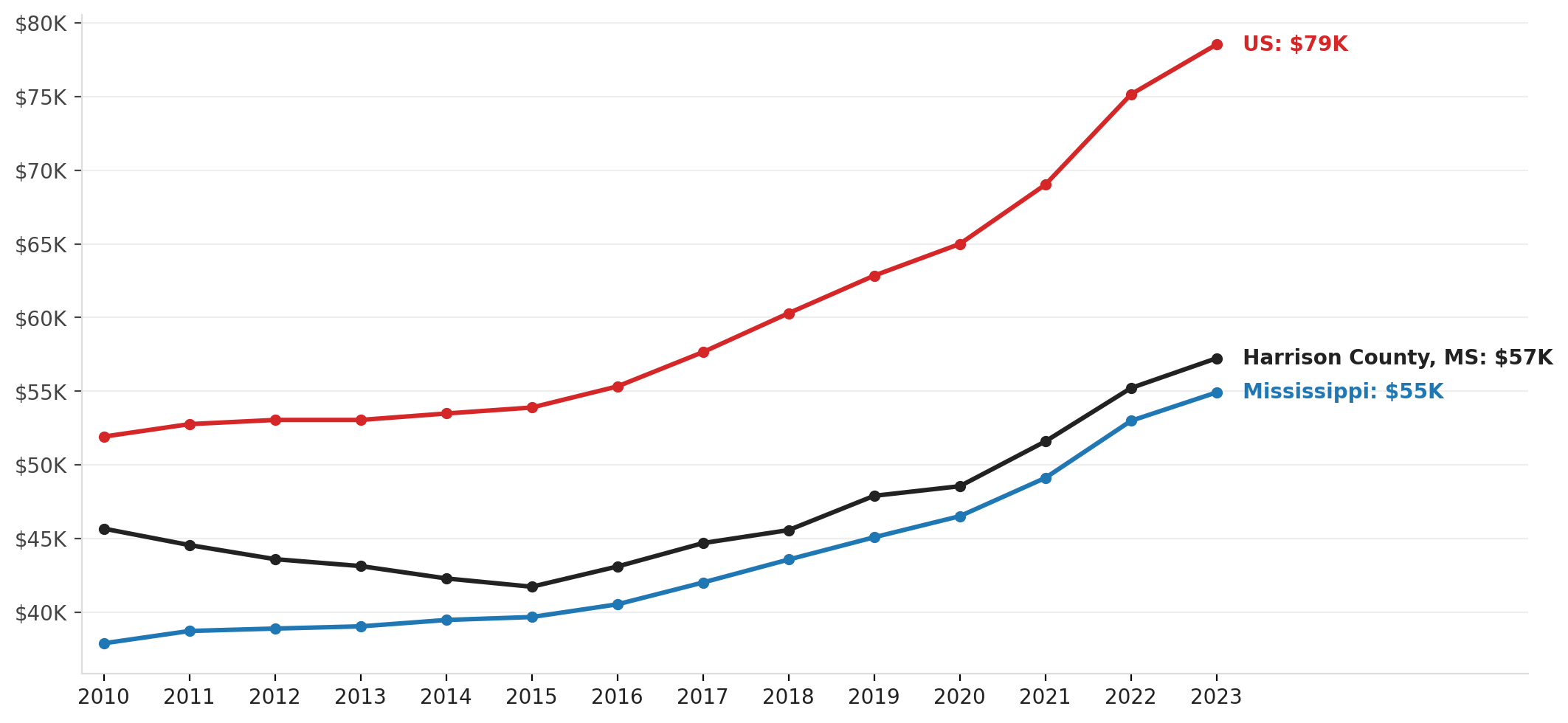
Source: U.S. Census Bureau, American Community Survey.
The county's push for diversification is not abstract. Harrison County, home to roughly 208,000 residents and the cities of Gulfport and Biloxi, has endured two catastrophic economic disruptions in five years: Hurricane Katrina in 2005 and Deepwater Horizon in 2010. Its economy leans heavily on casino gaming, military installations, and port activity, industries that are either geographically fixed or vulnerable to the same storms and spills that have already battered the coast twice.
The funding comes from the RESTORE Act, passed by Congress in 2012 to direct 80% of Clean Water Act penalties paid by BP and other responsible parties into a Gulf Coast Restoration Trust Fund. BP ultimately paid $5.5 billion in penalties under its 2016 consent decree, the largest environmental penalty in U.S. history. Mississippi, along with Texas, Louisiana, Alabama, and Florida, receives a direct share of those funds, with Gulf Coast counties as the primary beneficiaries. A similar allocation recently sent $1.6 million to neighboring Hancock County for sewer infrastructure.
The use of ecological disaster funds for freight infrastructure has drawn scrutiny nationally. Environmental groups have questioned whether projects like this serve the RESTORE Act's restoration purposes, and a 2023 Government Accountability Office report found that Gulf states, including Mississippi, had been slow to spend RESTORE Act money overall, leaving billions uncommitted more than a decade after the spill.
For Harrison County, the argument is pragmatic: a coast that can't sustain a diverse economy will remain vulnerable to the next disaster, whatever form it takes. Whether the upgraded facility succeeds in attracting new tenants will be the measure of that bet.