Port Angeles, Washington is moving to formalize where its homeless residents can safely sleep, inviting nonprofits to run sanctioned tent encampments and safe parking lots as the city's existing shelter beds remain chronically full.
The city posted an RFP for managed sheltering projects on July 2, signaling a shift from ad hoc responses to a structured approach. Two formats are on the table: designated encampments where unhoused individuals and families can pitch tents legally, and safe parking sites where people living in their vehicles can stay overnight without fear of being moved along. The full funding amount and potential site locations have not been disclosed.
The move comes against a specific legal and political backdrop. After the U.S. Supreme Court's June 2024 ruling in City of Grants Pass v. Johnson restored cities' authority to enforce camping bans, Washington municipalities faced a choice: ramp up sweeps or build legitimate alternatives. Many have chosen a middle path, offering a sanctioned place to go before clearing unsanctioned camps. Seattle's tiny house villages and Tacoma's Stability Sites are the most visible examples, but the model has taken root in smaller cities like Olympia and Bellingham as well. Port Angeles, with roughly 20,000 residents, would be among the smallest in the state to go this route.
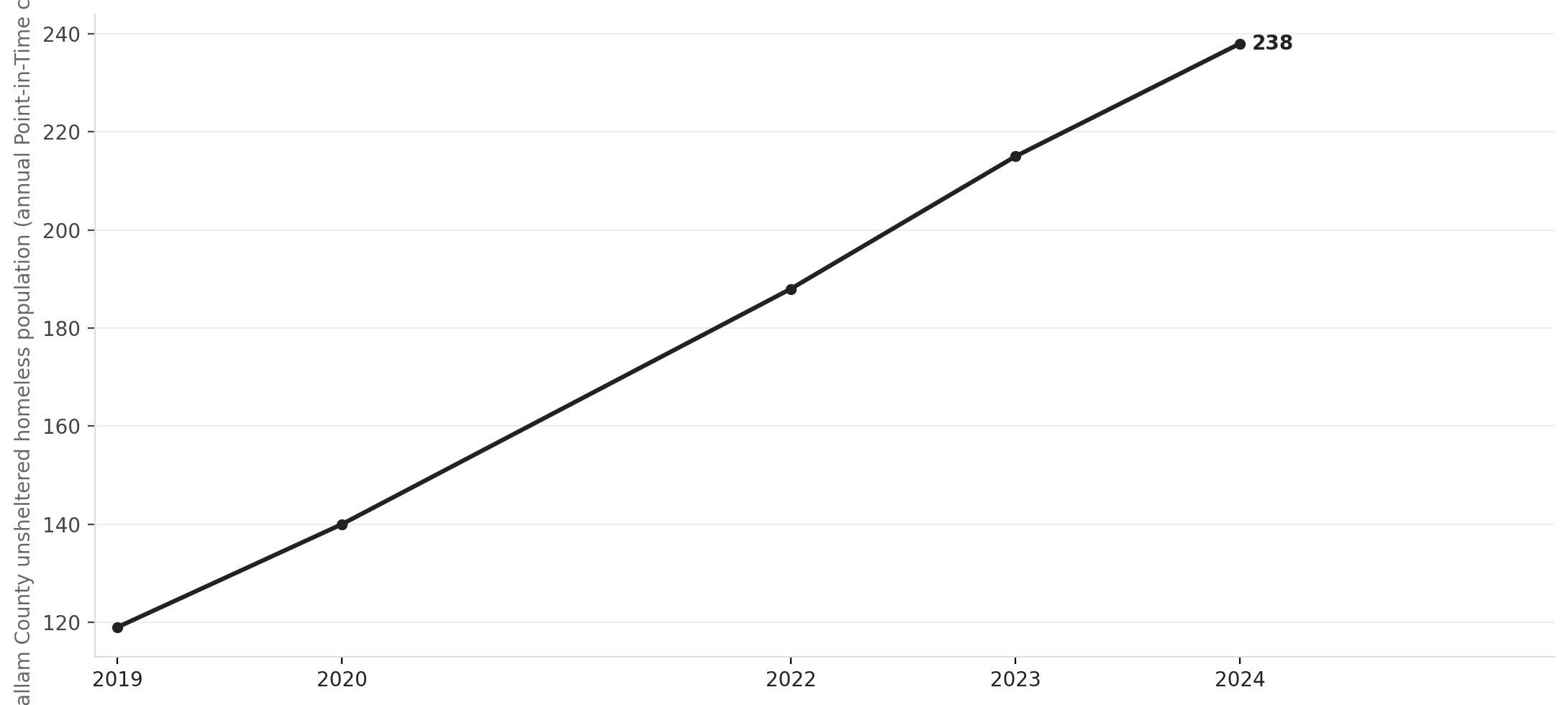
Source: NationGraph.
The pressure is real. The 2024 Clallam County Point-in-Time count showed continued growth in unsheltered homelessness, and local providers like Serenity House and the Salvation Army have repeatedly hit capacity. Port Angeles sits in an unusually constrained geography: Olympic National Park and the Strait of Juan de Fuca leave little room to spread out, concentrating the region's homeless population and its services in one place. A pandemic-era surge in remote workers and retirees from the Seattle area drove housing costs sharply higher, while local wages in the timber, tourism and ferry economy haven't kept pace.
The city council has navigated years of tension over encampments near Francis Street and downtown, with business owners and homeless advocates pulling in opposite directions. This RFP suggests the city is trying to move past that stalemate by giving nonprofits a formal role in managing sites.
Proposals are now being accepted, and the organizations that respond will shape what these sites actually look like, where they go, and how they're run.