Pima County, Arizona is moving to put lawyers in eviction courtrooms alongside low-income Tucson-area tenants, a direct response to rising eviction filings after the federal rental assistance programs that kept thousands of families housed during the pandemic ran dry.
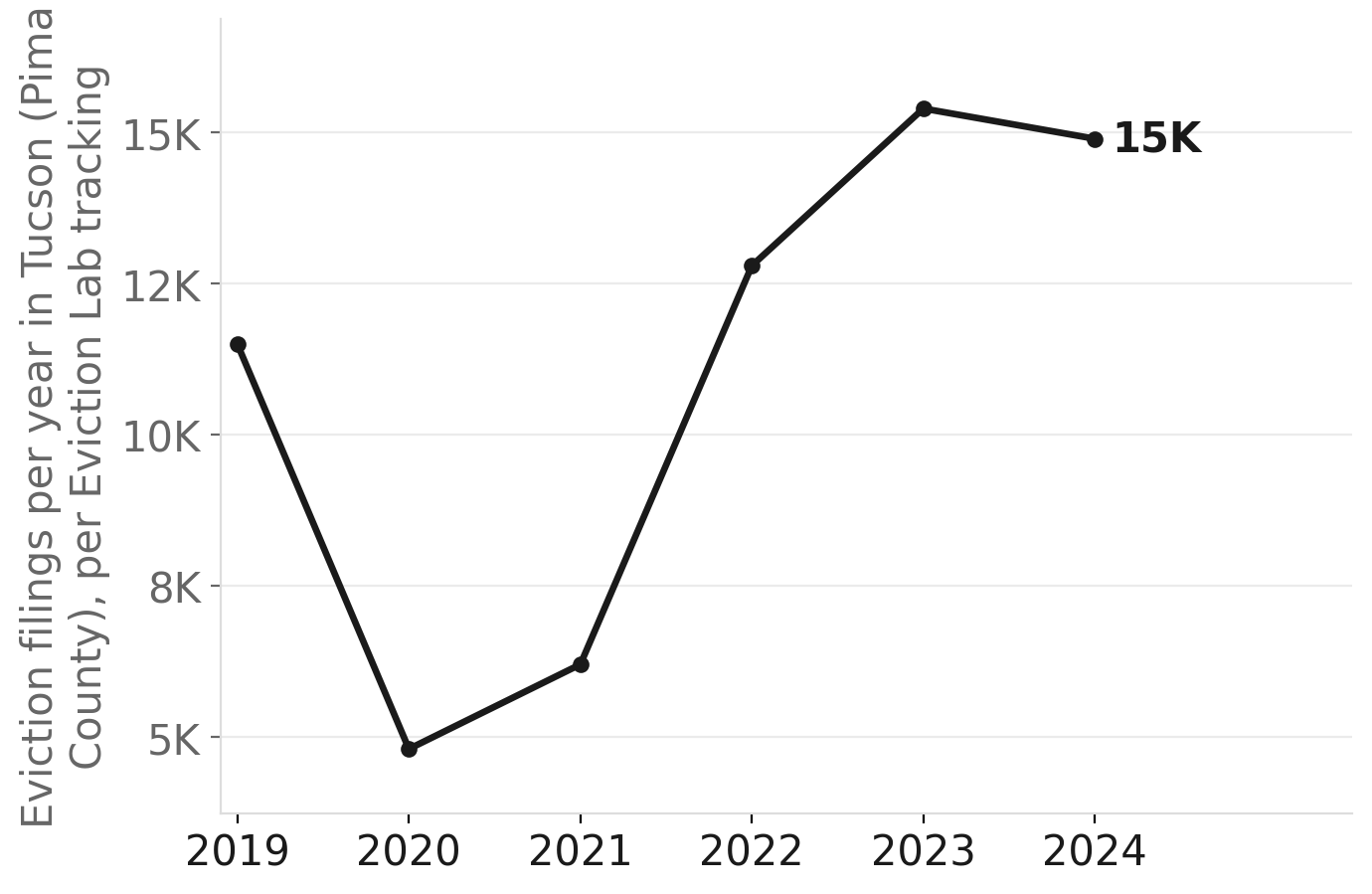
The county posted a solicitation for Emergency Eviction Legal Services on Oct. 29, seeking a provider to represent income-qualified residents facing eviction. The urgency embedded in the program's name reflects what housing advocates have seen on the ground: eviction filings in Tucson have returned to and in many cases exceeded pre-pandemic levels.
For about five years, federal money cushioned the blow. Congress poured roughly $46.5 billion into Emergency Rental Assistance nationwide after COVID-19 hit, and Arizona received more than $789 million of that, with Pima County running its own Eviction Prevention Program that paid back rent for tens of thousands of households. Those funds were largely exhausted by late 2023 and fully wound down by 2024 and 2025. With that lifeline gone, landlords are filing again, and tenants are mostly showing up to court alone.
Source: NationGraph.
That matters enormously in Arizona, which has one of the fastest eviction timelines in the country. Under state law, a tenant can be removed for nonpayment in as little as five to 10 days, leaving almost no time to find a lawyer, negotiate a payment plan, or understand legal options. Research from right-to-counsel programs elsewhere, including New York City's pioneering 2017 law, has consistently shown that represented tenants are dramatically less likely to be evicted than those who go it alone.
Pima County has limited tools available. Arizona's Republican-controlled state legislature has blocked most local tenant protection ordinances, leaving the Democratic-led Board of Supervisors to work with instruments they fully control, including the county's own procurement budget. Paying lawyers to show up in court is one of the few remaining levers.
The stakes are high for a county where roughly 40% of households rent, the poverty rate hovers around 15%, and rents rose 30 to 40% between 2020 and 2023. Elderly residents on fixed incomes, immigrant families, and members of the Tohono O'odham and Pascua Yaqui nations face particular barriers navigating eviction proceedings. Existing free legal services in the county, provided primarily by Southern Arizona Legal Aid and Step Up to Justice, have been stretched thin as caseloads climbed.
The county is now looking for a provider to take on that caseload in a more structured way. How many tenants the program will serve, and at what cost, will depend on the proposals that come back.