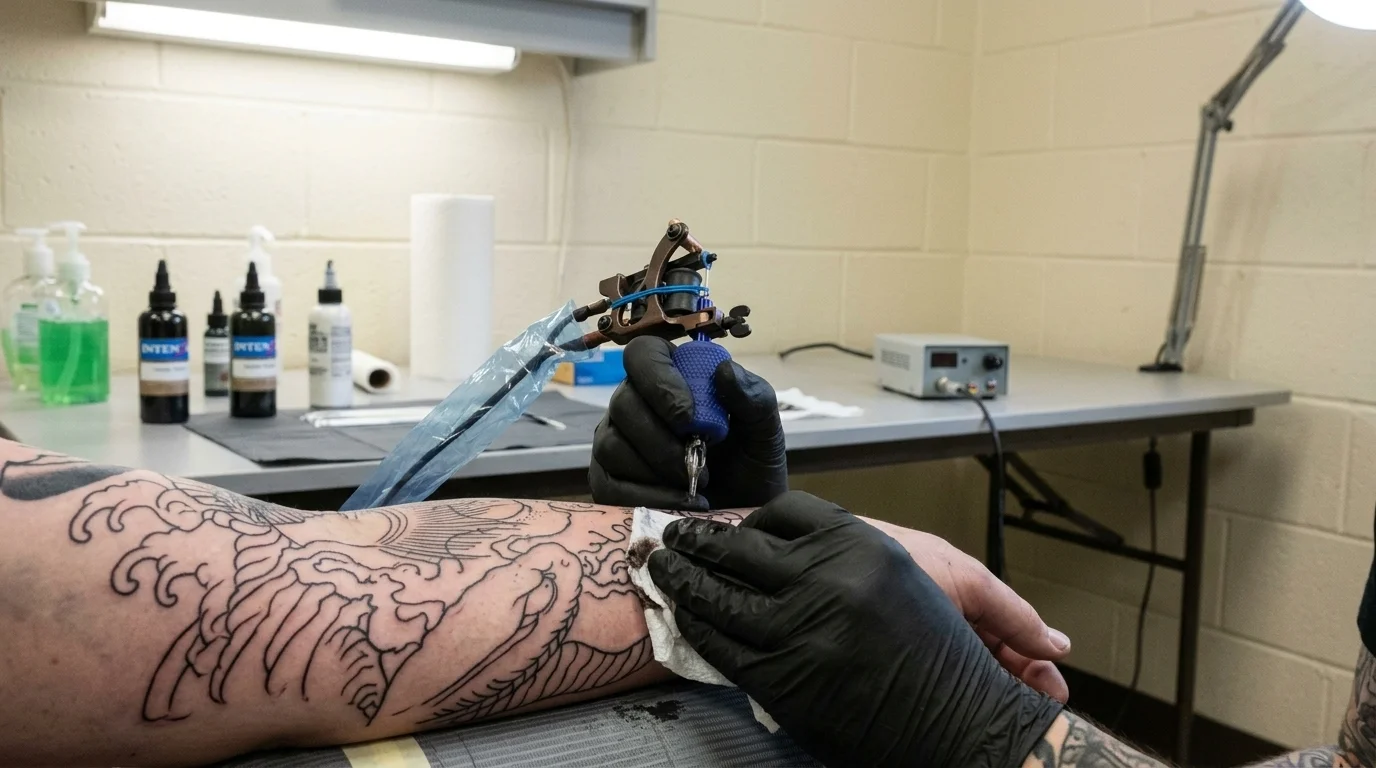
Pennsylvania is launching a tattoo artist apprenticeship program for incarcerated people at SCI Frackville, a medium-security prison in Schuylkill County, betting that a skill many prisoners already practice in secret with contraband equipment can become a legal livelihood after release.
The Pennsylvania Department of Corrections is hiring a contracted instructor to run the program 32 to 40 hours a week, covering everything from disease prevention and needle safety to design, customer service, and how a professional tattoo shop operates. The goal is a formal apprenticeship credential, not just job training.
The trade is an unusual but practical choice. Tattooing is one of the few skilled professions in Pennsylvania that doesn't require a state-issued license, meaning people with felony records face far fewer barriers entering it than they would in cosmetology, nursing, or contracting. Pennsylvania's 2020 occupational-licensing reform law (Act 53) further limits how much an old conviction can block someone from working, and tattoo artists fall under county health and sanitation rules rather than any professional licensing board.
Source: NationGraph.
The industry itself is growing. Tattooing generates more than $3 billion annually in the U.S. and has expanded steadily for years, with demand outpacing the supply of trained artists in many markets.
Frackville has run vocational programs before, including barbering, carpentry and culinary training, and the tattoo apprenticeship fits that model. It also addresses a specific safety problem: underground tattooing inside prisons, done with improvised equipment and shared ink, is a known transmission route for Hepatitis C and HIV. Teaching the trade properly, with sterile technique and disease-prevention training built into the curriculum, could reduce that risk.
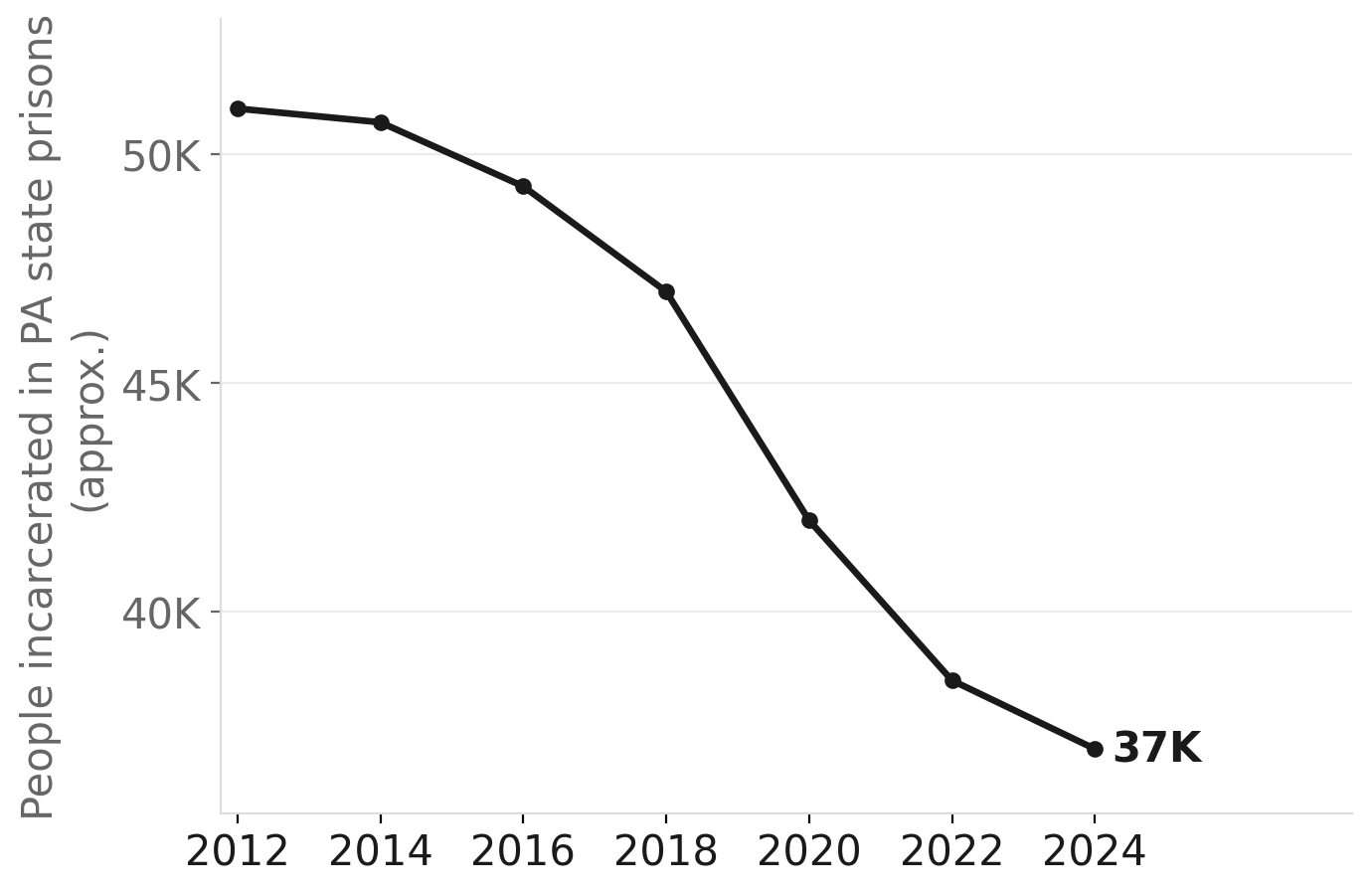
Pennsylvania houses roughly 37,000 people across 23 state prisons, down about 20% from a peak of around 51,000 in 2012. The state spends more than $3 billion a year on corrections, and reducing the number of people who return to prison after release is both a public safety and a budget argument. Research consistently shows that stable employment after release is one of the strongest predictors of whether someone reoffends.
The program is part of a broader push under DOC Secretary Dr. Laurel Harry, who has expanded workforce-development programming since taking over in 2023, including barbering apprenticeships and CDL training partnerships.
The department posted the solicitation on Pennsylvania's eMarketplace seeking an instructor. No contract value was disclosed. Once a contractor is selected and the program launches, it will be among the first state-run prison tattoo apprenticeships in Pennsylvania, joining similar efforts in Washington State and at California's San Quentin that have drawn national attention in recent years.