Pennsylvania issued 191 stormwater management RFPs in the last 30 days, against a monthly average of roughly 42, a 4.5x spike that makes October 2026 the single highest-volume month in an 18-month dataset. The contracts range from pipe replacements in legacy industrial boroughs to basin retrofits at a state university to rain garden maintenance programs in Chester County. They share one cause: a convergence of federal permit deadlines that has put every tier of Pennsylvania government into procurement at the same moment.
Two distinct permit instruments are driving the same wave, and they should not be confused. PennDOT holds a single Individual Large MS4 permit under the federal Clean Water Act's NPDES framework; that permit, effective November 1, 2021, expires October 31, 2026, and PennDOT must submit a full renewal application before that date. Separately, PA DEP's PAG-13 General Permit covers Pennsylvania's 1,059 small municipal MS4s, one of the largest such populations in the country, and its reissuance cycle originally set a September 30, 2026 deadline for municipalities to submit Notices of Intent under the new permit. DEP subsequently announced it would not publish the final PAG-13 in 2026 and would revise the NOI deadline, but that reprieve has not stopped the procurement wave. Municipal engineers had already briefed councils, contracts were already in motion, and waiting for regulatory certainty when your permit expires in weeks is itself a compliance risk.
PennDOT is the top single issuer, with 15 RFPs in the trailing 30 days covering Stormwater Control Measure (SCM) maintenance contracts across Delaware, Philadelphia, Montgomery, and Chester counties. Those contracts are funded through state appropriations, not federal grants; PennDOT's active federal DOT grant portfolio carries roughly $995 million obligated for transportation broadly, but SCM-specific maintenance costs are not separately broken out. At the municipal level, the picture is similar: the active EPA Clean Water State Revolving Fund and direct EPA stormwater grant portfolio for Pennsylvania totals roughly $9 million spread across local awardees, in the $376,000 to $3.5 million range per municipality. That means the overwhelming majority of this procurement wave is being financed from local budgets, stormwater fees, or state revolving funds, not federal recovery dollars.
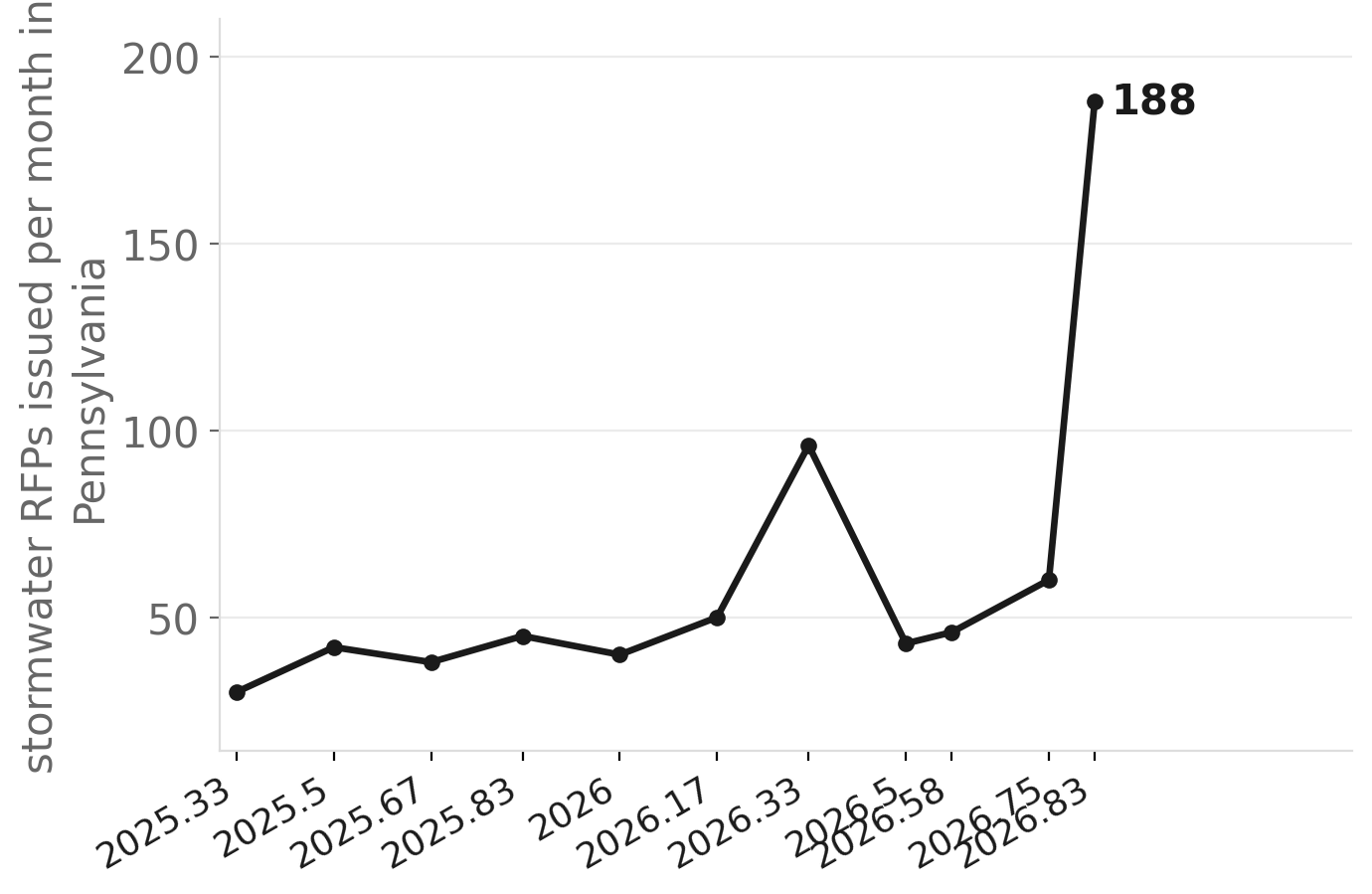
Source: NationGraph.
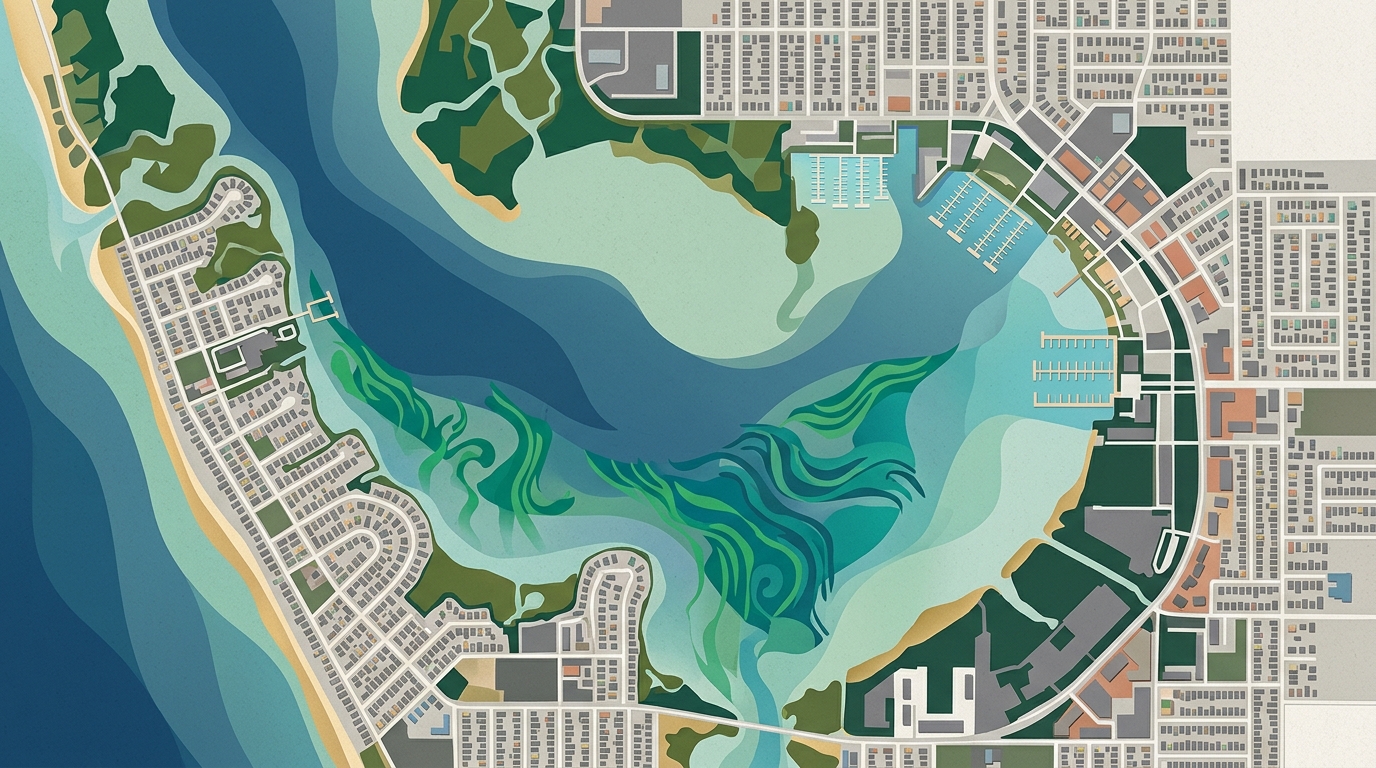
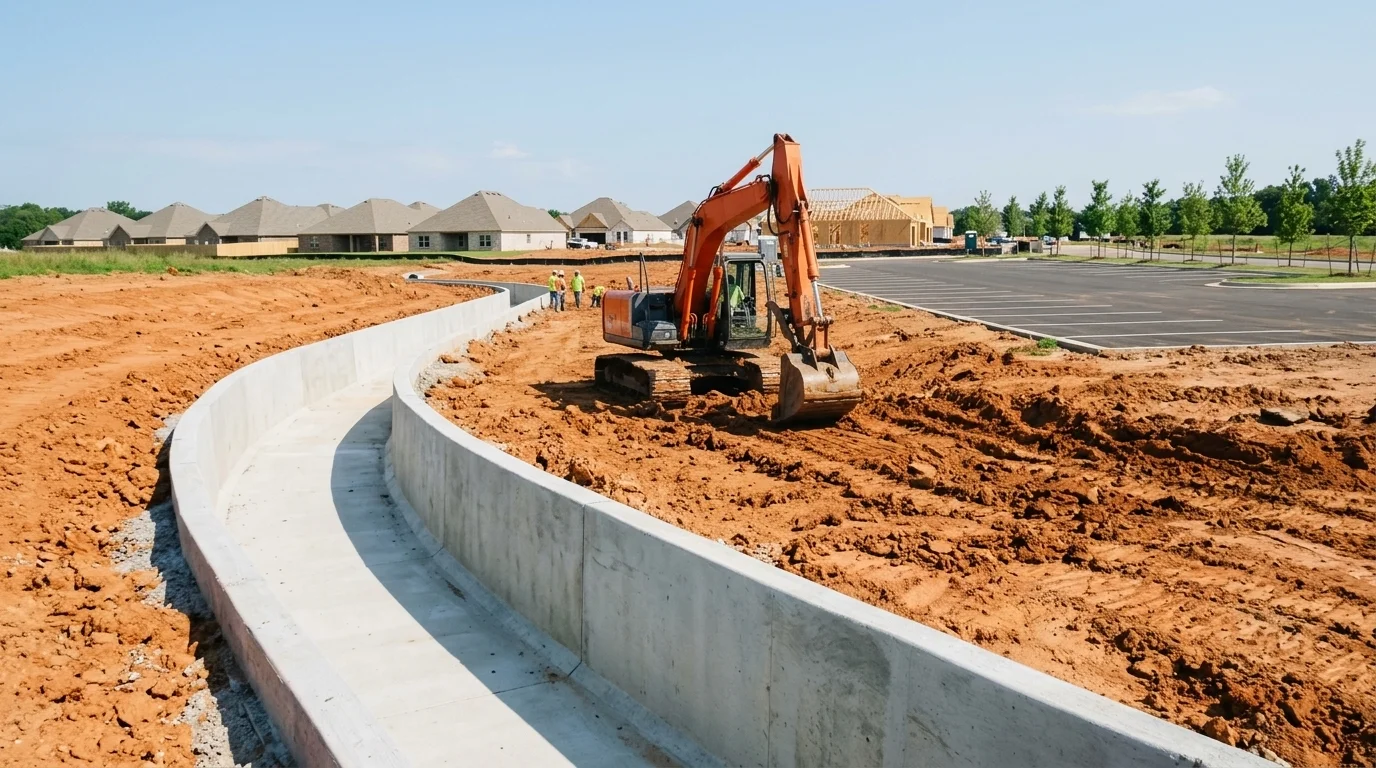
The county-level spread confirms this is not a single-jurisdiction event. Dauphin County leads with 19 RFPs, followed by Allegheny with 18, Westmoreland with 10, Montgomery with 9, and Lancaster with 8. The project types are as varied as the geography: Ephrata Borough and Shamokin are engineering street-level stormwater replacements, West Chester University is retrofitting a detention basin, Lower Merion and Cumberland County have road and bridge projects with stormwater components, and West Chester Borough is running a rain garden maintenance program. What binds them is not a shared funding stream but a shared regulatory calendar.
The compliance burden is not purely about renewing existing permits. The new PAG-13 adds requirements that municipal engineers are describing as a step-change, including a Volume Management Plan due in draft form by September 2028. At a June 2025 New Cumberland Borough council session, the borough engineer urged council to begin planning for "compliance costs and possible projects rather than relying on purchased credits", a signal that the offset-credit strategies some smaller municipalities had leaned on may not survive the new permit cycle. In Douglass Township in Montgomery County, an assistant manager publicly called the new PAG-13 requirements "unfunded mandates," a phrase that has started circulating in borough halls across the state. In a Lackawanna County borough, officials were told they must demonstrate stormwater infrastructure upgrades and enact an updated stormwater ordinance as conditions of an MS4 waiver, before the end of 2026.
The structural reason this wave is so large is a timing artifact of the five-year NPDES permit cycle. Many Pennsylvania MS4 permits were issued or renewed around 2021, which means a large cohort expires simultaneously in 2026. Unlike coastal flood-resilience spending, this procurement is not triggered by a disaster or a federal appropriation. It is triggered by regulatory law, which means the spending happens regardless of whether grant money is available. Pennsylvania municipalities cannot defer these projects the way they might defer a capital improvement: a lapsed MS4 permit exposes a municipality to enforcement action under the Clean Water Act.
The next signal to watch is PA DEP's announcement of the revised PAG-13 NOI deadline. If DEP pushes the deadline deep into 2027, some municipalities may pause additional procurement. But contracts already executed will not be unwound, and PennDOT's October 31 deadline is fixed. The October spike in RFPs may represent peak procurement pressure, or it may be the leading edge of a longer compliance cycle driven by the new Volume Management Plan requirements coming due in 2028.