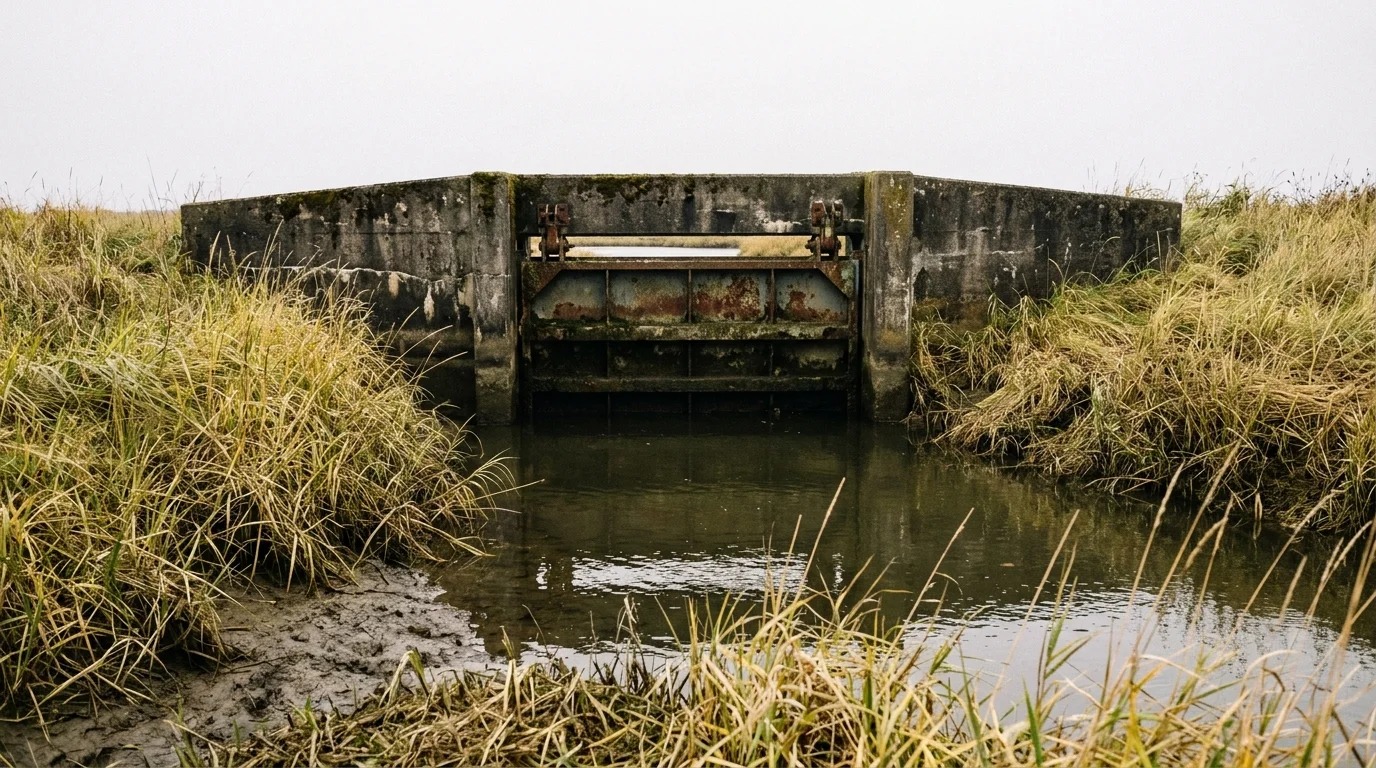
A tide gate on Oregon's coast, a relic of mid-20th century flood control that has quietly choked off tidal marsh habitat and blocked salmon for decades, is coming out. An Oregon agency has posted a solicitation on the state's procurement portal to remove the structure at Gallagher Slough and restore the surrounding coastal wetland to functioning tidal marsh.
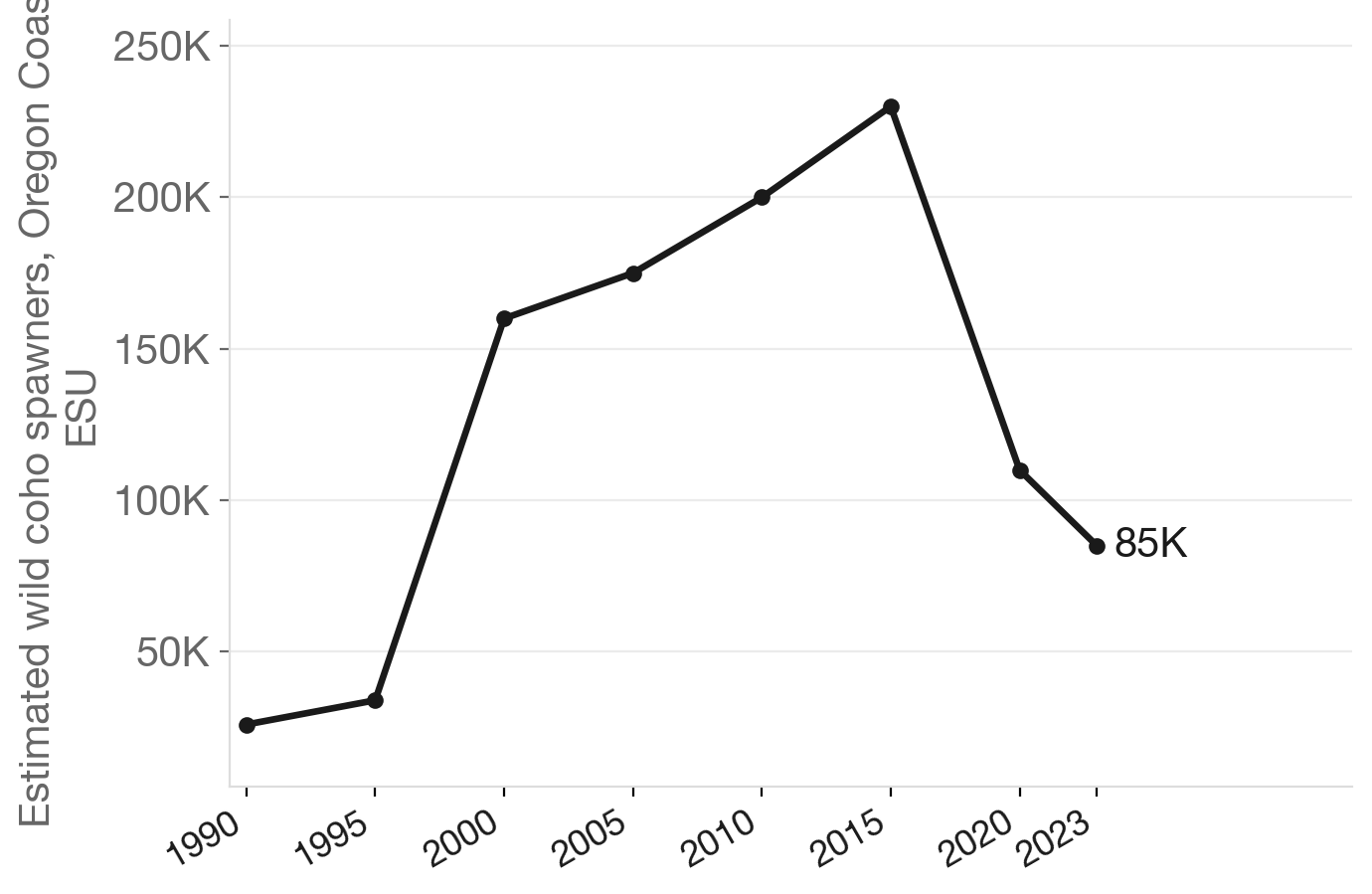
Tide gates were built by the thousands along the Pacific Coast between the 1920s and 1960s, installed as one-way valves across coastal creeks and sloughs to drain wetlands for dairy farms and cattle ranches. They worked as intended. They also cut off estuaries from tidal exchange, trapped warm, low-oxygen water laden with agricultural nutrients, and blocked the upstream migration of coho salmon, steelhead and cutthroat trout. On the Oregon coast, where coho salmon are listed as threatened under the Endangered Species Act, that legacy has become impossible to ignore.
Scientists and restoration ecologists have spent the past 15 years documenting the damage and making the case for removal. Federal momentum accelerated sharply with the 2021 Bipartisan Infrastructure Law, which sent roughly $2.6 billion to NOAA for coastal resilience and habitat restoration, and continued with the 2022 Inflation Reduction Act. Oregon's Watershed Enhancement Board has been steadily funding tide gate removals as the science has hardened. The Gallagher Slough project is part of that sustained push.
Source: NationGraph.
Once the gate is removed and tidal flow restored, the slough is expected to rebuild as a functioning salt marsh: filtering water, cycling nutrients, storing carbon and reopening habitat for juvenile salmon that need estuarine shallows to grow before heading to sea. The project pairs the infrastructure removal with active wetland restoration work.
The issuing agency was not identified in the posted record, but the solicitation is listed on OregonBuys, the state of Oregon's procurement system, posted Sept. 17, 2026. Contractor selection is the next step before restoration work can begin.