New York water districts issued 14 PFAS treatment RFPs in the trailing 30 days, against a 12-month monthly average of about 2.1, a 6.7x spike that is the largest single-month total in at least 18 months. Eleven of those 14 bids came from Long Island water districts in Nassau and Suffolk counties. Governor Hochul has not yet signed the bill that formally imposes the new limits.
That last detail is not slowing anyone down. The New York Legislature passed S3207B/A8634B unanimously on June 3, 2026, cutting allowable PFOA and PFOS concentrations from 10 parts per trillion to 4 ppt and setting a May 1, 2029 compliance deadline. Granulated activated carbon systems and ion-exchange treatment units, the technology most of these districts are procuring, take 18 to 36 months to design, bid, and install. A water district that waits for the governor's signature before issuing an RFP is already, mathematically, in jeopardy of missing the deadline. As advocates pressed Hochul to sign the bill at a November 16-17 Capitol push led by State Sen. Pat Fahy, Long Island procurement offices were already moving.
The federal picture is making that calculation even starker. In May 2026, the Trump EPA proposed extending the federal PFOA/PFOS compliance deadline from 2029 to 2031 and rescinding MCLs for PFHxS, PFNA, and GenX chemicals entirely. These are not the same policy as New York's pending state law, they operate through separate legal mechanisms and in opposite directions. The federal proposed rule would loosen requirements; the state bill would tighten them. If Hochul signs, New York water systems face the stricter 4 ppt standard under state Public Health Law regardless of what the EPA does in Washington. The result is a regulatory fork: districts that bank on the federal floor are exposed, while those procuring to the state standard are covered either way. For utility managers on Long Island, that asymmetry has a clear answer.
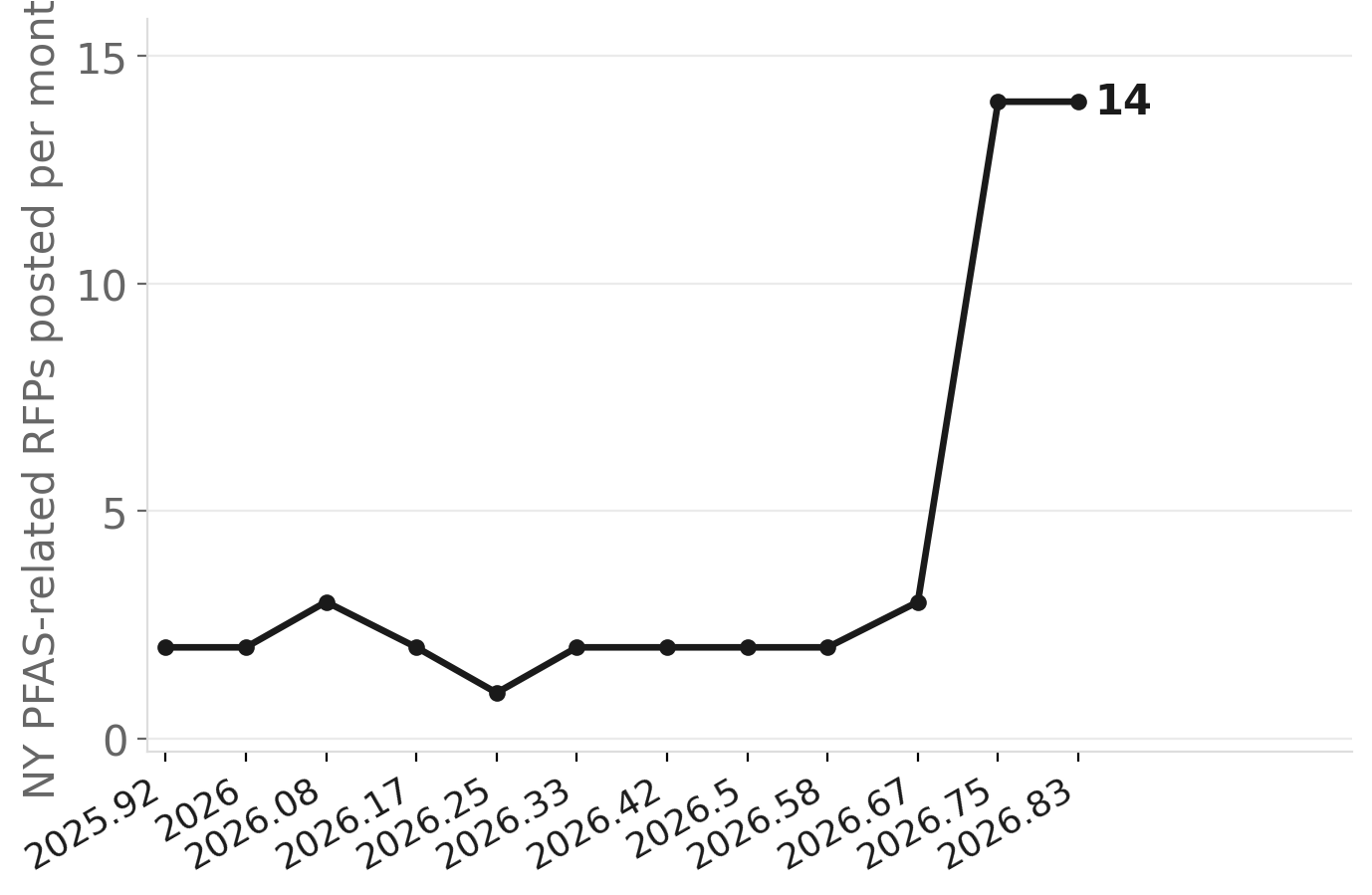
Source: NationGraph.
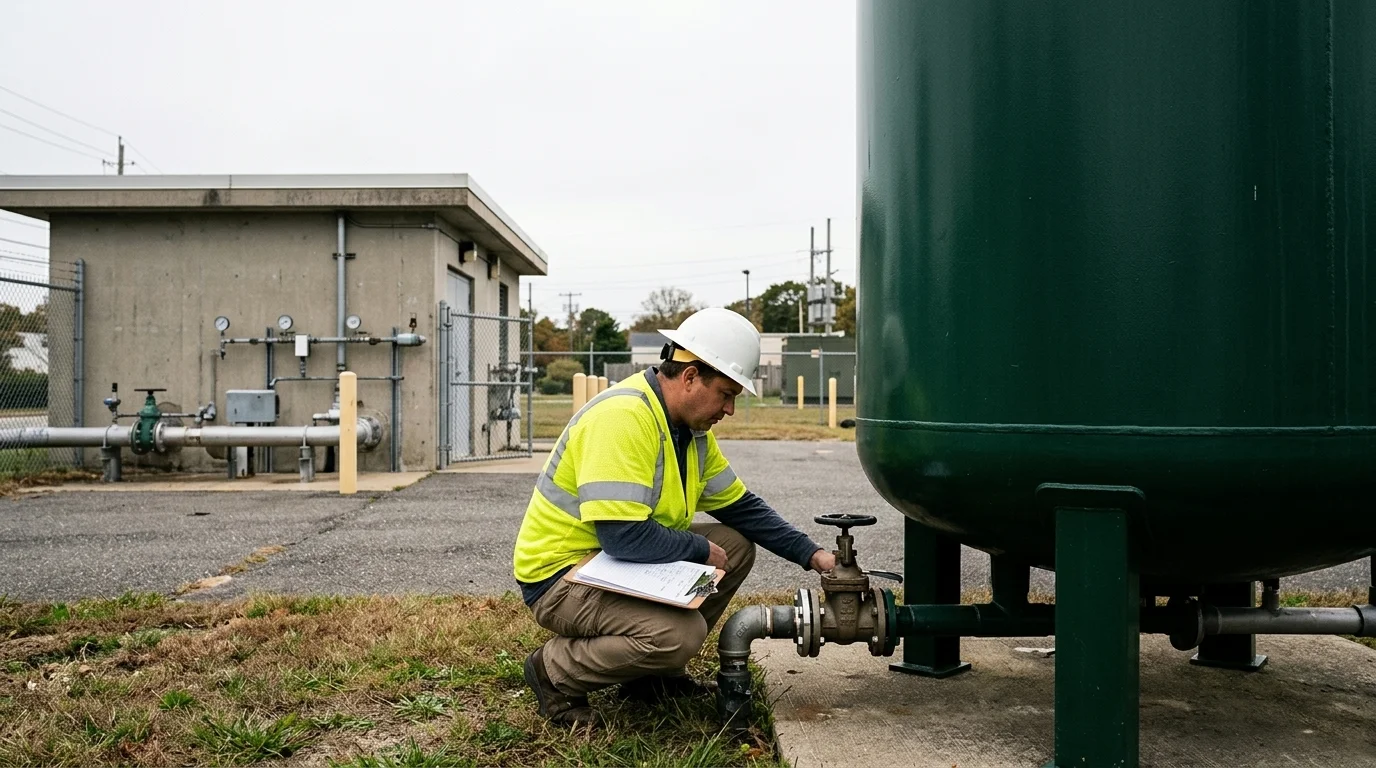
Long Island is not an arbitrary epicenter for this procurement wave. Nassau and Suffolk counties serve roughly 2.9 million people on groundwater-dependent public water systems, with no surface water alternative. Decades of industrial activity, including Grumman and Northrop Grumman manufacturing operations in Nassau and the former Calverton Naval Weapons Station in Suffolk, left the aquifer system heavily contaminated with PFAS compounds. For these districts, treatment upgrades are not an environmental improvement option; they are the only path to a compliant water supply. The RFPs now in procurement from entities including the Water Authority of Western Nassau County, Albertson Water District, Southampton Town, Greenlawn Water District, Locust Valley Water District, and Manhasset-Lakeville Water District are operational procurements: GAC absorbers, wellhead treatment systems, ion-exchange units. These are capital commitments, not feasibility studies.
The financial runway to support those commitments exists. New York's active federal PFAS grant portfolio totals $184 million across 24 grants. The largest piece is two EPA WIIN Act Emerging Contaminants grants to NYS DOH totaling $125.2 million, running through 2029 and 2030, designed specifically to fund water infrastructure upgrades for PFAS and other emerging contaminants in small and underserved communities. A separate EPA Drinking Water State Revolving Fund tranche of $36.8 million, active through 2032, adds additional capacity for PFAS-eligible projects. That funding is federal in origin, channeled through the state to local systems, it is a grant and loan program, not a mandate, and it is distinct from the state legislative deadline driving the procurement timeline.
New York is not moving alone. Massachusetts logged 24 PFAS-related RFPs and New Jersey logged 19 in the same 30-day window, suggesting the procurement surge is a regional response to shared regulatory pressure rather than anything specific to Albany's legislative calendar. The Northeast is running a coordinated capital sprint, with or without finalized state law in every jurisdiction.
For the roughly three million Long Island residents drawing from these groundwater systems, the immediate signal is that the infrastructure buildout is underway. GAC and ion-exchange systems, once installed, reduce PFOA and PFOS to levels well below the 4 ppt threshold. The question is sequencing: districts that complete procurement and construction before May 2029 will be in compliance from day one; those that fall behind will face state enforcement under a law that passed with unanimous legislative support.
The next milestone to watch is Hochul's desk. Clean-water groups and state lawmakers are publicly urging her to sign, framing the bill as the backstop against federal rollback. For the water districts already deep in the bid process, her signature would convert a legislative certainty into a legal one. The procurement clock, though, has already started.