Michigan school districts have until November 9, 2026, to apply for their share of $206.7 million in state school safety grants, and the last 30 days of procurement activity suggest many of them waited until the last possible moment to start spending.
The state's FY2026-27 budget allocates $310 million under Section 31aa of the School Aid Act: $206.7 million for safety infrastructure and $103.3 million for mental health, delivered as non-competitive per-pupil grants at $147.06 per student for safety and $73.53 for mental health. Every eligible public school district, charter academy, and nonpublic school in Michigan qualifies. Districts that file a Window 1 application by November 9 receive funds in the December state aid payment; those that miss it wait until a December 7 deadline or later. That calendar mechanic is producing a visible procurement scramble.
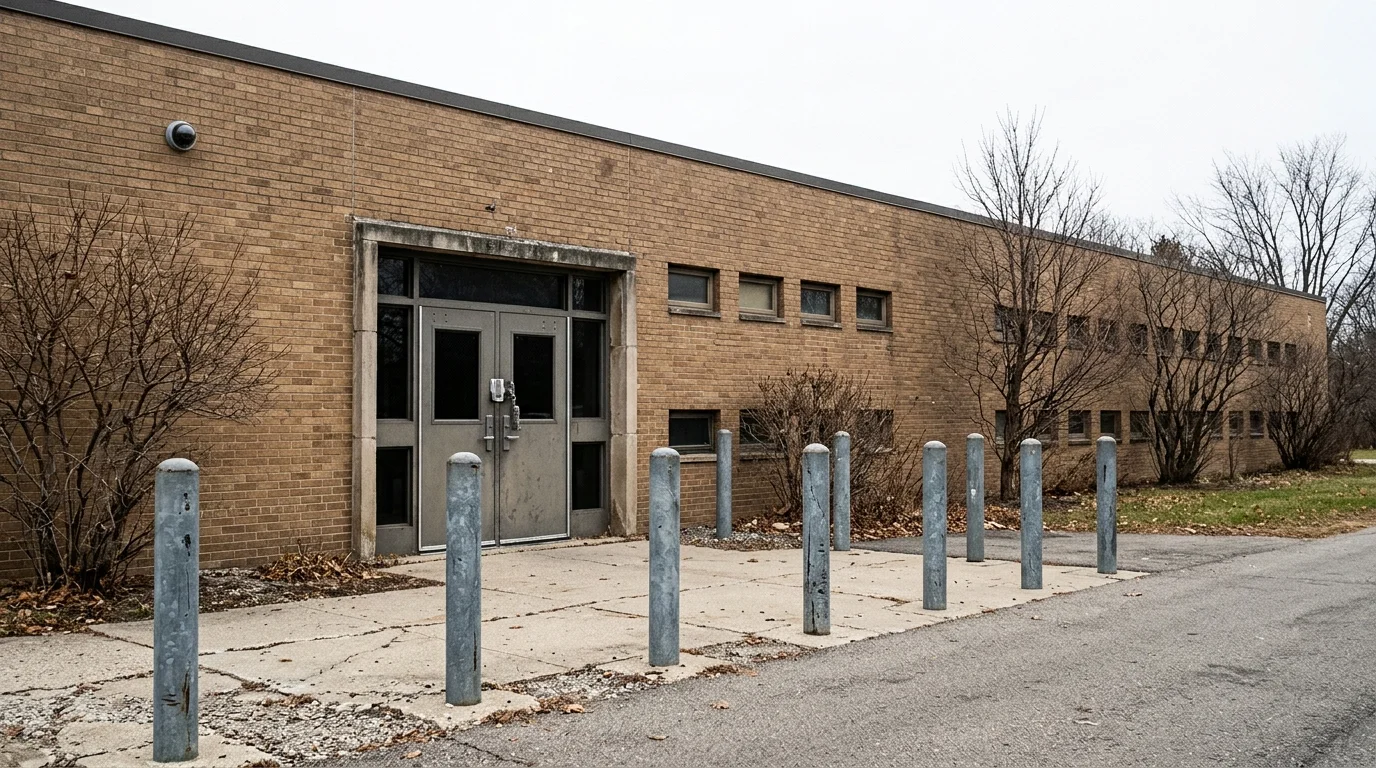
Direct-security RFPs posted by Michigan districts hit their highest monthly count in at least 15 months this October. Among the clearest examples: Walled Lake Consolidated Schools posted a district-wide security glazing project (bond-funded, Oakland County); Lamphere Schools in Madison Heights issued an RFP for security bollards and stadium lighting; and Flint Cultural Center Academy in Genesee County sought bids on an integrated school safety communication and emergency response system. Those three represent the kind of physical infrastructure the state grant is explicitly designed to fund, covering emergency response systems, safety technology, crisis communication, and school resource officers.
The broader RFP numbers require a caveat. Of 17 Michigan school-safety-related procurements posted in the trailing 30 days, only those three are unambiguously direct-security in scope. The remainder matched on the word "safety" but represent traffic studies, parking expansions, and elevator modernizations. The honest signal is a 3x to 4x uptick in genuine security procurement, not the headline 7x ratio. Even at that adjusted magnitude, October 2026 stands as the busiest single month for direct-security school contracting in recent memory.
The timing is not coincidental. The MDE's Section 31aa FAQ makes the October 1 expenditure window opening and the November 9 close explicit. Vendors are well aware: CENTEGIX released a Michigan Section 31aa Funding Guide on October 21, the same week the RFP cluster appeared, and the company reported a 2,375% growth in Michigan school sites using its rapid-incident-response technology since 2022. The annual grant deadline has created a predictable vendor-procurement cycle, and both sides of the market are now calibrated to it.
What makes this year's scramble more complicated is the legal cloud hanging over the program. In FY2025-26, when Section 31aa totaled $321 million, hundreds of Michigan districts declined the funds entirely. The condition that drove the rejection: a provision under MCL 388.1631aa(5) requiring districts to waive investigative privilege if a mass-casualty event occurs on school property. A lawsuit challenging that condition remains active before the Michigan Court of Appeals, and reporting from Chalkbeat Detroit documented the breadth of the district walkaway in January. The same compliance condition persists in FY2027. For districts that spent the past year waiting for legal clarity, the approaching November 9 deadline may represent a forced decision point: accept the terms and procure, or leave per-pupil dollars on the table again.
Layered on top of the grant pressure is a pending legislative mandate. Michigan lawmakers have introduced Alyssa's Law, which would require at least one panic alarm in every school building statewide. The bill remains under consideration and carries no attached funding of its own. Section 31aa and Alyssa's Law are legally distinct instruments doing different things: the state appropriation provides the money, the proposed mandate would create the requirement. But together they point in the same direction, toward faster adoption of emergency alert and communication technology, and districts planning procurements now have reason to spec for both.
For a Michigan parent or taxpayer, the November 9 deadline is the most immediate signal to watch. Districts that apply in Window 1 will show up in December state aid payment records; those that do not will either file later or forgo the funding. Given that hundreds of districts sat out FY2026 entirely, the December payment data will offer the first clean read on how many resolved their compliance hesitation and moved forward under FY2027 terms.
The federal complement to all of this is modest. DOJ's Stop School Violence program has funded roughly $2.5 million across a handful of Michigan grantees, including a $1 million grant to Lansing School District and smaller awards to Mt. Morris, Bellaire, Brandon, and Grant school districts. That figure underscores how thoroughly the state has taken ownership of school safety finance in Michigan. Section 31aa is now in at least its third consecutive year as the dominant mechanism, and the annual fall procurement spike it generates is becoming a predictable feature of the state's education calendar, not a reaction to any single event.