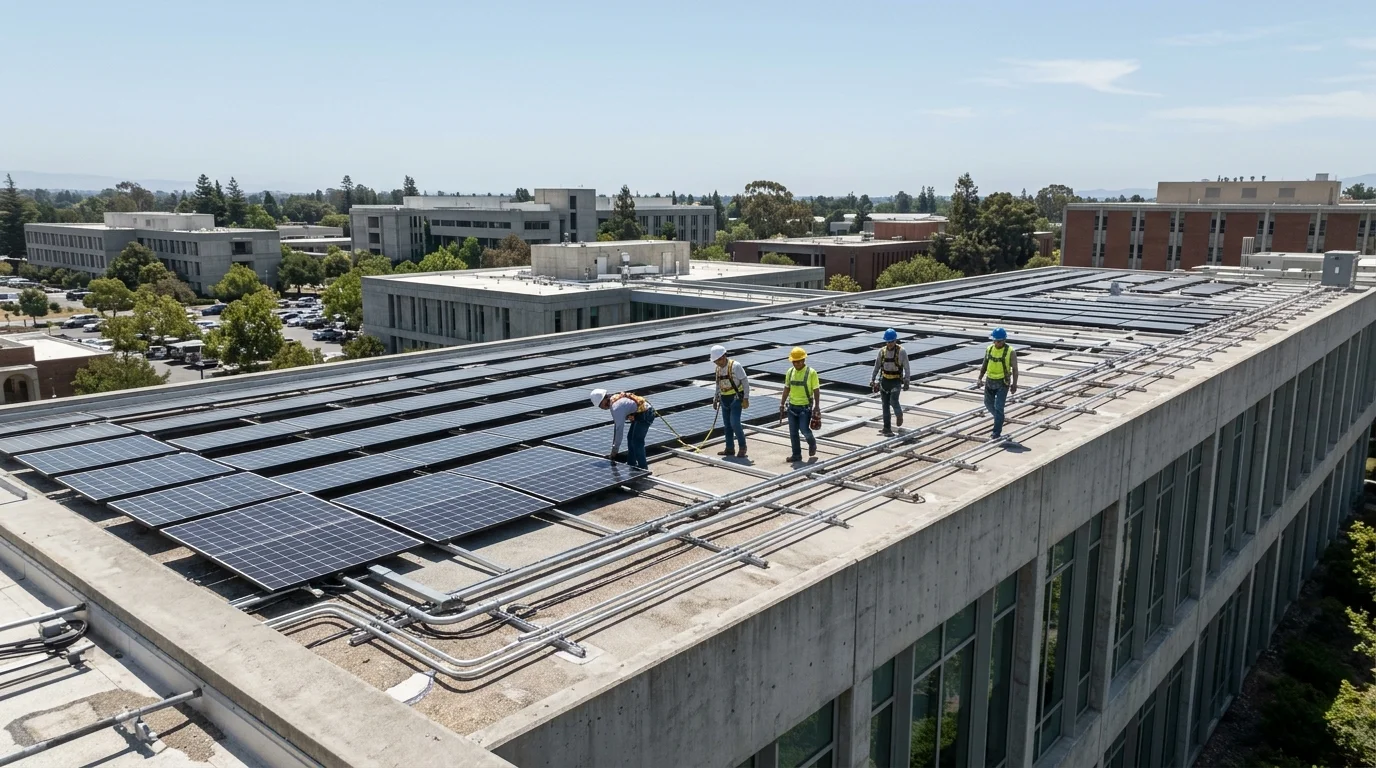
Nearly 400 homes in North Arlington, New Jersey are about to have their water lines dug up as the Passaic Valley Water Commission moves to replace aging mains and remove lead service pipes from a dense cluster of residential streets in the Bergen County borough.
The work covers roughly two miles of pipe running along Beech Street, Chestnut Street, Elm Street, Devon Street, Forest Street, Argyle Place and Exton Avenue, a stretch of housing stock that dates to the same era as the lead-containing service lines buried beneath it. The commission estimates about 380 water connections will need to be transferred to the new main, meaning nearly every home on these blocks will be touched before the project wraps up.
The project is one piece of New Jersey's aggressive statewide push to eliminate lead service lines entirely by 2031, the most demanding deadline of any state in the country. A 2021 state law requires every water utility to find and replace all lead and galvanized pipes within 10 years. PVWC published its systemwide lead service line inventory in 2023, identifying thousands of known or suspected lead lines across its service area, which spans Clifton, Paterson, Passaic and surrounding communities including North Arlington.

Source: NationGraph.
The urgency is federal as well. The 2021 Bipartisan Infrastructure Law dedicated $15 billion specifically for lead pipe replacement, and an EPA rule finalized in October 2024 set a nationwide 10-year replacement mandate. New Jersey has received more than $145 million in the most recent federal revolving fund cycle to help cover the costs.
The North Arlington contract does include lead service line removal, but only "if encountered" during construction, a phrase that reflects how much utilities still don't know about what's actually in the ground. Decades of incomplete records mean crews often don't discover whether a connection contains lead until they start digging.
Beyond the lead question, the mains themselves are well past their expected lifespan. Much of PVWC's distribution network in pre-war Bergen County boroughs like North Arlington consists of cast-iron pipe installed in the early 1900s, decades beyond the typical 75-to-100-year service life. The replacement will also add 30 new fire hydrants along the project corridor.
Contractors have 400 calendar days to complete the work once the commission issues a notice to proceed. The full project documents are posted on PVWC's website. Bids were publicly opened June 25.