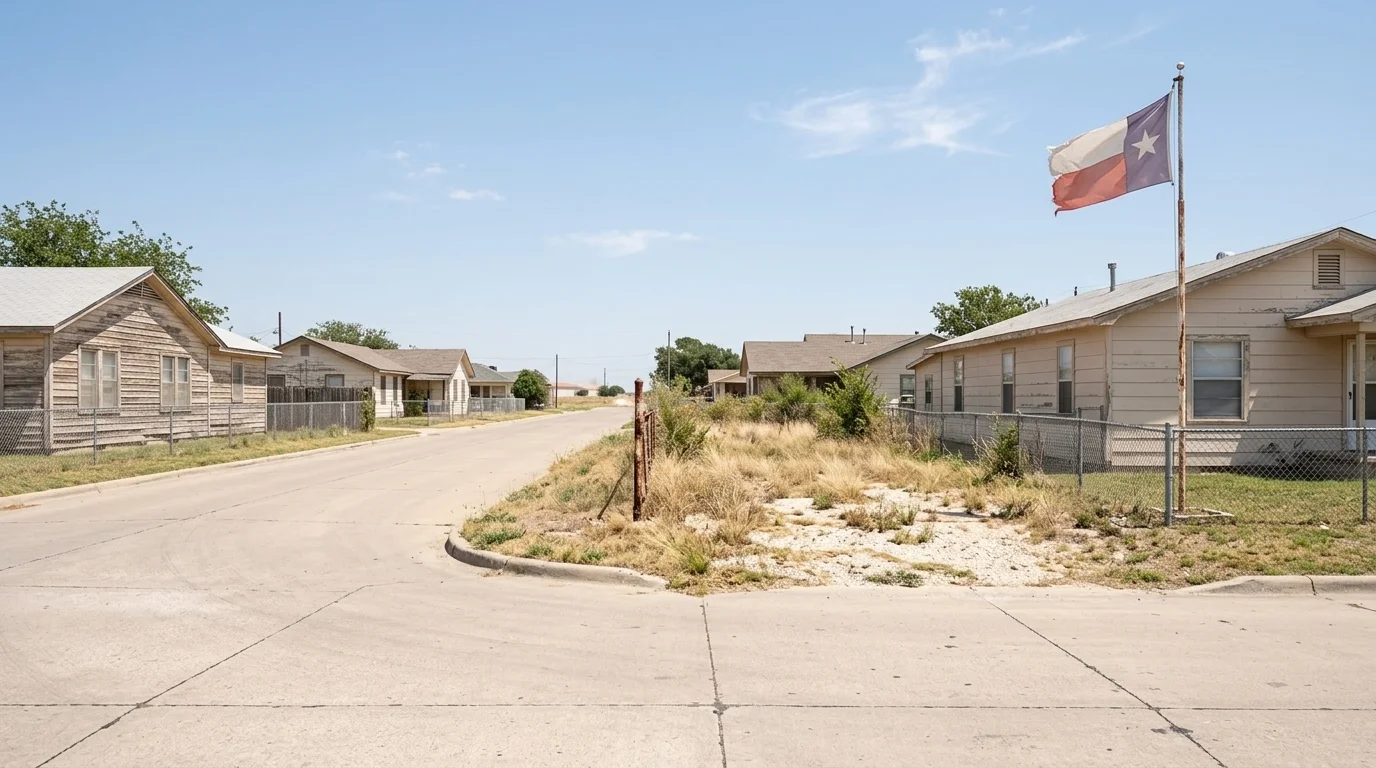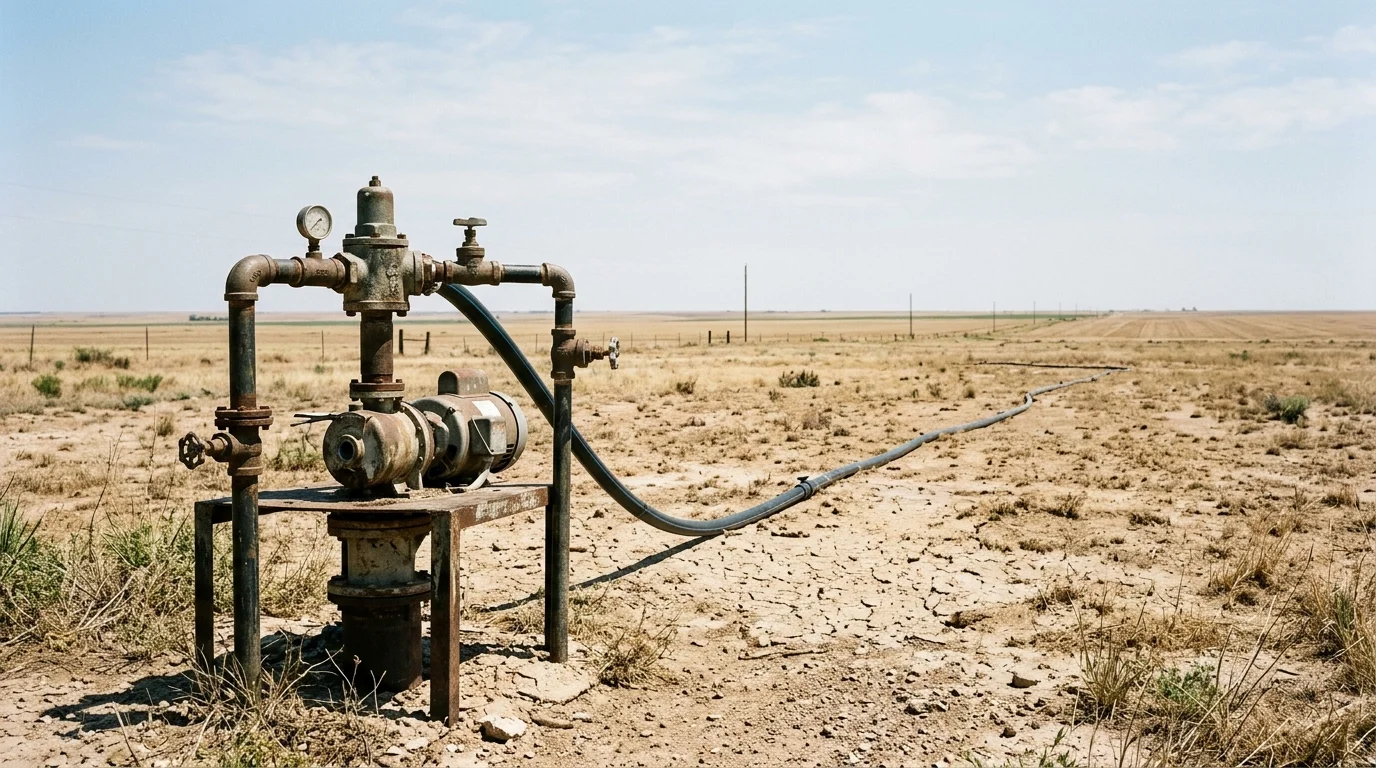
Federal money for PFAS contamination in New Mexico has fallen to $7.8 million in the past 90 days, down from $19.4 million in the same window a year ago, a 60% drop that lands hardest on the communities surrounding Cannon Air Force Base, where a four-mile groundwater plume has already contaminated the blood of 99.7% of 628 Clovis-area residents tested in 2024 and forced the euthanizing of roughly 3,500 dairy cows.
The arithmetic behind the drop is largely mechanical. The prior-year spike was driven by a single $18.9 million EPA Emerging Contaminants in Small or Disadvantaged Communities (EC-SDC) grant, funded through the Bipartisan Infrastructure Law, awarded to the New Mexico Environment Department in July 2025 and running through 2031. That EC-SDC tranche has not been replaced by an equivalent FY2026 award. What arrived instead was a $7.64 million EPA Drinking Water State Revolving Fund capitalization grant to the New Mexico Finance Authority in July 2026 and a $177,000 HHS environmental health grant to New Mexico State University. Those are real dollars, but they work differently: the DWSRF grant flows through a state lending mechanism that makes loans to water systems, a slower path to treatment infrastructure than a direct grant to the state environment agency.
The EC-SDC program is the mechanism Congress designed specifically to reach small and disadvantaged communities, which describes most of the rural, majority-Hispanic towns near Cannon AFB. According to the EPA's May 2026 allotment memo, the national FY2026 EC-SDC pool totaled $945.7 million for states. New Mexico has not recorded a new EC-SDC tranche in the current window.
The federal pullback is happening simultaneously with a proposed regulatory retreat. On May 18, 2026, the Trump EPA proposed to rescind drinking water limits for four PFAS compounds set under the Biden administration, PFHxS, PFNA, GenX chemicals, and PFBS mixtures, while allowing utilities until 2031 to comply with the retained PFOA and PFOS standards. The public comment period closed July 20, 2026. New Mexico Environment Department Cabinet Secretary James C. Kenney submitted an 87-page formal objection to EPA Administrator Lee Zeldin that same day, arguing the rollback would expose the state's already-contaminated communities to compounding risk. As Western Water reported, New Mexico's objection was among the most detailed filed by any state environment agency.
With less federal money flowing in and federal standards potentially weakening, New Mexico is compensating on two tracks. The first is direct appropriation: the 2025 state legislative session allocated $12 million in state funds, not federal dollars, to connect roughly 100 Curry County homes served by PFAS-contaminated private wells to treated municipal water through a pipeline awarded to utility EPCOR. The project addresses a real and immediate problem, but a single pipeline serving 100 homes illustrates the scale mismatch between the state's capacity to self-fund and the scope of contamination across Curry and Otero counties.
The second track is litigation. New Mexico has filed multiple lawsuits against the U.S. Air Force over contamination at Cannon AFB, and the state attorney general's office filed a new suit against the Air Force earlier this year. At the local level, procurement records show the cities of Farmington and Ruidoso and Santa Fe County have all recently issued requests for proposals for PFAS litigation counsel and public awareness consultants, signaling that municipalities are independently moving toward a legal strategy. Litigation can eventually compel cleanup and produce settlements, but it runs on timelines measured in years to decades, which is a long wait for communities where contamination is already in residents' bloodstreams.
New Mexico's overall active PFAS federal grant portfolio remains substantial, at least $45 million in grants currently running across multiple programs. The state ranks sixth among all states in EPA PFAS grant awards so far in 2026. But ranking sixth on a list where the top award is a fraction of last year's comparable figures is a different position than it sounds. The prior-year window, nationally, was defined by awards an order of magnitude larger as the Infrastructure Law's five-year grant authorization (FY2022 through FY2026) moved toward its final year.
That FY2026 year is now. Whether the EC-SDC program produces a new New Mexico tranche before the authorization window closes, or whether the current regulatory uncertainty is slowing both state applications and federal award decisions, will largely determine whether the 60% drop is a one-year anomaly or the start of a longer contraction. The next signal to watch is whether EPA publishes a final rule on the PFAS rescission before year's end, which would set the compliance landscape that governs how urgently states and utilities treat treatment infrastructure as a priority.