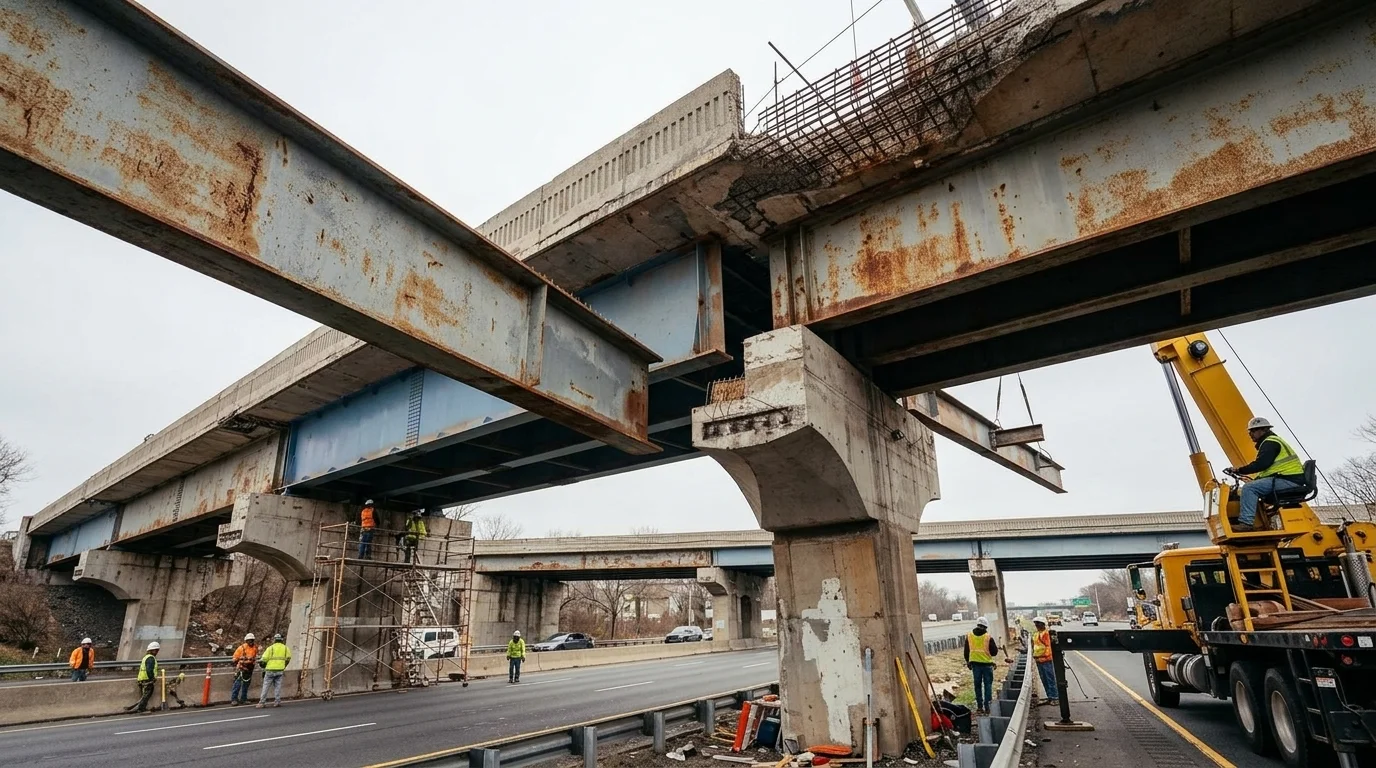
New Jersey is pushing ahead with a major overhaul of the Garden State Connector Bridge, a commuter corridor that carries daily traffic across one of the most congested road networks in the country, as the state races to spend down federal infrastructure dollars before they expire.
The project involves replacing the bridge's superstructure: the deck, beams, and load-bearing elements above the existing piers. Engineers typically pursue this approach when the foundation is still structurally sound but the driving surface and support members have reached the end of their useful life. It costs significantly less than tearing down and rebuilding from scratch, which is increasingly how New Jersey is stretching its infrastructure budget across dozens of at-risk spans.
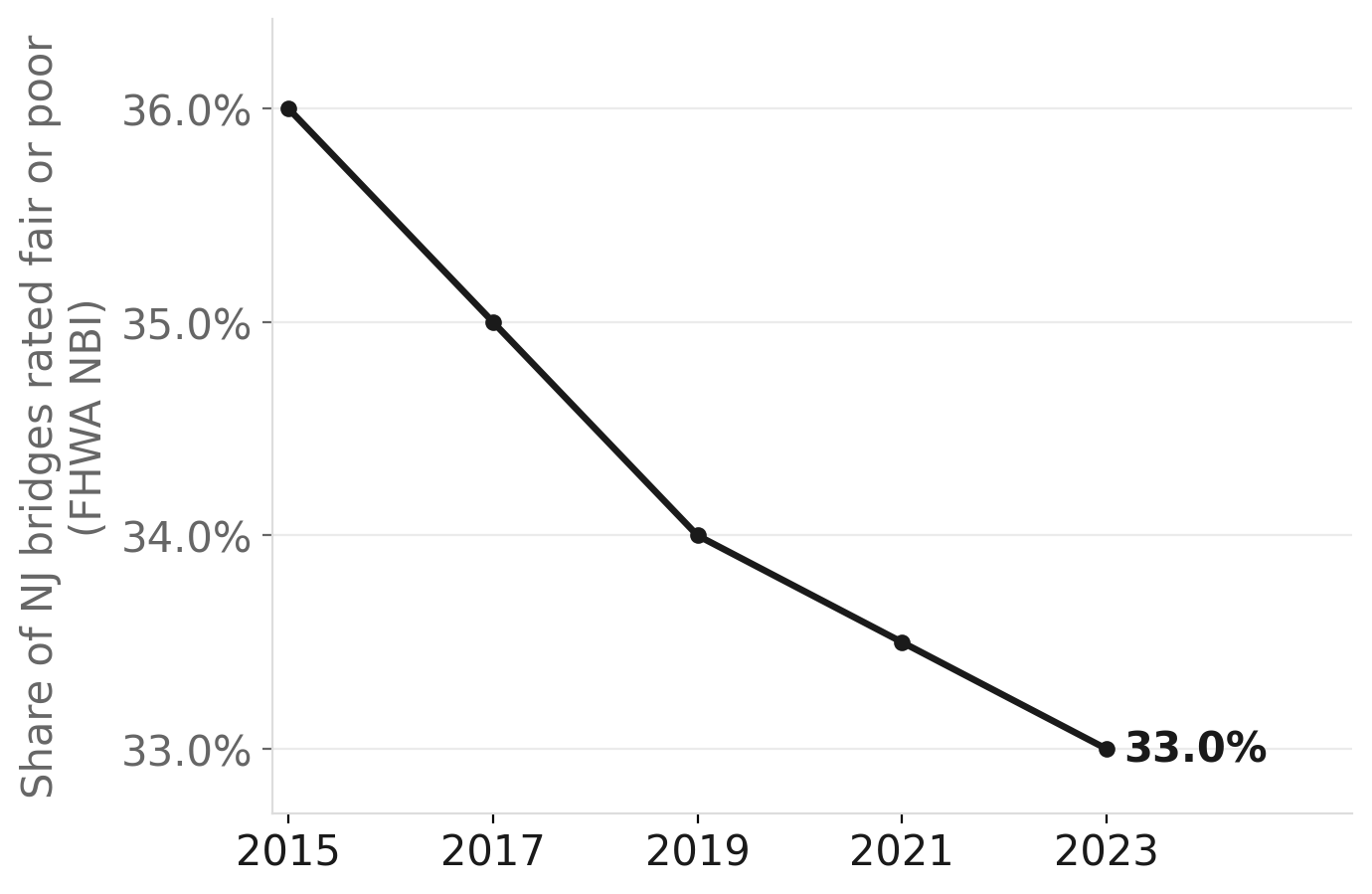
New Jersey has one of the oldest and most heavily traveled bridge inventories in the country. Roughly a third of the state's 6,700-plus bridges are rated in fair or poor condition, according to Federal Highway Administration data. That backlog traces to the postwar construction boom: the Garden State Parkway opened in stages between 1954 and 1957, and most of that era's bridges were built with a design life of 50 to 75 years.
Source: NationGraph.
The 2021 federal Infrastructure Investment and Jobs Act gave New Jersey roughly $1.1 billion over five years specifically for bridge work, and the state has been moving aggressively to obligate those funds before the program's authorization lapses. As New Jersey Transit has been spending at a pace not seen in a generation, the push extends across the state's entire transportation portfolio.
One detail worth flagging: the solicitation was posted on the New York State Contract Reporter, which is unusual for a New Jersey project. That may indicate involvement from a bi-state authority such as the Port Authority of New York and New Jersey, which owns several crossings between the two states. The agency responsible for the project was not identified in the posted record, and the exact structure, route and feature crossed have not been independently confirmed. Readers seeking specifics should consult the issuing agency directly.
With federal bridge funding set to sunset, New Jersey's window to complete projects like this one without tapping state reserves is narrowing fast.