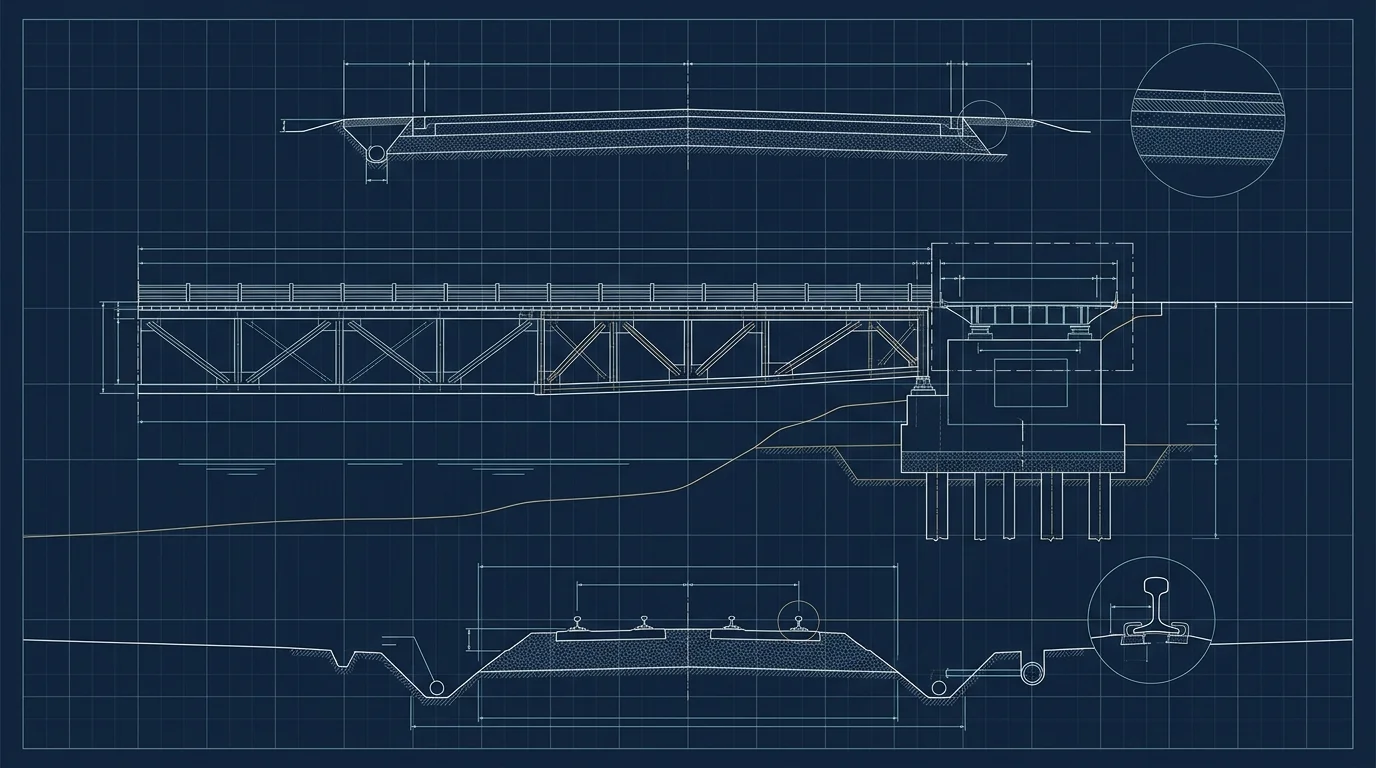
The new Blatnik Bridge connecting Duluth, Minn. and Superior, Wis. will be embedded with a network of sensors designed to detect structural problems in real time, as state engineers work to ensure the $1.8 billion replacement span avoids the failures that plagued its predecessor.
Minnesota's Department of Transportation is hiring engineers to design and install the system while the bridge is still under construction, a deliberate choice that makes installation far cheaper and captures baseline data from the moment the structure opens. The project focuses on the main navigational span over the Duluth-Superior Harbor, with coverage extending to the approach spans.
The urgency behind the effort is easy to trace. In 2007, the I-35W bridge in Minneapolis collapsed into the Mississippi River, killing 13 people and shaking public confidence in the state's infrastructure. MnDOT responded by outfitting the replacement St. Anthony Falls Bridge with fiber-optic cables, accelerometers and corrosion sensors that became a national model for continuously monitoring a major structure. The Blatnik system follows that same philosophy.

Source: NationGraph.
The old Blatnik, built in 1961, offered its own cautionary tale. Inspections revealed serious steel deterioration, forcing MnDOT to impose a 40-ton weight restriction in 2017. That forced heavy trucks to detour to the nearby Bong Bridge, disrupting freight through the Port of Duluth-Superior, the largest Great Lakes port by tonnage, which moves iron ore, grain, coal and wind turbine components. The disruption helped seal the case for full replacement rather than costly rehabilitation.
MnDOT and the Wisconsin Department of Transportation broke ground in 2024 after securing a roughly $1.06 billion federal Bridge Investment Program grant, one of the largest single bridge grants in U.S. history. Completion is expected around 2030 or 2031.
Climate change adds pressure that the 1961 bridge was never designed to handle. The western Lake Superior region is warming faster than most of the country, bringing more severe wind events and heavier snowstorms that accelerate fatigue in steel and concrete. The sensor network is meant to track how the new bridge responds to those stresses over its full lifespan, giving engineers early warning before any problem reaches the scale of a weight restriction or worse. Duluth is also working to preserve its 121-year-old Aerial Lift Bridge, reflecting a broader regional push to protect aging infrastructure against the same climate pressures.
MnDOT has posted the request for proposals for the monitoring system. With the bridge still years from completion, the window to wire it properly is now.