
Renters facing eviction in Multnomah County, Oregon are rarely in the same position as the landlord across the courtroom: nationally, landlords have legal representation in the vast majority of eviction cases, while fewer than 10% of tenants do, according to the National Coalition for a Civil Right to Counsel. That imbalance drives a courthouse dynamic where tenants often lose by default, sometimes without fully understanding what just happened.
The county's Department of County Human Services is now working to sustain a program designed to close that gap, seeking providers to staff in-court eviction defense services in the county, which encompasses Portland and roughly 800,000 residents. The goal is to have trained support staff physically present when tenants show up to eviction hearings, helping them understand their rights, navigate court proceedings, and potentially work out agreements with landlords.
The effort comes at a precarious moment for eviction defense programs across the country. Much of the funding that made these services possible in recent years came from American Rescue Plan Act dollars, which are now running out. Multnomah County and jurisdictions like it are facing a choice: find sustainable ongoing funding or watch programs built during the pandemic emergency quietly disappear.
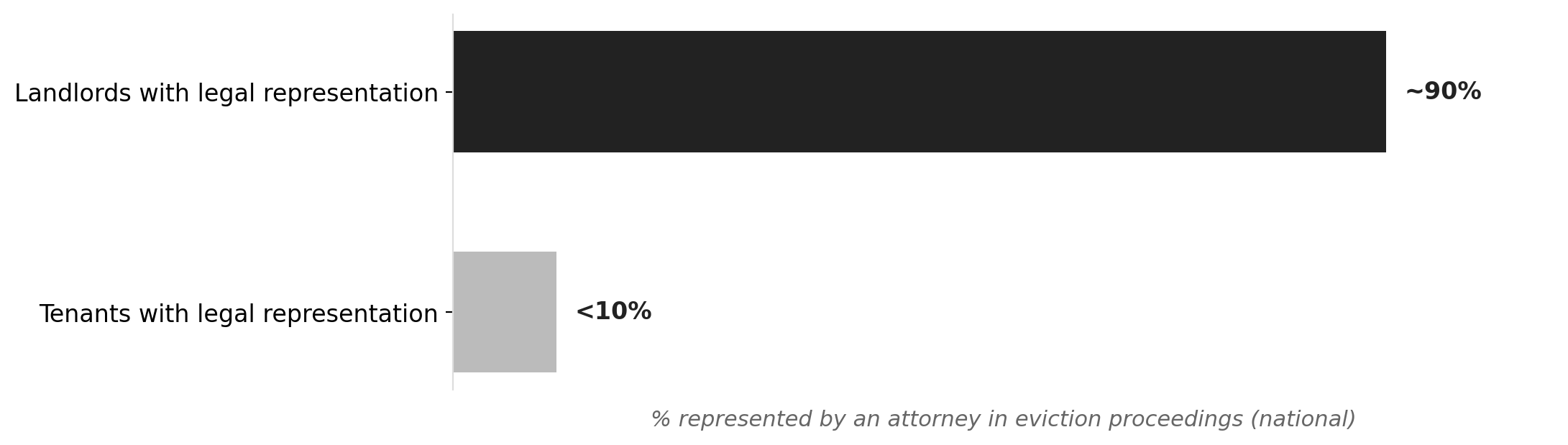
Source: NationGraph.
Oregon has made some of that transition easier than most states. In 2023, the legislature passed SB 1045, which established a right to counsel in eviction proceedings under certain circumstances and directed state funding toward eviction defense. The law made Oregon one of a growing number of states and cities following New York City, which pioneered the right-to-counsel model for eviction cases in 2017. Research from New York showed that represented tenants won or reached favorable settlements in roughly 84% of cases, a stark contrast to outcomes for those who showed up alone.
The stakes in Multnomah County are especially high. The county recorded more than 6,000 people experiencing homelessness in its 2024 point-in-time count, and median rent for a two-bedroom apartment exceeds $1,700. Eviction filings surged after Oregon's pandemic moratoriums, among the longest in the country, finally expired in mid-2022. Black, Latino, and immigrant residents are disproportionately represented in those filings, a fact that shapes how the county frames the need for courtroom support.
As previously reported, the county has been building out this in-court presence as a core piece of its eviction prevention strategy. The current solicitation suggests an existing contract cycle is ending, and the county is now deciding who runs the program going forward. The full contract terms, including funding levels and duration, are contained in the solicitation documents.
The organizations selected will determine whether this kind of hands-on courtroom support becomes a lasting fixture in Multnomah County or another program that outlasted its emergency funding by only a few years.