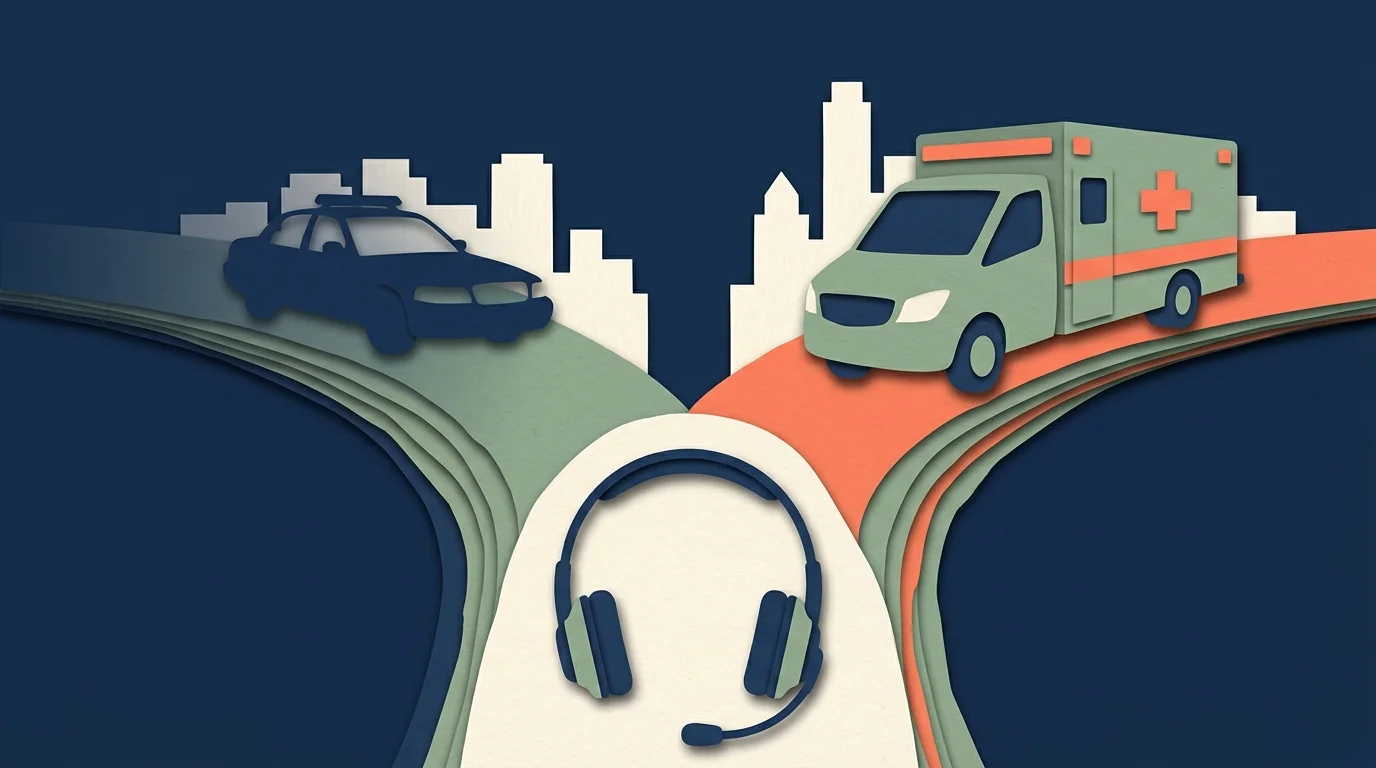
Minneapolis is looking to hand its mental health crisis response program to an outside provider, a significant shift that would send trained clinicians instead of police to low-acuity 911 calls, welfare checks, mental health emergencies, intoxication situations, that have long defaulted to law enforcement by default, not design.
The city's Office of Community Safety, the public safety agency created in the wake of George Floyd's 2020 murder, [posted the request](javascript:submitAction_win0(document.win0,'SCP_COSP_WK_FL_DESCR$27')) in May 2026. It marks a notable evolution from the internally-operated Behavioral Crisis Response program Minneapolis launched as a pilot in late 2020. Moving to a contracted model suggests the city believes an external organization can handle the staffing, scaling, and operational complexity that the program requires.
The stakes are significant. Minneapolis has been operating under a court-enforceable agreement with the Minnesota Department of Human Rights since 2023, after investigators found the Minneapolis Police Department engaged in a pattern of race discrimination. That agreement includes requirements around how the city handles crisis calls, making this procurement potentially a compliance obligation, not just a policy choice.
The practical pressure is just as real. MPD's officer count dropped from roughly 900 before 2020 to under 600 in the years that followed. There are simply not enough officers to respond to every 911 call, whatever the politics. Studies have found that 20 to 50 percent of police encounters involve someone in a mental health crisis, and people in crisis are 16 times more likely to be killed by police than others. Black residents face those risks at even higher rates.
Minneapolis is not starting from scratch. Programs like Eugene, Oregon's CAHOOTS, operating since 1989, and Denver's STAR program, launched the same year as Minneapolis's pilot, have demonstrated that trained crisis workers can resolve thousands of calls each year without police involvement or use of force. Denver's program showed measurable reductions in criminal offenses in areas it served. The federal launch of the 988 Suicide and Crisis Lifeline in 2022 added new infrastructure for routing mental health calls, and federal grants have pushed cities to build mobile response capacity to meet those calls in the field.
What remains to be seen is whether contracting out the work resolves the program's long-standing challenges. Local reporting has consistently flagged limited hours, gaps in geographic coverage, and a shortage of behavioral health workers, a national problem that an outside provider won't automatically solve. Who gets the contract, what hours and neighborhoods they commit to covering, and how they coordinate with 911 dispatchers will determine whether this program finally scales.