Multnomah County, Oregon is pushing to add more preschool sites to its tuition-free Preschool for All program, a sign that one of the nation's most ambitious local early childhood initiatives is still working to close the gap between its voter-approved promise and the reality of getting enough providers on board.
The county's Preschool & Early Learning Division is actively recruiting childcare centers, Head Start programs, culturally specific organizations, and family childcare providers to deliver preschool slots and help shape how the program operates going forward. The goal is universal access for every 3- and 4-year-old in the county by approximately 2030.
Voters launched the program in November 2020, approving Measure 26-214 with about 64% support. The initiative created a dedicated funding stream through a personal income tax surcharge on high earners, 1.5% on taxable income above $125,000 for individuals, and directed the revenue toward free preschool, prioritizing children of color, children from low-income families, kids with disabilities, foster children, and dual-language learners. The first children enrolled in fall 2022.
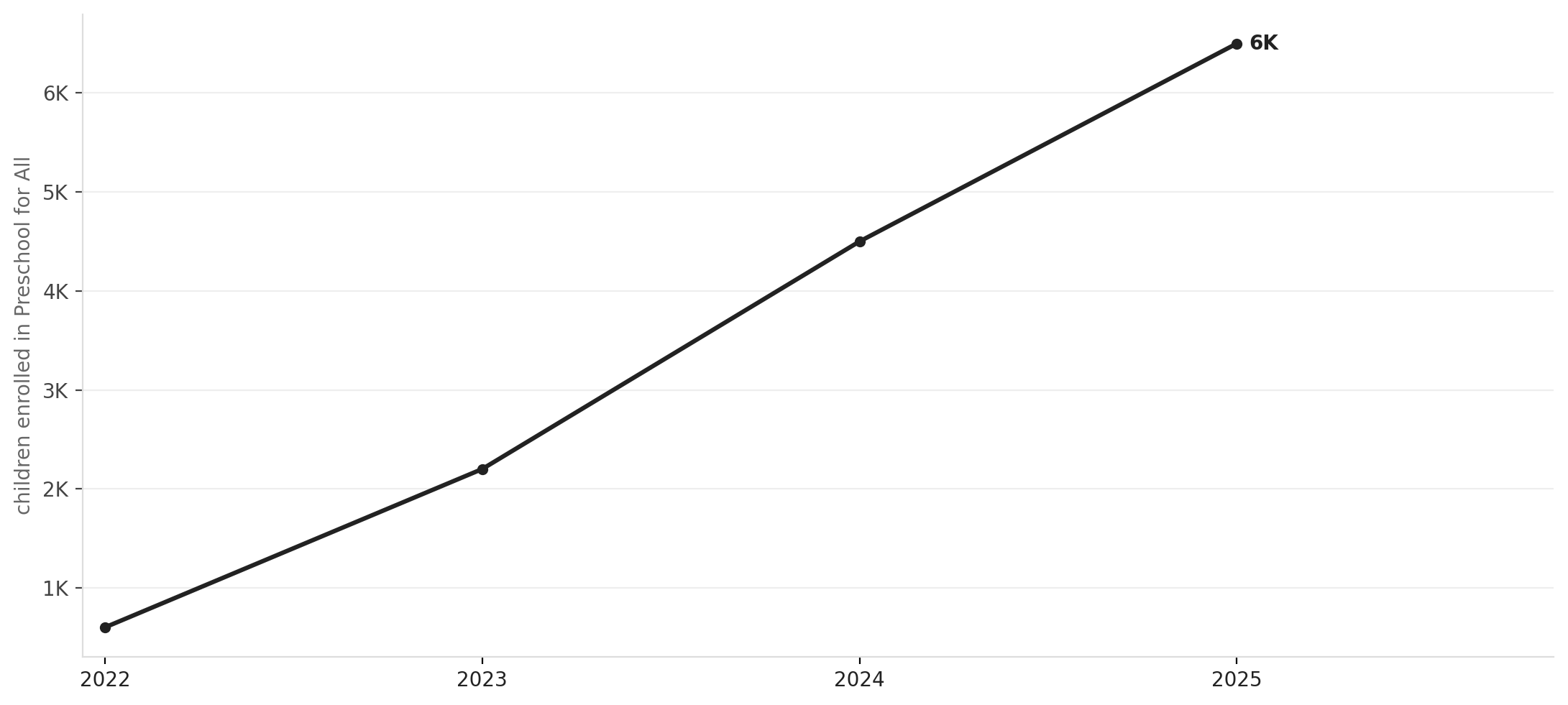
Source: NationGraph.
The program has generated more tax revenue than initially projected, but turning that money into actual preschool seats has proven harder. A 2024 community oversight report flagged the need to accelerate provider recruitment, and the county has faced criticism over slower-than-expected enrollment growth and administrative costs. Smaller providers and home-based childcare operators have at times found the program's quality and compensation requirements difficult to meet, even as the higher pay requirements were designed to address the chronic workforce shortage plaguing the sector.
As NationGraph has previously reported, finding enough willing and qualified providers remains the central obstacle to hitting the universality target. Portland's childcare market was already strained before the pandemic, and years of low wages and provider closures left the county with far fewer sites than families need.
Whether this latest recruitment round draws enough participants, particularly from the culturally specific organizations the program has made central to its mission, will go a long way toward determining if Multnomah County can deliver on what voters approved nearly six years ago.