Maryland, home to Baltimore's devastating overdose crisis, is moving to add residential treatment beds for pregnant and postpartum women struggling with substance use disorders, targeting one of the most vulnerable and underserved populations in the country.
Drug overdose is now the leading cause of pregnancy-associated death in the United States, surpassing hemorrhage and hypertensive disorders. CDC data show overdose deaths among pregnant and postpartum women roughly tripled between 2018 and 2021. Maryland has recorded more than 2,500 overdose deaths annually in recent years, with Baltimore posting the highest per-capita overdose death rate of any large American city.
The federal grant behind the effort, posted by the Substance Abuse and Mental Health Services Administration, would fund residential programs where women can keep their minor children with them during treatment. That detail matters: fear of losing custody is one of the primary reasons pregnant women avoid seeking help, and family-centered residential programs have been shown to significantly improve how long patients stay in treatment and whether they recover. Awards under the program have historically run between $525,000 and $750,000 per year for up to five years.
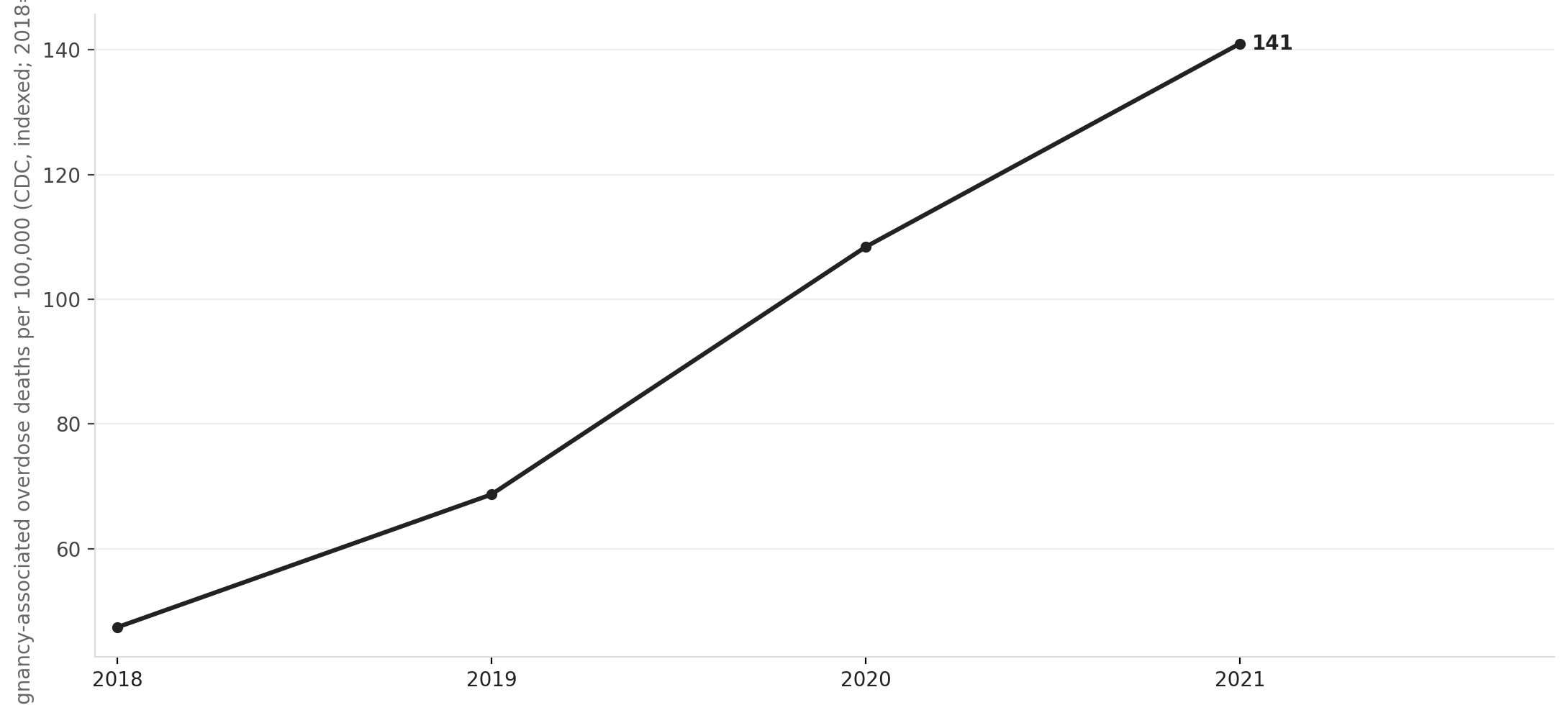
Source: NationGraph.
The program specifically covers co-occurring mental health conditions alongside substance use disorders, reflecting how rarely addiction exists in isolation. Treatment for opioid use disorder during pregnancy typically requires medication-assisted approaches using buprenorphine or methadone, adding medical complexity that most outpatient settings aren't equipped to handle.
Maryland's maternal mortality rate already exceeds the national average, and the burden falls hardest on Black women in the state, who die from pregnancy-related causes at roughly four times the rate of white women. Governor Wes Moore signed legislation in 2024 expanding postpartum Medicaid coverage, and residential treatment capacity for women with children remains one of the most acute gaps in the state's treatment infrastructure.
The federal PPW program dates to 1992 and was most recently expanded under the 2018 SUPPORT for Patients and Communities Act, which broadened eligibility to include postpartum women and reflected a deliberate shift toward treating addiction as a health issue rather than a criminal one. Organizations in Maryland interested in the funding will need to apply through SAMHSA's grants process.