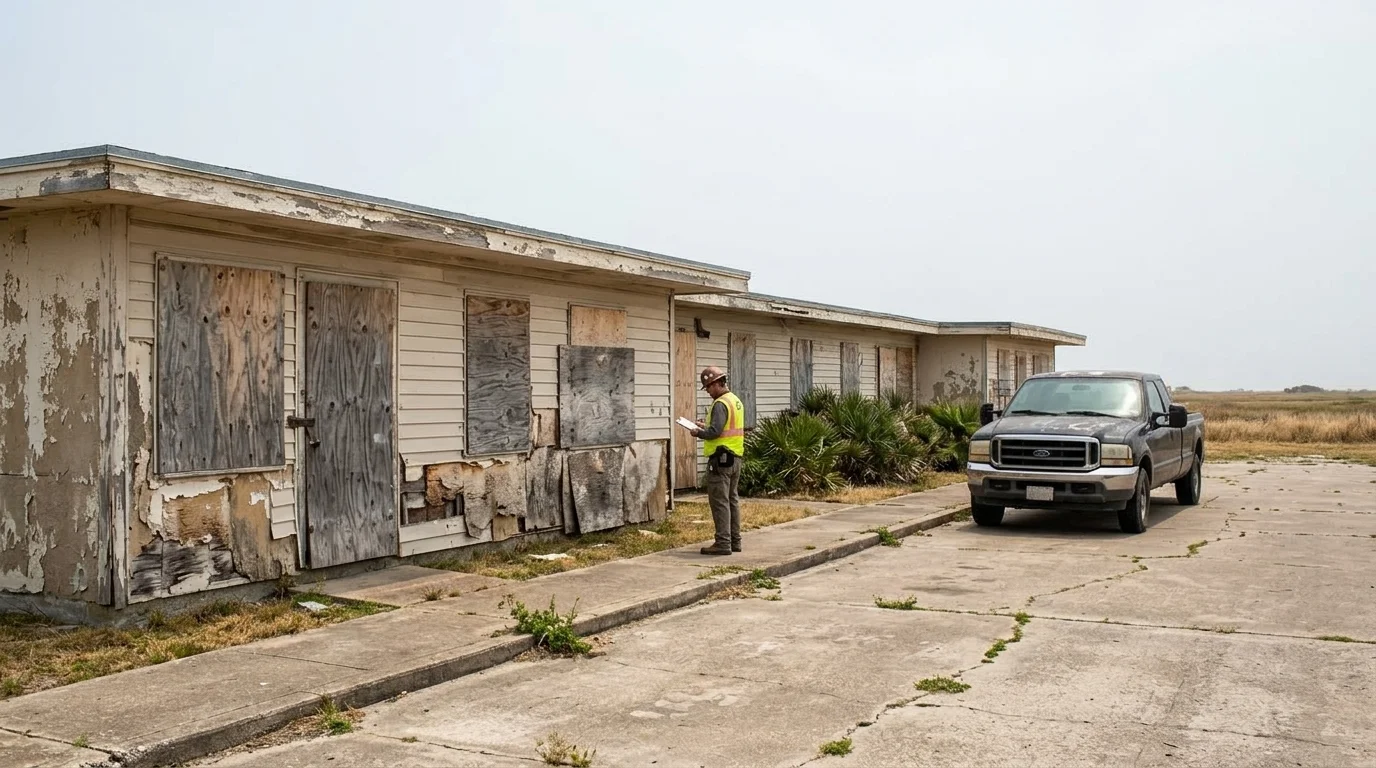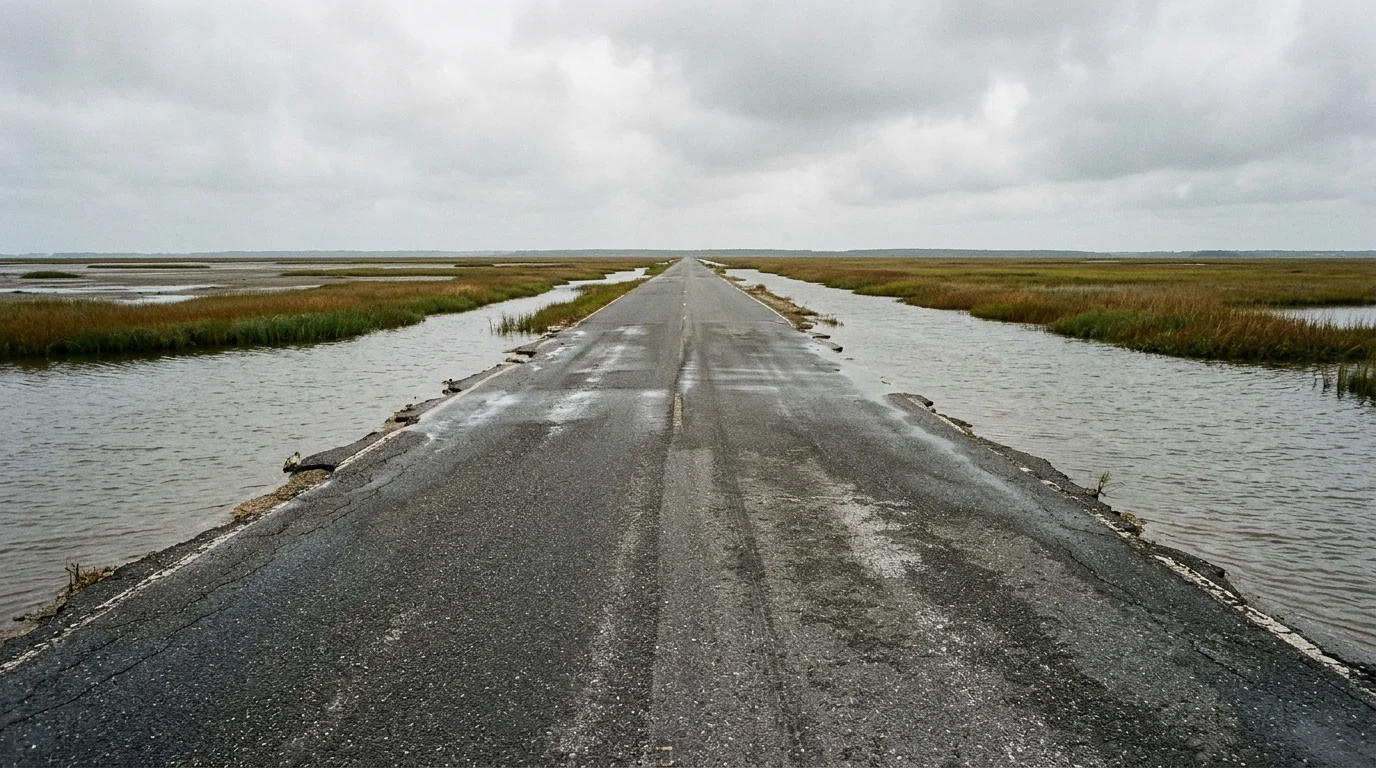
A state transportation agency is quietly raising a Kent County road by 21 inches against the incoming tide. That single project, DDOT's August 2026 RFP to reconstruct roughly 420 linear feet of Cypress Branch Road, lifting it 1.75 feet against chronic tidal flooding, is the sharpest illustration yet that Delaware has stopped treating sea-level rise as a future problem.
Behind it sits a procurement pipeline that has accelerated sharply. Delaware issued five flood-related RFPs in August 2026 against a 12-month monthly average of about 1.1, a fourfold spike. The August count is partly inflated by archival City of Dover entries re-entering the system with old due dates, but the underlying 6-month pipeline is real: DDOT's road hardening project, a DNREC vulnerability assessment of Delaware's energy infrastructure explicitly scoped to sea-level rise, a New Castle County stormwater pond rebuild in Eagle Trace, and a Delaware Army National Guard gate-complex drainage overhaul all entered procurement between July and August 2026. Four state and county agencies moving on flood infrastructure in two months is not a coincidence.
The driver is a convergence of policy and money that came together quickly after Governor Matt Meyer took office. His January 2026 Delaware Climate Action Plan names stormwater modernization and tidal road hardening as priority infrastructure spending, and Meyer himself described coastal roads flooding regularly as a present-tense crisis. On February 26, Executive Order #18 streamlined permitting for resilient water systems, cutting the regulatory lag that had historically slowed exactly these kinds of projects from design to procurement. Then in July, Meyer signed the bipartisan Freshwater Wetlands Protection Act, protecting roughly 75,000 acres of inland freshwater wetlands that had lost federal coverage under the Supreme Court's Sackett v. EPA ruling, closing a gap that had left Delaware's inland flood buffers legally unguarded.
Source: NationGraph.
The federal money backstopping all of this is already disbursing. DNREC holds a $6.3 million Department of the Interior coastal grant running through 2030, awarded in September 2025 and the largest active flood-related federal award in the state. Add a $3.3 million Commerce and NOAA Coastal Zone Management award (2024–2027) and a $1.3 million EPA Nonpoint Source grant (2024–2029), and DNREC's active flood and coastal portfolio tops $12 million. That is substantial for a state of fewer than one million people with no dedicated resilience agency, DNREC and the Conservation Districts carry the full institutional load.
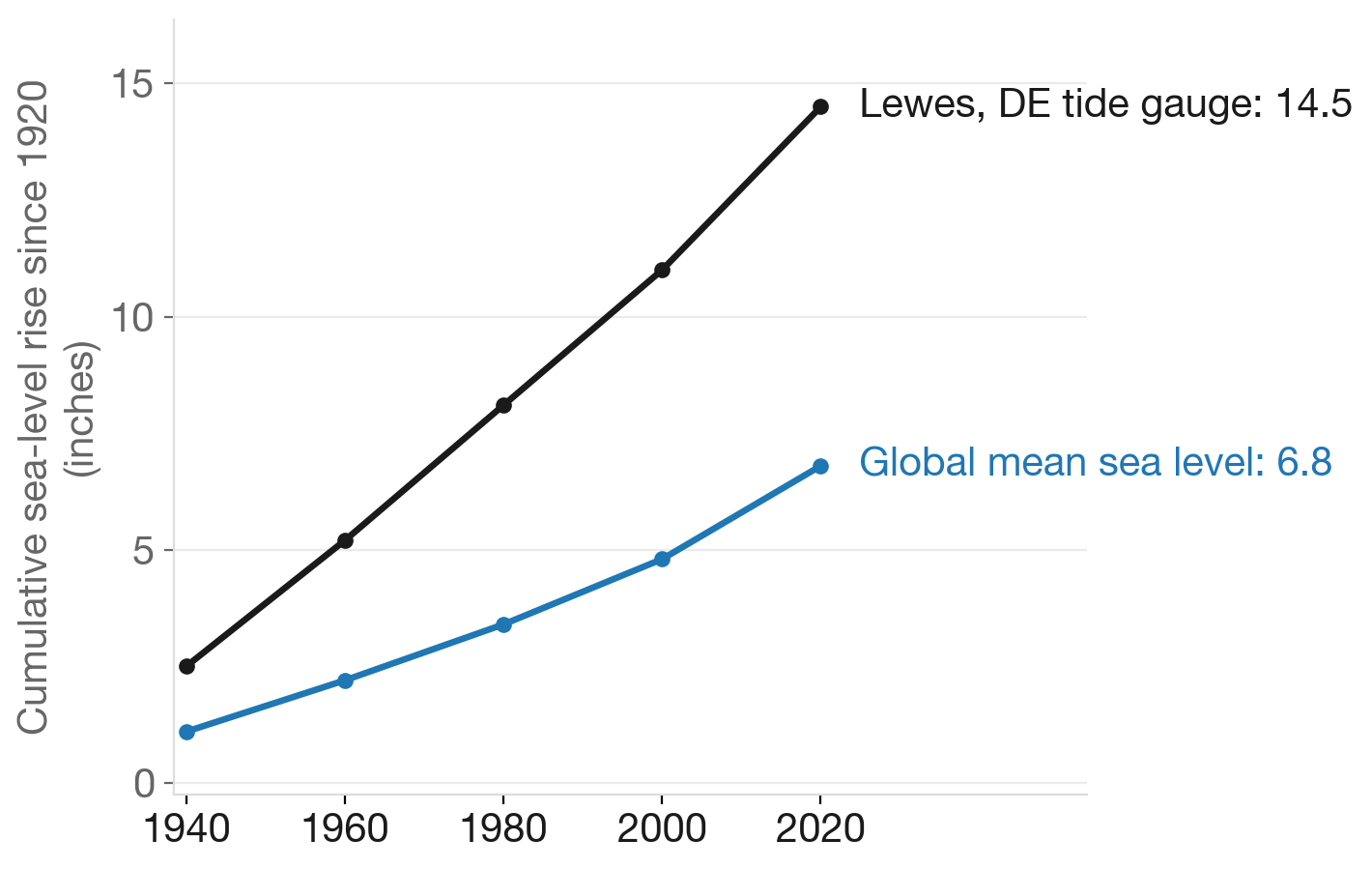
The scale of that load is visible in DNREC's own numbers. The agency's drainage program completed 181 projects in fiscal year 2026 alone, drawing on a fund that has disbursed more than $131 million since 1996. The pace is accelerating because the physical pressure is accelerating: DNREC's sea-level rise data show Delaware's coast rising at roughly twice the global average, with tide gauges recording up to 15 inches of rise over the past century. Projections put an additional one to six feet of rise on the table by 2100, compounded by ongoing land subsidence that makes Delaware's effective exposure worse than headline sea-level figures suggest.
In absolute procurement terms, Delaware's 12-month flood RFP count of 13 trails Maryland (23) and sits far below New Jersey (108). But Delaware's population is roughly one-fifth of Maryland's, which puts the per-capita signal in a different register. A small state with a lean agency and a coast that faces existential pressure within a generation is moving procurement at a rate that suggests political will has finally caught up with physical reality.
For residents in Kent and Sussex Counties, where tidal farm roads already flood regularly, where the working coast is low and flat and subsiding, the near-term signal is that more projects like Cypress Branch Road are entering the queue. The DNREC energy infrastructure vulnerability assessment now in procurement will map climate exposure across the state's critical systems, likely generating a new round of capital requests. DNREC's capital budget request for fiscal year 2027 already reflects a significant step-up.
The open question is capacity. Delaware has the federal grants, the executive orders, the regulatory framework, and now a quickening procurement pace. What it does not yet have is a large resilience bureaucracy to execute at scale. Whether DNREC and the Conservation Districts can absorb the volume of work the pipeline implies, without the kind of implementation delays that have slowed comparable programs in other small states, will determine how much of this political momentum translates into roads that stay above water.