Flint, Michigan has spent years replacing lead pipes and rebuilding trust in its drinking water. Now the city is turning to the other half of its water system: the wastewater plant that processes what goes down the drain and determines what flows into the Flint River.
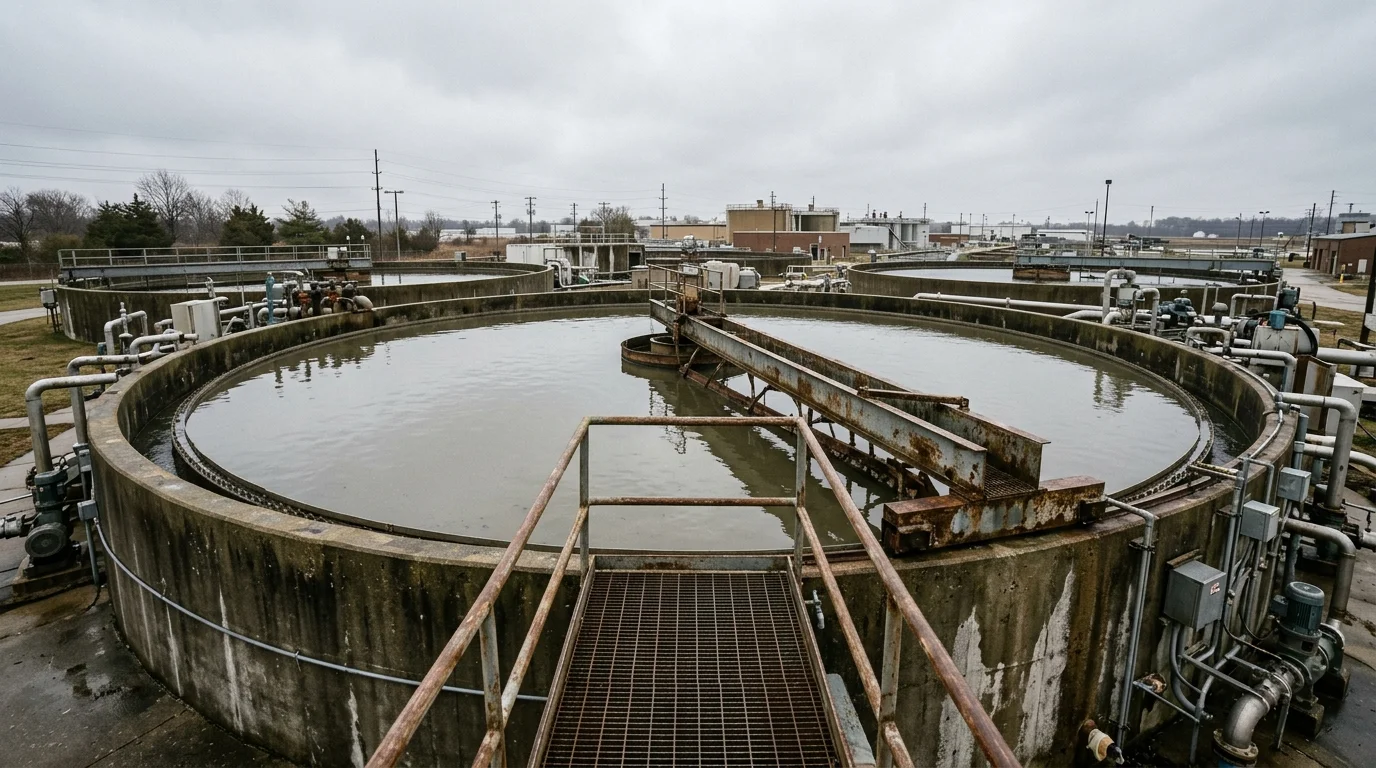
The city is seeking a contractor to repair a decant tank at its Water Pollution Control Facility, the sewage treatment plant on the city's south side. Decant tanks are a workhorse piece of equipment in sludge handling: solids settle to the bottom and cleaner liquid is drawn off the top for further treatment. When they fail or degrade, the quality of water discharged into the river drops, operating costs rise, and the city risks violating its Clean Water Act permit.
The project has nothing to do with drinking water directly, but it is part of the same long-deferred maintenance backlog that the 2014-2019 lead crisis put a spotlight on. Decades of population loss and deindustrialization, following the collapse of General Motors employment in a city that once housed nearly 200,000 people, left Flint with roughly 79,000 residents today and a shrunken tax base that could not keep pace with aging pipes, pumps, and treatment equipment on both sides of the system.
Since 2016, Flint has received hundreds of millions in state and federal dollars, including an EPA appropriation under the Water Infrastructure Improvements for the Nation Act, FEMA assistance, a $626 million civil settlement, and more recently funds routed through Michigan's Clean Water State Revolving Fund under the 2021 Bipartisan Infrastructure Law. Much of the early money went toward lead service line replacement. As that program has progressed, with more than 11,000 lines replaced under a court-ordered effort documented in ongoing coverage of Flint's pipe replacement work, the city is shifting attention to treatment plants and sewer infrastructure.
Michigan's Department of Environment, Great Lakes, and Energy has been pressing municipalities statewide on aging wastewater systems, and Flint's facility has seen prior upgrade work in recent years.
The dollar value and timeline for the decant tank project were not disclosed in the solicitation posted Oct. 13 to the Michigan Inter-governmental Trade Network. The city will select a contractor after reviewing bids, and the project's scope and cost should become clearer once a contract is awarded.
For residents who lived through the lead crisis, nearly any water-related work in Flint carries weight beyond its technical details. This project will be largely invisible to them, but the Flint River it helps protect flows north to Saginaw Bay and ultimately Lake Huron, waters that matter well beyond city limits.