Manatee County, Florida is moving to rebuild oyster reefs along its coastline, betting that living reefs can do what hard infrastructure cannot: absorb storm surge, filter polluted water, and help restore a bay system that has taken a beating over the past five years.
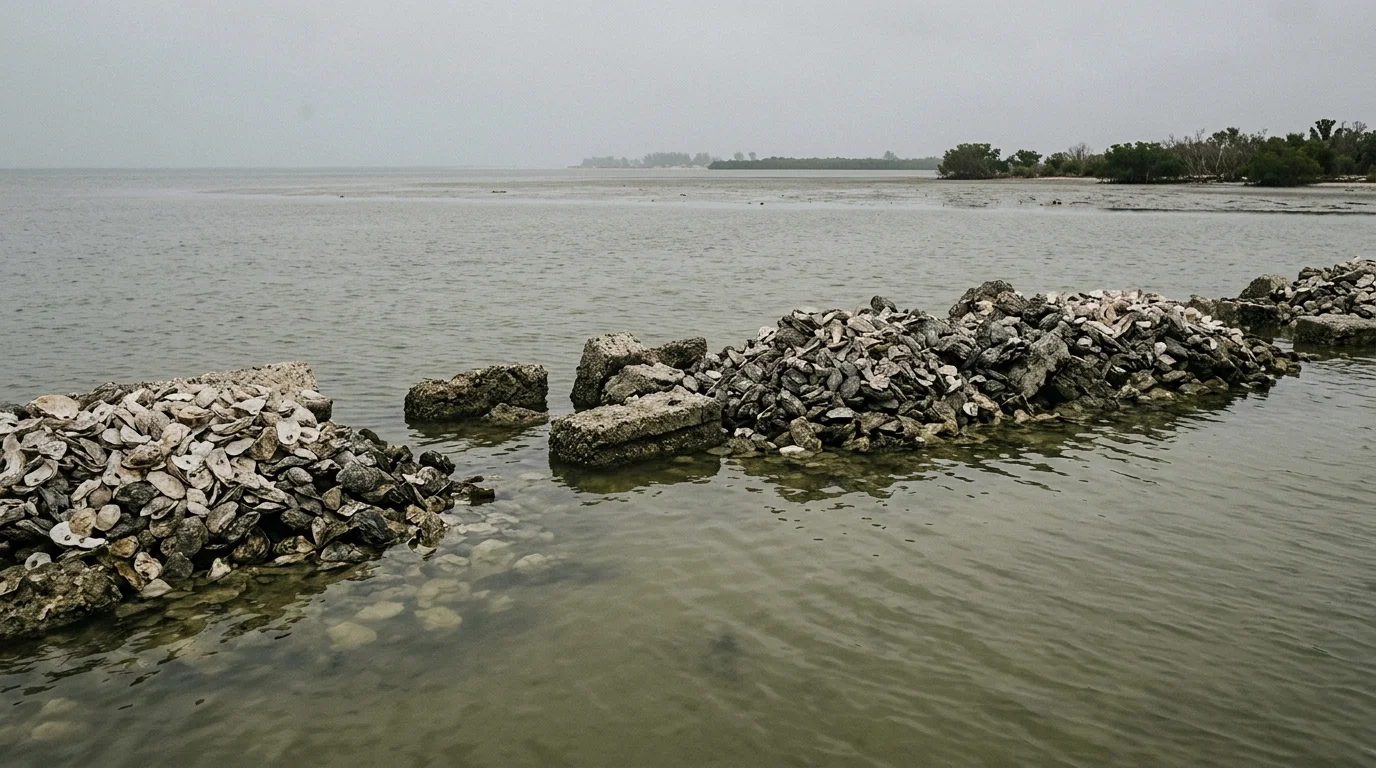
The county has posted a solicitation for contractors to carry out the oyster restoration project, which typically involves deploying recycled shell, limestone, or engineered reef structures as substrate for oyster larvae to colonize. The specific budget, acreage targets, and water bodies involved have not been publicly disclosed.
The timing reflects five years of compounding crises. In 2021, the abandoned Piney Point phosphate plant in Manatee County discharged 215 million gallons of polluted water into Tampa Bay, killing seagrass and marine life across the region. Red tide blooms compounded the damage in subsequent years. Then in fall 2024, Hurricanes Helene and Milton drove catastrophic storm surge into Manatee County's barrier islands, repeatedly inundating Anna Maria Island and the historic fishing village of Cortez.
Source: NationGraph.
Oysters have emerged as a rare tool that addresses multiple crises at once. A single adult oyster filters up to 50 gallons of water per day, helping remove the excess nutrients that fuel red tide and choke out seagrass. Reef structures can reduce wave energy by up to 76%, blunting the surge that has flooded coastal homes and businesses. Reefs also provide nursery habitat for fish and shellfish species central to Manatee County's commercial fishing economy.
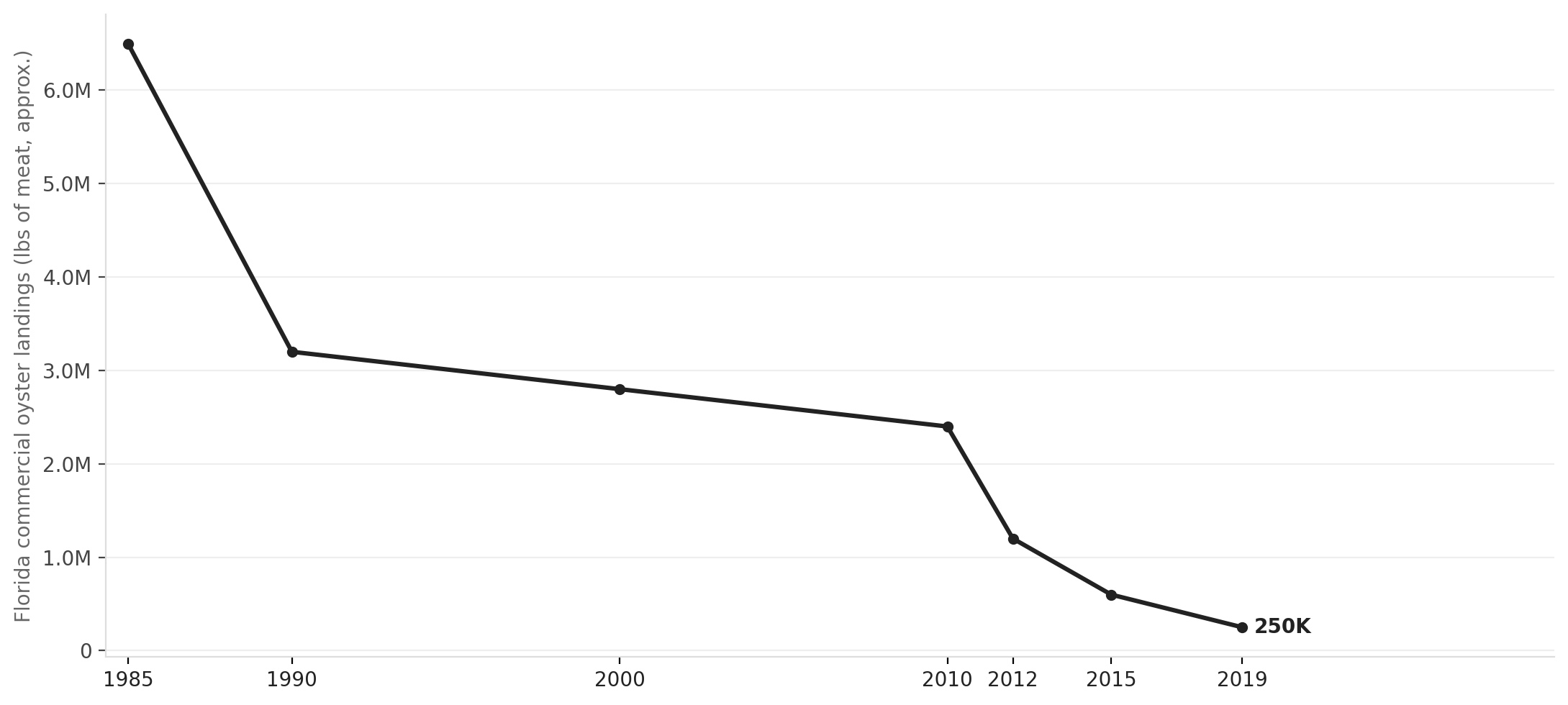
Florida's oyster reefs have declined by an estimated 85 to 90 percent since the late 1800s, lost to overharvesting, dredging, disease, and water quality degradation. The collapse of the Apalachicola Bay fishery in 2020 effectively ended commercial oyster harvesting in Florida and reframed the shellfish in state policy as ecological infrastructure rather than a crop.
Manatee County's project fits into a broader wave of Gulf Coast reef-building funded in part by the Bipartisan Infrastructure Law and Inflation Reduction Act, which directed significant new money toward NOAA and Army Corps coastal resilience programs. Similar projects have launched in neighboring Pinellas, Hillsborough, and Sarasota counties in recent years.
With a population now exceeding 430,000 and development pressure intensifying along its 50 miles of coastline, the county faces growing exposure to future storms. Contractor selection is underway, and the project's timeline will depend on what firms submit.