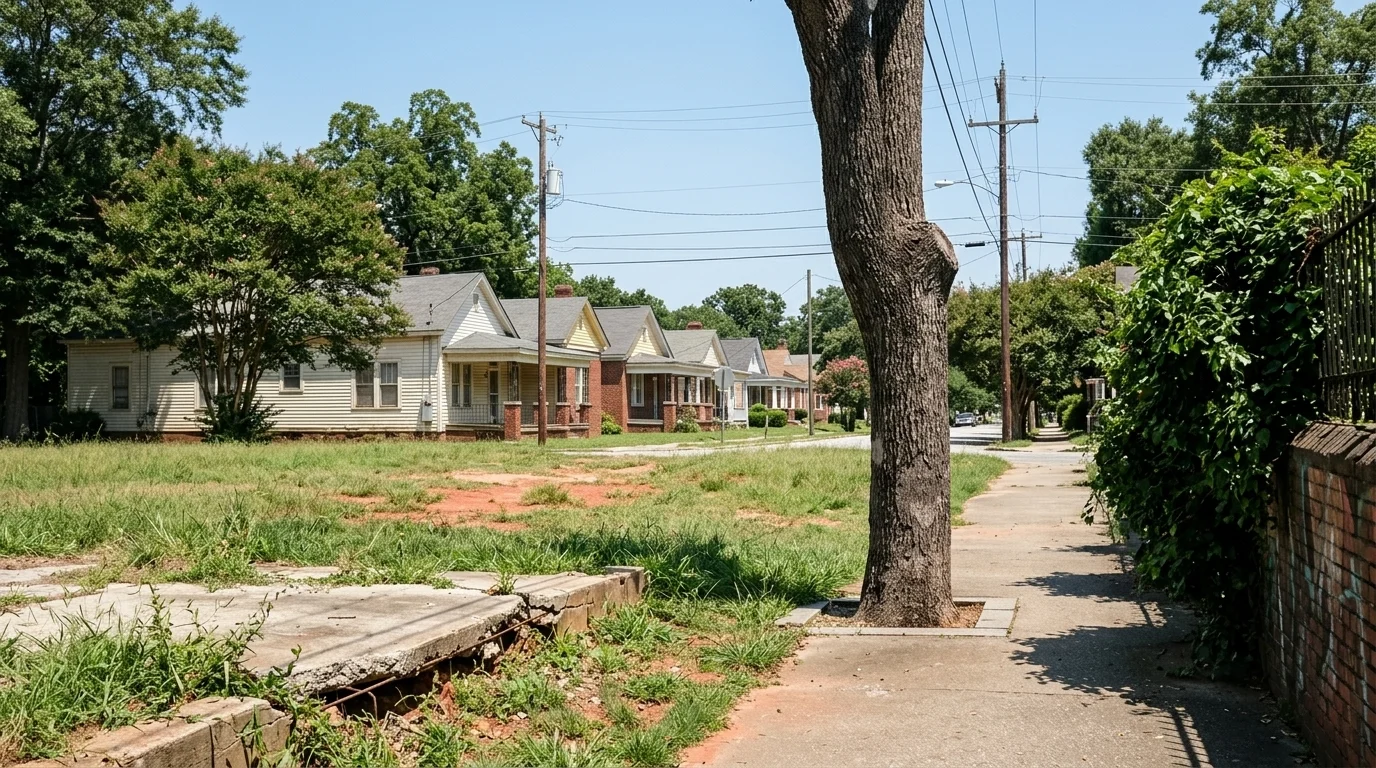
Macon-Bibb County, Georgia is looking for a developer to build factory-assembled homes on vacant lots scattered across the county, a strategy born from years of aggressive blight demolition that cleared land but left it empty.
The county has spent years tearing down derelict structures in one of the more ambitious blight-removal programs in the Southeast. The demolitions worked, in the sense that thousands of dangerous buildings came down. What followed was a new problem: a patchwork of small, cleared infill lots that traditional homebuilders have little appetite for. Thin margins, scattered sites, and a local economy where roughly one in four residents lives in poverty add up to a market that private developers largely pass on.
Modular construction, where homes are built in a factory and assembled on site, has emerged as the county's answer. It can cut construction time by 30 to 50 percent and reduce costs by 10 to 20 percent compared to conventional site-built homes, making projects viable on lots where the numbers otherwise don't pencil out. Georgia is already one of the largest manufactured and modular housing states in the country, and the county's Affordable Housing Fund is now being directed toward finding a developer partner who can deploy that model at scale.
The solicitation is listed on Georgia's state procurement portal with a response deadline of Aug. 6, 2026, an unusually long window that signals the county is looking for a sustained development partnership rather than a one-off contract.
Macon-Bibb, a consolidated city-county government of about 157,000 residents formed in 2014, carries one of the highest poverty rates in Georgia and has watched median home prices climb beyond what a median-income household can realistically afford. Mayor Lester Miller, re-elected in 2024, has made housing and blight central to his administration's agenda. The modular approach is designed to move faster than the housing market has been willing to on its own.
Once a developer is selected, the harder question becomes execution: scattered-site infill is logistically complicated even with modular methods, and similar programs in cities like Atlanta and Charlotte have seen mixed results. Whether Macon-Bibb can turn cleared lots into occupied homes at the pace and price point it needs remains to be seen.